




500 NEW MARIJUANA SEEDS RELEASED

Unlocking Cannabis-Related Terms Made Easy

Marijuana comes from the Cannabis sativa (hemp) plant’s dried flowering tops, leaves, stems, and seeds. For hundreds of years, humans have used cannabis for fiber (hemp), seed oils, seeds, medical, and recreational care. There is some evidence that marijuana or some of its components, such as CBD, can help relieve severe pain, inflammation, nausea, and chronic conditions. CBD is only one of at least 120 Trusted Source (cannabinoids) substances found in marijuana, however. People have a lot of health concerns about drug use.

The delta-9-tetrahydrocannabinol (THC) is another main component of cannabis. THC is the main component in cannabis that affects the brain (psychoactive). It acts on particular receptors of the brain, causing necessary changes in mood, depression, suicidal thinking, memory problems, and disruption of normal learning abilities. It can also give rise to dependence. It is also known that the compound increases appetite (informally known as “munchies”) and causes a relaxed state, as well as other effects on the sense of smell, hearing, and sight. THC can also contribute to tiredness. In some cases, hostility may be decreased by THC.

Mostly unclear are the actions of the 120-plus cannabinoidsTrusted Source found in marijuana, but the most effective psychoactive agent reported to date is THC. THC is quickly absorbed into the bloodstream when a person smokes marijuana, entering the brain within minutes. When consumed, the body absorbs THC more gradually, delaying the initiation of action by up to two hours and reducing the impact duration. THC and other cannabis cannabinoids are identical to the body’s cannabinoids. These natural cannabinoids act as neurotransmitters sending chemical messages throughout the nervous system between nerve cells (neurons).

Certain parts of the brain are also affected, adversely affecting balance, posture, agility, and reaction time. This can make driving a car, operating machinery, or engaging in sports or other potentially dangerous physical activity hazardous for a person using cannabis. THC also activates different cannabinoid receptors, which increase dopamine release, a neurotransmitter associated with pleasant feelings. People are using cannabis to get a feeling of elation (a high), elation, and relaxation. Marijuana also generates changes in sensory perception; brighter colors may appear more vivid music, and deeper emotions. Several may have anxious thoughts.

Terms Frequently Used

Even though the only link you need is through videos, you probably know what bongs, joints, and bowls are. Yet, for the first time, visiting a medical or recreational clinic often means finding a whole foreign language.
Here are some of the terms that are commonly used in the Cannabis industry:

  1. Cannabinoid

The word “cannabinoids” refers to a large group of chemicals found in the cannabis plant. These substances are involved in neurotransmission-related receptors in the cells of the brain. Tetrahydrocannabinol (“THC”) and cannabidiol (“CBD”) are the two renowned cannabinoids. THC is known to produce psychoactive properties in cannabis users; it is the compound that is responsible for the “high” associated with cannabis use. CBD is best known for its health effects, which do not include a portion that is psychoactive. In addition to these two cannabinoids, the different parts of a cannabis plant do contain hundreds of other compounds.

2. Access Point

An access point is a spot where patients with medical marijuana are allowed to purchase or pick up cannabis. The term “access point” is often used with the term “dispensary” somewhat synonymously. In either case, the location pertains to a state-authorized facility that must adhere to strict processes and guidelines.

3. Agitation

In the method of extracting marijuana plants and products, agitation refers to a specific procedure. In agitation, producers use physical contact with marijuana plants for collection and refining to break off trichomes.

4. Backcross

Successful cultivation of cannabis requires extensive botanical and biological expertise, and backcrossing is an official term borrowed from these areas. Cultivators cross a marijuana plant while promoting plant breeding so that one or more desirable characteristics can be passed from a parent to an offspring. This process, in particular, typically involves breeding a plant with one of its parents to reinforce specific genes in rare strains.

marijuana plant while promoting plant breeding so that one or more desirable characteristics can be passed from a parent to an offspring. This process, in particular, typically involves breeding a plant with one of its parents to reinforce specific genes in rare strains.

5. BHO

BHO refers to butane hash oil, a strong concentrate of cannabis extracted from marijuana plants that use butane as a solvent. This contains extremely high levels of THC, can be generated in a variety of ways and can vary in quality. It is also recognized as “honey oil” or “earwax.”

BHO refers to butane hash oil, a strong concentrate of cannabis extracted from marijuana plants that use butane as a solvent. This contains extremely high levels of THC, can be generated in a variety of ways and can vary in quality. It is also recognized as “honey oil” or “earwax.”

6. Bud

The flower growing on mature plants is the bud of a marijuana plant. Buds contain significant cannabinoid levels, making them a popular extracting choice.

7. Cannabidiol

Cannabidiol, popularly known as CBD, is one of the dozens of cannabis plant molecules known as cannabinoids. In recent years, CBD has become particularly popular due to the belief that it provides health benefits for patients undergoing various diseases, including seizures, pain, arthritis, and more. CBD is unlike THC because it does not contain psychoactive properties, which means that people can use CBD for their medical benefits without feeling “high.” CBD is most widely provided to users through oils, topical products, and tinctures.

8. Concentrate

Concentrates are highly powerful cannabis plant extracts containing cannabinoids such as tetrahydrocannabinol (“THC”). In the production process, all plant material is extracted. Hash, kief, and hash oils are popular concentrate. They are often used in both recreational and medical contexts.

9. Cross

In a process called “crossbreeding” or “crossing,” for short, multiple cannabis plants can be interbred to create a new strain of product. New cannabis varieties are being developed to control factors such as appearance, potency, and more.

10. Crystals

The word “crystals” refers to trichomes, a translucent, crystal-like component of the cannabis plant containing high THC levels. Different concentrates are produced using crystals.

11. Dabbing

While smoking and cannabis-based products continue to be two of the most favored methods of marijuana consumption, a relatively new technique called “dabbing” has become incredibly popular. To “dab,” a user puts a small concentration of marijuana on a hot oil rig pipe; the concentration is vaporized, and the user then inhales the vapor.

12. Decarboxylation

Decarboxylation is a mechanism that is used to turn such inactive cannabinoids into active ingredients such as THC and CBD. The process includes the low-temperature slow heating of cannabis and is widely used to make food.

13. Dispensary

It is known as dispensaries that sell cannabis products. Many dispensaries, including items such as paraphernalia or clothes, can hold more than just cannabis itself. Because legal marijuana sales are controlled differently depending on the U.S. state or province of Canada, the specific requirements and set-up of a dispensary will rely heavily on the location of that dispensary.

14. Edibles

Goods that contain chemicals based on marijuana and are meant to be orally ingested are known as edibles. Baked goods, candy, and soda are among the most popular edible items.

15. Indica

There are three marijuana plant species: indica, sativa, and ruderals. Indica cannabis plants tend to have dense bud clumps, and it is believed that the strain has a sedative effect.

16. Resin

Resin is a term often used interchangeably with trichomes, although in the cannabis industry, it may also have other meanings. The waste left inside is often referred to as resin after a piece of marijuana paraphernalia is used.

17. Sativa

Sativa plants are the highest of all species of cannabis, and often the strain is considered to increase creativity and resources.

18. Trichome

Often known as “cristals,” trichomes on a marijuana plant are resin-producing glands. These have the feel of tiny hairs. Trichomes are responsible for producing cannabinoids for the vast majority of a cannabis plant.

19. Ruderalis

Ruderalis, together with indica and sativa, is one of three cannabis plant species. Ruderalis plants are somewhat larger than indica plants, and flowers alone and without a light cycle stimulus. Ruderalis plants do tend to have higher levels of CBD relative to indica and sativa plants.

20. Kief

Kief is the product of extracting trichomes from a marijuana plant. It is also known as dry sieve hash, a form of marijuana concentrate. Kief usually has high levels of THC.

Importance of Learning about Cannabis

It is very crucial that a person learns about cannabis or at the very least, be oriented about it. At one point in our human lives, we will reach a point wherein we will start to get curious about Cannabis. That is where we utilize the things we have learned about cannabis to have knowledge about its benefits, side effects, and simply its basic impacts. One of the benefits of why we must learn its benefits is to know when we can utilize Cannabis for recreational or therapeutic usage.

Cannabis is undeniably one of the most highly recommended by experts to cure severe cases of stress, loss of appetite, sleep deprivation, and more. One must also learn about its side effects to know the risks of consuming cannabis. Since humans have different pain tolerance, we will never know how a human body may react to cannabis. Enlightening oneself about Cannabis may be one of the wisest decisions an individual can make.
What The World Needs To Know About Cannabis-Made Eco Car

In today’s time, people have been searching for ways and innovations to make use of cannabis to get the most out of its benefits.

Cannabis now is not only used for smoking or to make you high. It can also help treat various medical conditions. Researchers have been innovating to make use of cannabis as a treatment for cancer and cancer-related symptoms.

People will never stop creating new products out of precious cannabis because nobody can resist the potentials of the plant.

The First Cannabis-Derived Car

Cannabis is making a noise in the world of automobiles. I don’t know if you have heard of a car made from the hemp plant.

If it seems familiar to you or you might have heard some news regarding this, then you are not mistaken, indeed.

In the year 1941, Henry Ford, the founder of Ford Motor Company, has been thinking and researching about a car made entirely from the hemp plant, one of the cannabis categories.

Henry Ford was able to build a hemp-derived car that was fueled by hemp biofuel. It is considered the greenest car ever in history, long before the arrival of electric powered vehicles.

Why Was It Built?

The conceptualization of eco-friendly cars has been derived from the world’s worst problem today, climate change.

With all the problems happening now like global warming and ozone layers getting weaker, researchers finally decided to make an innovation without harming the environment.

By this, people are leaving the engine combustion behind as it is one of the leading producers of hazardous chemical compounds like carbon dioxide.

Also, Ford was hoping to build something that could resist massive impact like a car crash without giving at least a scratch. At that year, there was also a shortage of metal.

Finally, after twelve long years, Henry Ford was able to make this idea come into realization by showcasing the first car made from the hemp plant and fueled with hemp oil or vegetable oil.

The panels of the car were made from seventy percent of a mixture of wheat straw, sisal and hemp plant. The thirty percent was from the resin binder. Altogether were molded using hydraulic pressure of 1500lbs PSI. The car’s tubular welded frame was the only mental made in the whole car.

Durability

It was reported that the car was lighter as compared to steel cars for about 300lbs. The inventor also brags that the vehicle can withstand an impact of ten folds.

According to several car tests reported by Henry Ford, the car can handle an impact without a dent as it is ten times tougher compared to steel.

During the car show of the hemp-derived car, Henry Ford used an ax and attempted to cut through the body of the car, but it was a failure. The ax just bounced back, proving that indeed the car derived from hemp is stronger and tougher than steel cars.

Moreover, Rudolph Diesel, father of diesel motor, was also part of the collaboration for the hemp-derived car. He was the one responsible for the engine to be able to run using hemp oil or vegetable oil.

What Happened To The Car?

Due to the occurrence of World War II, the production of all automobiles, including this car, was discontinued. After WWII, they started the production again but eventually abandoned it because the energy was organized for the recovery efforts from the war.

Coincidentally, the price of gasoline during that year dropped significantly, along with the ban on illegal cannabis plants.

Nonetheless, the car was not able to be a showcase in the museum; it continues to be the rise of design for innovation.

Now, a lot more have implanted the prevention of emitting greenhouse gasses, and legalization of cannabis in a lot of states could have been a better setting for Henry Ford’s to realize again.

The Kestrel

Kestrel is a hemp-derived car, named after a bird species. It is considered the most Eco-friendly vehicle as of this generation.

The eco-friendly car is generated from the hemp, a cannabis category. It drives approximately 90 kilometers per hour powered BY TM4 Electrodynamics Systems.

Although the Kerstel demands to be replenished for every one hundred sixty kilometers hustle.

Illegality of Cannabis

Hemp cultivation remains questionable up until today. It cannot complain that the materials used in the car were cost-efficient and friendly to the environment and mother nature.

Thus, the generation of hemp plants exhibits an incredible amount of potential in the world of auto and engineering.

Fortunately, in Canada, where Kerstel was built, the government is enthusiastic in investigating hemp and its advantages for the atmosphere, climate, and environment. 

Impact Resistant

The car was made from the combination of stalks from hemp plant and resin. Altogether, it made a tough and resistant to any impact car.

In comparison to steel cars or average cars, Kerstel’s composition made it efficient and adequate performance.

On top of that, it acknowledges to the eco standards that we have established today.

Although the eco-friendly car, Kerstel, is not prepared for production yet, it has already made an uproar and been on the limelight globally.

The price of Kerstel is estimated to be around $25,000. It is not as bad as expected, given that the car itself is environmentally friendly, fuel-efficient, and made from reliable lightweight materials.

The Renew Sports Car

From the concept of Henry Ford, a new car was made from cannabis. This is called The Renew.

Bruce Michael Dietzen, a former executive of Dell, has been investing a lot of effort and time in creating his brand of a sports car.

When making this sports car, all he was thinking was the environment and how to make use of eco-friendly materials. Dietzen was able to make a car from hundred-pound cannabis with coverage of incredibly tough resin.

He also wanted to wipe off the stigma attached to the reputation of cannabis plants as it is still deemed as harmful as cocaine and heroin.

Most Durable Car There Is

Similar to Ford’s car, Bruce Dietzen is ten times tougher than steel. This is an insight he gave during the showcase of his sports car at Jay Leno’ Garage.

He also added that cannabis could make attainable material for building cars in the future.

During the show, Dietzen showed off the potentials of the cannabis car by slamming the car hood over and over. Unfortunately, the slamming attempt did not make any scratch on the Renew’s body.

The production of the car was not as easy as you may think, given that in Florida, where Dietzen lives, cannabis is considered illegal.

He had to import materials from another country to make the production possible, and there is also a scarcity of facilities to manufacture cannabis.

Carbon Neutral

Additionally, the car is not the only eco-friendly here but also how it was made. The process of building the Renew was carbon neutral.

Carbon neutral allows the manufacturing to prevent from releasing excess dangerous and harmful gasses into the atmosphere. It is quite different from steel cars that emit an estimated ten tons of carbon dioxide while on production and another six tons of the same harmful chemical annually when driven on the road.

It is considered the first carbon-free vehicle in the world. Cannabis efficiently eliminates carbon in the atmosphere. Surprisingly, It even does the job better than trees.

Cannabis plants grow faster than trees. In about three to four months, you will have a mature plant already and can be regrowth many times annually.

Cannabis is outstanding in storing carbon dioxide while it grows. When this ability is used in a car like the Renew, it can be the most beneficial approach to fight climate change and make a change in the emission of harmful chemicals in the atmosphere.

Very Expensive

Although Dietzen was not the pioneer in conceptualizing the cannabis as cars, he made it possible to upgrade the original findings and put effort into thoroughly researching to modernize the idea.

The Renew is not the most affordable car there is and certainly the most expensive way of building a car. With whooping $200,000 invested in making the project happen, it is quite valuable and expensive. However, it is efficient given by the fact that it is eco-friendly, and the materials and products used were distinct.

Anyways, nobody mentioned that the future is not an expensive investment, especially if it is for the sake of innovation and preservation of mother nature.

Dietzen also collaborated with Cool Tech, a Colorado-based company in creating alternative vehicular fuel to save and preserve the environment.

Takeaway

The potentials of cannabis to surpass the ability of artificial materials is an excellent discovery by Henry Ford. It only proves that he was right, and his effort will not be put into waste.

Researchers should look into the harvest year to make use of agriculture in producing innovative products that could change the perspective of today’s generation and their stigma on cannabis. In this way, we could help reduce the emission of harmful chemicals in the atmosphere and possibly prevent climate change from continuing.

Making use of cannabis not just in medicine or food, but also in fabrics, automobiles, and many other ways that could potentially make a tremendously positive and significant impact in the world.

The Science Behind Regenerative Farming As The Future Of Cannabis Growing

As the light has shone on the cannabis industry that permitted its legalization, farming cannabis is now openly discussed. With the limitations and sanctions are gone, more activities are being revealed in the cannabis industry and many people are shifting their attention to this plant.

Cannabis could be cultivated normally just like other plants but because the world is already concerned with the pollution that is being contributed by farming, growing them using regenerative farming is now becoming a must.

Though it has just permitted in most countries to grow and farm cannabis, it is already catching up to grow those using regenerative farming methods. 

There are already many cannabis growers that are using this method and more studies are being made about it. 

Farming methods and tools like pesticides have been considered as a great help when they were just discovered because of the help they had contributed to the society. It has helped mitigate hunger and poor living conditions.

Now, it became a problem due to oversupply and the impact on the environment is already noticed and being felt. What has been great before does not stand forever.

Some of the disadvantages it has brought include the loss of billions of topsoil, waterways are being choked, and the pollution it has given to the atmosphere, deaths due to pesticides, and more.

Now, regenerative farming of cannabis is a new way to help the environment and even produce a crop in good quality that can supply the demand.

Defining Regenerative Farming

There can be a broad definition of regenerative farming and each can have their own focus. It includes practicing of companion planting (this practice enriches the soil without needing chemicals), diversification of crops, using rainwater catching system, and using cover crops (this protects the soil). 

It also involves using working animals for weed control (raising animals while farming is a good combination), use of non-toxic pest management, no tilling, composting, using worms, and other methods that has the goal of soil improvement.

It emphasizes the practices above to make the watershed conditions improve, increasing biodiversity, and enhancing the ecosystem. This practice had been used for many years all throughout the world but was forgotten when commercial farming took over.

The soil itself has many living organisms that make it ideal for planting crops without the need for pesticides.

That also provides the consciousness to help small scale farmers so they could be sustainable.

Regenerative Farming Of Cannabis

Regenerative farming is now in effect in the cannabis plant. More studies and experiments are being done to attain its highest effectiveness and meeting the goal of not just using the method but also being sustainable.

Cannabis farming using the regenerative method allows using the materials from the farm itself and all-natural. This ensures that the weeds produced are of great quality and are organic without the use of harmful pesticides and chemicals.

Knowledge of how to apply regenerative farming into cannabis cultivation is very important. Many growers are already applying it but more is to be done so that more are to be educated for the proper and best use of the practice.

That is why the cannabis growers are having meetings and gatherings to share ideas and even seeds that are of proven quality. They are willing to help each other understand more of the cannabis and the use of regenerative farming.

It is not easy when you have no background and idea about regenerative farming. But do not be dismayed as you can learn it and you can do well. You can use the resources shared online or get the help of a regenerative cannabis farmer near your area and get direct help and information.

A slowly shift from normal cultivation to regenerative cultivation had been the subject of study and had already been in practice. You too can join in this effort and will be able to be one of the educated cannabis regenerative farmers. 

Understanding Indoor vs. Outdoor Farming of Cannabis

Cannabis Indoor Farming

There is an advantage that makes indoor cultivation better than outdoor cultivation. Moneywise, outdoor is cheaper than outdoor. The indoor growing of cannabis has become popular over the years. With the limitations and laws that do not allow cannabis cultivation, indoor growing has grown in practice and soon many learned to practice it commercially or privately for personal use.

With indoor cultivation, you have to prepare what is needed including lights, air ventilation system, nutrients needed, and others. It seems to be a disadvantage but it can be covered up with its advantages. Growing cannabis indoor gives good yield in terms of the scent and its look and the THC level is higher. 

Another concern for indoor growing is that diversity is not promoted and farmers spend farming in crowded rows of cannabis plants when cultivating indoors. It is a different scene when outdoor having the natural light of the sun and fresh air.

But with the limited space of growing in other areas, and when it is only on a slow scale where the grower grows for a personal need, indoor farming is preferred and is the ideal method.

Cannabis Outdoor Farming

This is what has been practiced many years ago and is advocated by many. Because of its many advantages, outdoor farming is still the top choice when it comes to farming cannabis.


It is noted that plants grown in an outdoor setting are tastier and more attractive than indoor-grown cannabis. It is even cheaper as there is not much cost as compared to indoor growing. Besides its benefit as earth-friendly, it is also consumer-friendly and farmer-friendly products.

Farming cannabis outdoor allows your plants to enjoy the space, the sun, and the natural air that you as a grower can experience.

The outdoor growing of cannabis is more recommended because you can combine it with regenerative farming to promote better farming practice helping the environment.

Understanding the Science and Tips of Farming Cannabis

Behind this entire goal to be good at regenerative farming, you as a cannabis farmer should understand the science behind farming cannabis. Understanding your crop is one key to the success of your plan to use regenerative farming for cannabis growing.

Cannabis has different strains with different flavors, aroma, effect, and medical benefits. If you are new and wondering what would be the good strains to cultivate, you may be overwhelmed.

One clue that was given is that know the basics of marijuana. You can group the strains with the flavor and see what people like the most. If you do it for your personal use, you can then group them according to what you like.

As you had already grouped them, you keep a good quality stock of strains that are popular and sell. You can use them to produce more strains and you do not have to keep all available strains on that particular flavor.

As it is not ideal to have as much as you can because of the cost, you can manage your stocks and keep more variety and stock on what sells higher than the flavors you have. You can adjust your stock when the trend has shifted to another flavor. 

For example, you can have a 60% stock on gassy varieties, and the rest for the other varieties. You can reduce the stock or increase them according to demand. 

It is important to know your market. Who is buying your products? Through that, you can know what strains to produce more and focus more. Remember to keep the quality products so you can grow them when change arises.

Safe practice in cultivating and storing cannabis is to have the old weeds that have the best quality. They do not necessarily be the best flavor that will sell but you can use them to produce the one that is on-demand in the market.

The flavors or strains promoted on social media do not always sell forever. The taste could change and people, when they have no choice, will just use what is already in the market. 

If you will make your own cannabis that is in good quality, consumers would come to you. They can also explore the other flavors and so keeping a good quality stock makes it sure that they are available.

Science of Cannabis and Regenerative Farming

If you combine this with regenerative farming, you will be able to reap the best benefit you can with growing cannabis. Whether you grow cannabis for your personal use, you can apply this method so you will not be burdened with keeping many stocks. 

Regenerative farming of cannabis has been already proven to be productive and you too can do it. As you enjoy growing your marijuana, you are also helping with the effort to help the environment and not contribute to pollution. 

Regenerative farming of cannabis is now the new trend. It has many advantages that have been reap by growers for years already. Many more are expected to happen with this cannabis cultivation.

Helpful Guide to Making Your Own DIY Cannabis Drying and Curing Racks

Having deliberately been sprouting your seeds, giving the delicate love and safekeeping to bring your cultivation into life, and making the ideal conditions for your blossoms to develop, it’s currently gone to the hotly anticipated reap! The way toward developing cannabis doesn’t stop at collecting time. Appropriately drying and restoring your new cannabis stash is central to avert mold infection from occurring. These techniques will likewise bring about buds that taste better and offer a predominant high. Despite the fact that it’s enticing to attempt your buds after collect, regardless, you have to dry and fix your cannabis harvest to guarantee that it remains sound, smokes well, and creates a quality high. 

Curing and drying weed is a basic post-collect component since it can essentially affect the taste and general nature of your cannabis crop. It is anything but difficult to inhale a murmur of help subsequent to collecting your plants in the mixed up conviction that the difficult work has been finished. Relieving includes drying your cannabis buds gradually in a uniquely controlled condition. Next, you have to keep the dried buds in glass bricklayer containers for half a month. In the long run, you will have weed that scents and tastes better and, maybe more significantly, is significantly progressively powerful!

Before we supply you onto manufacturing your own cannabis drying and curing racks, let’s take a look first on the importance of drying and curing your cannabis cultivation and how to do it.

Why Do I Need to Cure My Newly Harvested Cannabis?

The first reason why is that curing your cannabis increases its potency.  There is no point in experiencing the whole developing and gathering process except if you’re resolved to getting the strongest weed conceivable out of the experience. During a procedure known as biosynthesis, cannabis plants produce THC Acid (THCA) and different cannabinoids. The procedure includes certain mixes getting changed over into various mixes. For example, THCA becomes THC during this procedure. 

Curiously, this procedure of biosynthesis proceeds after you choose to chop down your plant, and, luckily, for THC sweethearts, the non-psychoactive cannabinoids in your buds will start to change over into THCA when kept in the correct conditions. Specifically, this implies keeping them at temperatures that fall somewhere in the range of 60°F and 70°F and mugginess levels of 45% to close to 55%. By doing this, you encourage the biosynthesis procedure and guarantee your yield is loaded down with THC. The inability to appropriately fix weed implies it eventually contains a lower level of THC and different cannabinoids.

Second, curing enhances its savor and caliber of its smoke. On the off chance that you didn’t have the foggiest idea about, the charming and one of a kind smell and kind of cannabis you experience are because of its terpene content. In any case, these unpredictable and delicate mixes are in peril of dissipating and debasing even at exceptionally low temperatures, which implies they rush to corrupt and vanish off into the ether when they get excessively warm. Truth be told, terpenes can start to separate at simply 70°F, consequently the need to keep your reaped bud somewhere in the range of 60 and 70°F Companies that mass produce second rate maryjane frequently utilizes a fast fire hot cannabis drying process. For better quality bud, utilize a moderate relieving procedure to safeguard the terpene content. 

Just with a moderate fix, will you have the option to appropriately welcome the best flavors and tastes of your plant so don’t release all your difficult work to squander at the relieving stage since you are urgent to give your convenient work its initially run-out? At the point when the pot is ineffectively relieved, it makes the perfect condition for proteins and microscopic organisms to separate undesirable materials. It additionally brings about the separating of the unfortunate sugars shaped when chlorophyll decays. These sugars and minerals are what caused the undesirable throat-consume you now and then get from smoking.

Lastly, curing preserves your cannabis cultivation. In the event that you plan to store your cannabis for quite a while, top-notch relieving of the weed is basic. At the point when you fix the plant accurately, you can spare it in a sealed shut compartment for roughly two years without a critical misfortune in power. Else, it will lose its cannabinoid content and turn out to be progressively vulnerable to form development. 

Great restoring strategies empower you to keep your cannabis for any longer. While you probably won’t be accustomed to having more buds than you can smoke when you develop your very own, you may discover you shock yourself, so you’re not going to need to pass up smoking it since you can’t keep up the pace with its debasement. 

In as much as you fix your weed appropriately, at that point, you won’t need to stress over a shape or your bud losing its cannabinoids. Simply make a point to keep your buds in a hermetically sealed compartment and in a cool and dull area and, incredibly, your bud is fine for use for near two years.

How to Dry your Weed?

Be that as it may, since we realize you will make the best decision for you and your buds, how about we proceed to how to viably dry and fix your cannabis. 

Step 1

Cut down your plant(s), laying them on a defensive sheet until you can hang them. 

Step 2

Trim away any additional fan leaves from your stalks. (you could likewise decide to do this before you chop down your plant in the event that you think that it is simpler) 

Step 3

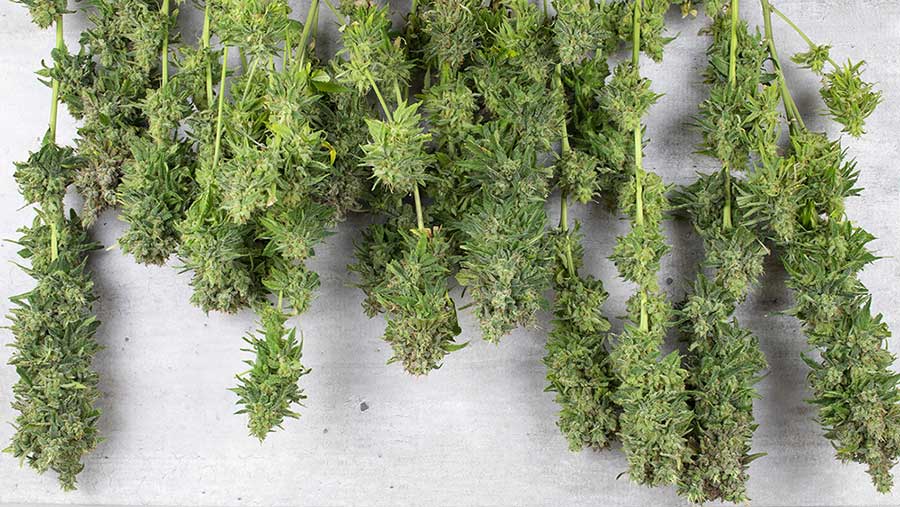
Hang your stalks topsy turvy to dry in a faintly lit, moistness controlled ‘room.’ Generally, a storeroom is adequate, insofar as you can give an air course and keep light out. Make a kind of clothing line for your stalks to hold tight, or get imaginative utilizing garments holders or other family unit things. But don’t worry, we’ll get to it later to help you make your own. 

Keep your drying room around 70 degrees F and the dampness between 45 – 55% utilizing a hygrometer to screen. This procedure can take around 10 days. Then again, you may utilize a work tower drying rack and spot your reaped buds (removed from the stalks) spread out in each different compartment and drape the whole tower in a temperature-controlled room or storage room. 

Step 4

Your buds are dried enough when littler stems snap off as opposed to twisting. On the off chance that any of the stems are still too bendy, don’t expel them as there is still water inside the plant that will discover out, later on, making the potential for shape. 

Keep an eye on your yield each day or so to screen where your drying procedure is at and make vital changes with your wind current, A/C in the event that you are utilizing it, humidifiers, and so on, in the event that you notice your buds appear to be excessively wet or dry during the procedure.

How to Cure Your Buds?

Step 1

Place your recently dried buds into artisan containers, with about 25% breathing room at the top. On the off chance that you utilized strategy 3a in the drying procedure, utilizing great nursery scissors expel the buds from the stalks and quickly place them in artisan containers. Keep these containers at 60 – 65% mugginess, again utilizing your hygrometer to screen. Bricklayer containers are significant over others as they remain totally fixed and don’t give buds a chance to dry out and lose intensity. 

Step 2

Shake it like a polaroid picture! Joking, don’t shake it that hard. Give the container a delicate shake with the cover on to guarantee the buds can move around. In the event that they are remaining together, keep the tops off the containers for a couple of hours, and check once more. 

Step 3

Over the following, hardly any weeks, open the entirety of your containers each other day or something like that. This is designated “burping.” It enables the bud to inhale, ought to there be any additional dampness left, avoiding mold generation. It additionally offers you a chance to examine how the buds are relieving and in the event that you have to haul any out should despite everything they are excessively wet around then in the restoring procedure. 

Step 4

Sample your bud! 

Now that you already know everything about curing and drying your buds, here are some tips on how to make your own racks for it.

Branch Rack

Materials Needed:

  • A branch from a tree: choose any that could handle your newly harvest weed well
  • Thick Rope
  • Twine
  • Scissors
  • And of course, your weed!

Guide How To:

  1. To start, utilize a standard bunch to attach the jute rope as far as possible of the branch, leaving a bit ‘tail’ free.
  2. At that point, fold the twine over the rope and the ‘tail.’
  3. Tie a couple of bunches in the twine as I went to ensure it wasn’t going to self-destruct following a moment.
  4. Next, do something very similar on the opposite side of the branch.
  5. With the weed drying rack completed, tie a heap of your buds to the branch.
  6. Finally, leave a tad of room in the middle of packs to enable air to flow unreservedly as the buds dry.

Macrame Rack

Materials Needed:

  • Scissors
  • Embroidery Hoop: you can choose any size you want for your own rack
  • Small S Hooks
  • Twine
  • And oh, don’t forget your buds!

Guide How To:

  1. Cut six pieces of twin in a length of 10 ft each.
  2. Assemble your strings in gatherings of two and crease them into halves. Circle each collapsed, gathering around the loop. Spot the collapsed end under the circle and force the closures over the band and through the circle made by the collapsed end. Rehash with the other two gatherings and space them similarly separated around the band, around 10-1/2 inches separated.
  3. To make a square bunch lay your four strands from one of your groupings level on a table. Take the outside string on the left-hand side and spot it over different strands. Take the outside string on the correct side and spot it over the string going over, at that point under the two focus strands, at that point through the extreme left circle. Force tight and rehash these means beginning the right. Spot the extreme right string over different strands. Take the extreme left string and spot it over the crossed strand, under the middle strands and through the circle on the left. Draw tight, and you have finished one square bunch.
  4. Keep including square bunches until you have 3 full bunches on each gathering of strings.
  5. 3 inches from the highest point of your square bunches, you will begin the winding. To make a truly winding impact, you just recurrent the primary portion of the square bunch. Lay your strands level. Spot the outside left strand over the rest of the strands. Spot the outside right strand over the string over, under the middle strings, and through the left circle. Force tight. Rehash, continually beginning with the outside left string. (Rather than rotating which side you start the bunch, start on a similar side and the macrame will curve.) Continue the half bunches until your winding estimates 1-1/2 inches. Rehash on the other two groupings.
  6. To make intrigue, separate the strings into up to the minute sets. Place the circle level and settle the strings of two gatherings of strands that are alongside one another level on the table. From the left-hand gathering, take the two strands on the privilege, and from the right-hand gathering, take the two strands on the left to make another gathering of four. Three crawls from the highest point of the spirals get this new gathering together with 2 full squares hitches. Rehash this means with different strands.
  7. 6 inches from the last bunches get every one of the strands together with the half bunch. Pick two long outside strands. Spot the outside left strand over the various strands. Spot the outside right strand over the strand running over, at that point under focus strands, and through the circle in the left. Draw tight and rehash until you have a winding estimating 2 inches.
  8. Add the last square bunches to make a circle for hanging. 6 inches over your huge winding, total three square bunches, climb an inch, and afterward make two all the more square bunches. Trim the strings, and your portable is prepared to hang. Utilize the hole between the gatherings of square bunches to drape your versatile from a snare.
  9. Gathering your buds into packs and tie with string. Supplement one side of the S guide into the circle of the string.
  10. Hang your portable and snare your buds on the ring. Enable your buds to dry totally and appreciate them until one or 2 years from today’s gathering.

So, what are you waiting for? Get your ass up and do it!

Are In Bred Lines of Cannabis Attainable Through Hybridizing?

As a novice breeder, you may feel nervous and uncertain about the outcome of your prime cannabis project. This is normal. All breeders experienced that same anxiety and hesitation in their first grow. Do you have a strain to cross in mind? Are you going for hybrids? Or do you want an inbred offspring? These are the usual questions you should have an answer to before you start hybridizing cannabis. If you are ambiguous still on these things, then you must continue reading this article to help shed some light on the darkness that secludes you.

Breeding and A Long Cannabis History

· Cannabis was the first plant used in the making of fiber for paper and ropes as early as 8000 BCE.

· Canvas was made from cannabis. The word canvas came from the Greek term kannabis and Latin word cannabis.

· Emperor Shen Nung, the Father of Chinese medicine, described marijuana as one of the dominant plants in Chinese medicine as early as 2700 BCE in Chinese history.

· In 1865, Gregor Johann Mendel, an Austrian scientist, began his well-known pea hybridizing cannabis experiments that gave us the basic rules of inheritance (now termed as the laws of Mendelian inheritance). It was through his observations of how certain traits seemed to surface and go through the generations that he concluded some genes must be dominant and others recessive.

· By the middle of the 19th century, most cannabis species were legal almost everywhere in the world, aside from a few Islamic countries.

· In the 1960s, wild landrace sativas began showing up in the United States. Seeds were being grown in greenhouses in southern and central California.

· The 1970s came, and little-known indica sub-species were introduced and soon revolutionized the indoor grow the scene.

· In the 1980s or the “Golden age of breeding,” the West Coast exploded with the cornerstones to almost every strain we breed today. The most popular of these strains include Northern Lights, Hash Plant, Skunk #1, and Big Bud.

· In the middle of the 20th century, hybridizing Cannabis divided into strains producing fiber, seeds, and drugs.

· Cultivars meant for making drugs were forbidden, mocked, and labeled as marijuana – a term that originated from the language of a native Mexican ethnic group.

· Bypassing laws and punishments, the cultivation of psychoactive (high THC) cannabis strains was carried out by stealth to match the high underground demand.

· By the end of the 20th century, cannabis laws were loosened, and the open planting, cultivation, and creation of new strains started. The Netherlands was the first nation to legalize cannabis. In 2015, Uruguay first legalized recreational marijuana, and Canada followed suit in 2018.

A little bit of cannabis history helps you understand the importance it played so many years ago and the part it still plays until now. So, next, we define the word breeding.

What is Breeding?

Breeding is used as a noun that means “a process of combining plants to produce targeted traits.” Breeding purifies and strengthens a strain. A backbone of the cannabis industry, most growers experiment and become breeders to achieve a strain perfect for their needs.

The Mechanics of Plant Reproduction

Cannabis has two chromosomes or a diploid genome, one from the mother strain and another from the father strain. When you breed, you take a male and female plant to cross with each other allowing each to contribute its genes to the child strain.

A copy of each parent plant’s chromosome is supplied by the plant’s sex cell, which is ovule in the female and pollen in the male plants. During reproduction, these cells join together, mixing the two genes in a process called recombination.

Recombination allows the genetic material to become congregated in one area on the chromosome, making the selection and removal of traits easier. This makes it less troublesome to cultivate a strain of its highest potential and a better adapted one.

Cannabis can be reproduced asexually or sexually. Asexual reproduction uses the same plant to be produced again and again. Sexual reproduction involves crossing different parents. There are also vegetative methods that include cutting, cloning, and even division of roots.

To which strain you are to reproduce really depends on what characteristics (size, autoflowering or not, resin quality, terpenes, yields, color, effects, resilience, THC, and CBD levels and resistance), what species and type of breeding you opt to select. You may choose from an indica, sativa, or ruderalis. Indicas are short and bushy plants. Sativas are tall and tree-like, while ruderalis are autoflowering strains. Mix and match any two or three strains as inbreds or hybrids. Here is a quick rundown on the 2 types of breeding.

Two Types of Breeding: Inbred Lines vs. Hybrid Lines

Inbred Lines or IBL-

Breeding of a mother to son and daughter to father, a transfer from generation to generation from the same family to ensure that a stable trait of marijuana will be produced and show little variations on their phenotypes. It simply is the act of crossing a group, variety, or family of plants with each other. The offspring cannabis from inbreeding is considered an inbred line. It takes lots of time, patience, and hard work to achieve inbred lines. These are paid off with good results of having healthy uniform plants that tend to produce consistent offspring. A good example is Skunks. They were hybridized, and after many generations, they developed into the Cheese family. Other examples of inbred lines are Blueberry, Columbian Gold, and Thai.

An extreme form of inbreeding, “selfing,” happens when a plant pollinates itself, producing a new strain with the same genetics. This results in “stale genetics” or “inbreeding depression,” where the lineages produced become less vigorous over time. This can surface as a reduction in potency or a decrease in yield or rate of growth. To deal with this dilemma, breeders would often hybridize or out-cross the plant to restore health once inbred depression show.

Anyhow, here are some signs that would help you determine when a line is becoming too closely inbred:

It becomes more prone to disease.
Exhibit new colors from what is expected of it. From a generation of dark greens, a lighter shade of green may appear along the way.
Abnormalities or simple undesirable traits may surface through the generations.

Hybrid Lines

When you recombination vastly different genetic information by crossing a true inbred line with another strain from a different family or from a distant relation, then a hybrid line is produced. This improves hybrid vigor that increases genetic diversity and the health of the lineage. Tangie is one of the famed and loved hybrids. Created between a cross of Cali-O and Skunk by Crockett Family Farms, this strain is widely sold in the online market. A wide variety of phenotypic traits, such as varying heights and leaf shapes are noted from one bag of seeds that all share the same Tangie genotype. Despite their peculiarities, the characteristic tangerine aroma will be the same for all of these plants.

A man-made attempt at customizing cannabis with characteristics of different species, here are 5 kinds of hybrid strains that can result from your crosses:

1. An Indica plus indica: Two different indica varieties are crossed together.

2. A Sativa plus sativa: Two different sativa varieties are combined together.

3. An Indica plus sativa: This variety will have characteristics of both, but is more potent on the indica side. It may result in a short plant with light-colored buds.

4. A Sativa plus indica: A hybrid strain with dominant characteristics of a sativa . However, it has traits of both varieties of cannabis. It could be a tall and lanky plant with resinous buds, for example.

5. Autoflowering hybrids are strains that have been mixed down the generation with ruderalis genetics.

Hybridizing In Bred Lines Simplified

Are you ready with answers to the questions we had earlier? Have you picked a female and male strain for breeding? Did you carefully choose characteristics you want to flourish in your plant? Are you going to breed two strains from different groups? Or do you want to strengthen your plant’s traits through inbred lines?

Still having a hard time? Life can be easy once everything is simplified. Let’s summarize what we have learned. Breeding cannabis involves choosing the best female and male plant for pollination. You should know what characteristics you want to boost in your strain. Take note of a strain’s color, smell, amount of yield, auto-flowering or not, CBD level, and the cerebral and physical effects it gives, etc. Once decided, choose from inbred or hybrid breeding. Hybrids, usually a mix of indica, sativa, or ruderalis, bring about diversity in the plant’s genetics through time. If you want to go for stability in your plant’s traits, inbred lines are perfect. Just remember not to overdo it too much as it losses vigor along the way.

That was smooth sailing, wasn’t it? From here, you can go ahead and turn that anxiety into excitement. Start your garden with inbred lines and hybrids that are easily attainable through hybridizing.

Tips On How to Dry Weed Buds Fast

What Are Weed Buds?

Marijuana plants, or cannabis, if you prefer, is considered a unique plant that can be utilized for a variety of ways. Mainly, marijuana is used to enhance the mood as well as to cure certain illnesses. Cannabis plants are grown indoors, outdoors, or in a greenhouse and have a wide range of strains that offer different flavors. They need both basic and some specialized, caring techniques to grow healthy and beautifully. However, the most favorite part of cannabis enthusiasts is the buds. Along with this question, how to dry weed buds fast?

From the seeds to the flowers, and the buds of a marijuana plant, growers can find some delight. However, the most favorite part of cannabis enthusiasts is the buds. Marijuana buds are the most flavorful, tasty, and aromatic section of the plant. They can smoke it or extract oil that can be added to other goodies.

The Right Time for Weed Bud Harvesting

Growers must be alert in checking their crops, especially during harvest time. Harvesting too early and too late may result in a low-quality of buds. Collecting the plants at the right time is as important as how one grows cannabis. They might lose potency, and the yield may be less.

Therefore, to help seasoned growers and newbies, here is a list of the steps to follow for the right time for harvesting your beloved crops.

1. The Knowledge of When the Right Time for Harvest Is

Either from a manual or research you conducted, you should keep in mind the exact day for harvest.

2. Keen Observation and Eyes for Visual Inspection

You should be able to notice considerable changes into the appearance of the sensitive parts of your cannabis like the pistils, buds, and the leaves. They tell so many things about you cannabis aside from ripening.

3. Use of a Magnifying Tool

There are some parts and attributes that are not visible to the naked eyes, which calls for a little help of devices like the magnifying glass to see even the smallest changes in your crops.

Preparing the Weed for Consumption

When you already know the right time for harvest, the next thing to do is perform the yield of cannabis crops.
To begin the harvest, you must also prepare the necessary tools listed below beforehand:

Trimmers

Specifically, this includes handheld scissors, mechanical, and electric trimmers, which are very important in the process.

Trim Trays

This tool helps in holding harvested crops as well as in catching the excess kief and sugar leaves through its wire screen. It makes harvesting easier since you do not need to take a table with you during collection.

Gloves

This hand tool shall protect your hand in terms of the sticky resin of the plant, including the stinky odor that may last long after trimming and then prevent the contamination of the buds. Your gloves may be nitrile or latex.

Lines

Clothing lines are where you are going to hang the plants. It doesn’t matter what material it is, but make sure that it is sturdy enough to hold the cannabis up until drying is done successfully.

Tips on How to Dry Weed Buds fast

After harvesting your precious weeds, what you need to prepare for next is the drying of the marijuana buds. Just like in harvesting, specific steps need to be followed in doing it the right way.

Tip #1 Use Brown Bags, and Computer Fans

Brown bags that you get from bakery and groceries are suitable materials for drying up cannabis. Leave the marijuana in the brown bag for 2 to 3 days and then another three days for another complete drying. After that, use your laptop computer for the next step. Notice the exhaust fans that release hot air for keeping the internal parts of the computer working well. Place the half-dried cannabis buds in a brown bag to the direction of the hot air. After 10 minutes, the herbs will be ready.

Tip #2 Sun-dry The Weeds

This is the traditional way of drying the buds that have been practiced many years ago. However, this may not be the most efficient method to perform because the sunlight and the heat can lower their quality. If you do not find this one successful and productive for your purpose, try using a rock to weigh down the bud bags exposed in direct sunlight and wait for a day or two during warm or sunny weather. After that, you shall have a bag of crunchy buds to smoke.

Tip #3 If You Have a Drying Room at Home, Convert it Into a Drying Room

With the boiling water keeping the room cozy and less humid, drying the bud is undoubtedly natural. Just keep them in that room for a day or two.

You must not feel bad or tired of the things that you must do for your marijuana crops, for at the end of the process, you shall receive the most beautiful reward of great enjoyment.

Learning How 12/12 Cultivation System Works In Cannabis Growing

Would you like to go from seed to bud faster and less expensive? A quicker, space-sparing and practical approach to development is the no veg, seed to bloom, 12-12 light cycle strategy. Is 12/12 from seed justified, despite all the trouble? Is it a decent method to get enormous yields as fast as could reasonably be expected? 

The answer is no; however, there is truth to the thought behind starting the blooming stage as quickly as time permits! At the point when changed marginally, a similar essential system will give you a lot greater yields while adding next to zero additional time before collect. 

What is the 12/12 Cultivation System?

12-12 just alludes to the long periods of light and haziness; a cannabis plant is presented to 12 – 12 of each. Ordinarily, a cannabis plant is presented to an 18-6 light cycle. This tells the cannabis plant conditions are useful for development, and it centers around working upsize and foliage. At the point when the light cycle is changed to 12-12 (either normally or through human intercession), it tells the cannabis the seasons are changing, and the time has come to blossom. By compelling a 12-12 light period from the beginning, the cannabis plant goes straightforwardly into a blossoming, in an offer to imitate. You are basically fooling the plant into a deduction. The developing season is reaching a conclusion, so it needs to deliver blossoms as soon as possible.

For quite a long while, it has been doing an elective method for developing inside, setting aside time and cash on the power bill. It is a straightforward procedure that doesn’t require noteworthy additional endeavors, just a little better control of culture parameters. 

We talk about the way of life at 12-12 from seed. Indoor crops are generally constantly offered four to about a month and a half of development to seed before changing their light cycle and pass them to blossom.

Developing 12-12 from seed isn’t just conceivable, yet in addition will spare us vitality, which converts into cost investment funds for our pockets. 

The way of life procedure is indistinguishable, however, with a couple of minor alterations as definite underneath for anybody keen on evaluating this technique.

12/12: Its Method

Developing with a 12-12 photoperiod is an answer for space and asset issues. This strategy disposes of the vegetation period of development and powers the plant to go straight into blossom from a seedling. Yields are lower than that of a normally developed cannabis plant; however, results are acquired a lot quicker, with a couple of favorable circumstances.

Growing 12-12 is as basic as changing the planning on your light cycles, giving your plants equivalent measures of day and night directly from when they grow. The plants will appear to be unique to a cannabis plant that experiences vegetative development. Photosensitive hormones in cannabis make the most noteworthy point the largest cola. This technique is everything except it ensures just fundamental bud development on each little plant. Basically, you will grow a cola with a couple of short, matured side branches – with the plant fundamentally being a bud in itself. Make certain to stake your plants. 

Everything to which you would focus on a typical development stays unaltered are still similarly as significant. pH and water quality, supplement blending, bug control, develop medium conditions, EC, and ppm all still assume their significant jobs in the wetness and weight of your completed item.

Developing along these lines still requires all the information that would be expected to blossom plants with some other strategy, and upkeep schedules still stay unaltered. After weakened supplements, while still youthful, treat your plants as you would during an ordinary bud cycle. Be that as it may flush more regularly, like clockwork probably, in order to maintain a strategic distance from salt development in the little pots. 

The 12-12 lighting strategy makes the development cycle 7-9 weeks all in all, as opposed to any longer time required when giving plants a vegetative stage. For the space-obliged, and those ready to trial and give it prior, it very well may be a fantasy worked out as expected.

Finished with master practice and a willing strain of Cannabis Seeds, it isn’t obscure to create 1 gram of ganja for each watt of lighting. That is a noteworthy 250g in 7-9 weeks for a 250W light in a little organizer!

12/12: Choosing The Right Genetics

One of the requirements to develop with this strategy is choosing the correct hereditary qualities for indoor. This is habitually done by choosing at least one known strains or strains with favored hereditary qualities and afterward, growing a number of plants to discover which display the attributes generally attractive. These hereditary qualities ought to regularly yield in any event 1 gram for each watt every long stretch of blossom. The Indica assortments don’t develop quick and simply sprout to twofold their stature during blooming; they additionally don’t build up the root framework much like different assortments, so absolutely it’s not prescribed to be refined to 12-12 with Indica assortments. 

Sativa or hybrid diversities are generally appropriate for this harvest. Their energy and developing root advancement during the entire culture make them a perfect contender for this assignment. 

The way of life must be made beginning from seed or from cuttings since the cuttings need a time of adjustment and pre-blooming root advancement.

Plant attributes are commonly chosen for include: 

  • Generally, yield 
  • Time of enjoyment
  • Protection from bugs
  • Geometric attributes (consistency, smallness, blossom thickness, and so on.) 
  • Shading 
  • The flavor and additionally fragrance 
  • Advance to an end purchaser (known as “pack offer”) 
  • Psychoactive characteristics 
  • Trichome thickness and type (stalked or sessile)

12/12: Advantages

  • Lights have full infiltration to the floor. Watch out for the dirt wetness as lights will dry the medium snappier than if secured by a shade 
  • This strategy is quick. 7-9 weeks all things considered 
  • Less dramatization cutting as there are far fewer sugar leaves to manage 
  • Plants are simpler to deal with for upkeep 
  • Can develop in minor zones 
  • Spare mileage on moving parts 
  • Economical-friendly

However, there’s only one significant issue for 12/12 from seed cultivation system. It causes hindered development and little yields. The outcomes in yields that are frequently under 1 ounce for every plant, considerably under solid develop lights.

12/12: Start Your Own

Utilize a little parcel of your blossoming room (or a different bureau or grow box) for planting under two or three glaring lights. Start 19-22 days before you intend to reap. Utilize 9×9 cm or 10 x10 cm plastic compartments loaded up with soil, or use Rockwool starter attachments of 7.5×7.5 cm. On the off chance that you choose to utilize starter plugs, flush them well and include a minor piece of nourishment to the water. Spot the fittings together firmly and try to include a layer of 2 cm Hydrodensa or perlite underneath the starter attachments to avoid root harm. While sprouting in starter plugs, make a point to include 1-2 cm Hydro or developing soil over the seed.

To ensure you get even germination, absorb your seeds for 50 hours wet cotton fleece before putting them in compartments or starter plugs. At customary, ordinary indoor temperatures planting the seeds will develop inside 50-55 hours. Every one of the seeds, including the ones that have not so much opened, are then set in the following medium. Spot one seed in every compartment, ideally each at a similar profundity of 0.7 mm! Ensure you use Hydrodensa or an exceptional seed-starter blend containing some sand, or blend in any event 40% argil with the fertilized soil. 

On the off chance that you avoid this progression, the seed coat (or testa) on a portion of your seedlings will adhere to the leaves and go along when the seedling grows. The plant won’t stay stocky and minimal as we need; however, it will begin to extend and become leggy in light of the fact that the little plant ‘thinks’ it is still underneath the dirt and keeps on extending looking for light.

On average, your plants will arrive at a tallness of around 75-80 cm. It might sound peculiar to develop plants under 12 hours, yet you will be flabbergasted. By adhering to 12 hours, the seedlings are compelled to very quickly pick sex with the goal that when you collect three weeks after the fact, your crisp women are prepared to consume the develop room since you have cut off the guys around day 16-18. So as to get enthusiastic plants, it’s significant to give your seedlings a great deal of splendid direct light from the earliest starting point. The fluorescents should be near the seedlings, only an inch over the foliage is perfect. 

On the off chance that that in one way or another is incomprehensible at most two inches. The best fluorescents to utilize are Philips 33 Cool White! Keep away from Cool White Deluxe! Add a few Philips 830 to get enough of the red range. One red to each white is perfect. Lack of red light makes such a large number of guys develop. On the off chance that your store doesn’t convey Philips fluorescents, they typically have reference tables accessible that show the comparing shades of different brands.

There are a few haters of this technique; however, many love it. The individuals who despise it regularly have not really attempted it. It is tied in with giving it a go and seeing what works for you. Regardless of whether you rule against it in the wake of attempting it, everything extends your insight as a cultivator.

Expert Tips For Energy-Saving Marijuana Growing

You’ve heard of the many names of marijuana. And the names seem to be endless. That only means that the production of marijuana increases as the consumer demands a more customized strain. With increased competition, prices also went down. In one of the states in the USA, a pound of hash was sold for $750 in 2017 and went down to $500 by the end of 2018.

To stay afloat, producers now have to tighten bolts, particularly regarding their energy costs, as these partake 20 to 40% of the final product’s cost. They turn to the efficient use of energy to help the business maintain revenue. This article will discuss energy-saving marijuana growing and some helpful tips on saving energy. Let’s start the Go Green Journey.

Energy-Saving Marijuana Consumption of a Cannabis Grower

Here are some shocking facts (for non-breeders) regarding the use of energy resources in growing marijuana.

· Indoor systems use fans and lights mostly on a 24/7 operation.

· Some places (where cannabis is legalized) experience blackouts traced to marijuana production facilities.

· Indoor commercial cannabis production (AKA cannabis grow room) can consume 2,000 to 3,000 kilowatt-hours (kWh) of energy per pound of product.

The amount of energy used for breeding our beloved plant is overwhelming. The next three sections will talk about the impact and costs on the energy sector and the culprit and reason for intensive use.

The Impact of Energy-Saving Marijuana a Growers on the Electric Grid

As you can grow your own pot (if cannabis is legal in your state that is), you are still limited to a specific number of cannabis plants for personal use. When you start propagating marijuana, you will be part of the 1% of electricity consumed in the USA by cannabis breeders. In some markets where marijuana was legalized on an earlier date, growers use up to 4% of the state’s electricity. That’s why many utility companies are now actively collaborating with commercial growers to identify energy efficiency measures. Legislatures also are placing restrictions on the types of lighting that growers can install in some states.

The Cost of Electricity in Cannabis Production

If you live, let’s say in Massachusetts, the average commercial/business price per kilowatt-hour is 16.14 cents. A maximum of 3,000 kWh will cost you $484. An ounce of marijuana will cost you about $340. If you convert to pounds, that will generate around $5,440 in retail revenue. So to grow, one pound of the hash will be equal to paying $484 for 3,000 kWh generating $5,440 in retail revenue. That’s a biggie on the electric bill and on the budget.

The Culprits of Electrical Consumption in a Grow Room

In the operation of a marijuana grow room, electricity is used for lighting, ventilation, exhaust fans, cooling or heating system, and water systems. Ventilation, cooling, and humidifying systems are the culprits with lighting as an accomplice. The rest have just minor roles to play.

Why is there an Intensive use of Energy-Saving Marijuana?

Outdoor farms are not energy exhausting, unlike indoor growing operations. However, growing marijuana indoors is more controllable than the unpredictable setting in the outdoors.

Growing Cannabis is energy extensive because light and air are essential in the optimal growth of a plant. Light is needed for photosynthesis for the plant to create its own food from air and water. Due to the strict temperature and humidity needs of the plants, growers invest costly in air conditioning, ventilation, and humidification. Humidity must be kept at 70 percent and lessened to 50 percent during the flowering stage.

The intensive use of energy in growing marijuana calls for energy-saving tips from the experts that can help you conserve precious energy. Here are more than a handful of them:

Expert Tips on For Energy-Saving Marijuana Growing

1. Find the appropriate size for your grows

If you are using cannabis for personal use, then you may choose for a smaller sized grow room. But, if you are a licensed commercial grower, then take into consideration the type of strain, the amount it yields, and how much effort you will put in propagating and marketing your cannabis bud.

2. Take your plants outside

The outdoors can be great for the plant since it will receive natural sunlight. Your indoor growing equipment can also take a break by exposing the plant outside. Be sure, though, that you have the proper enclosure that is away from public view.

3. Buy efficient lighting equipment

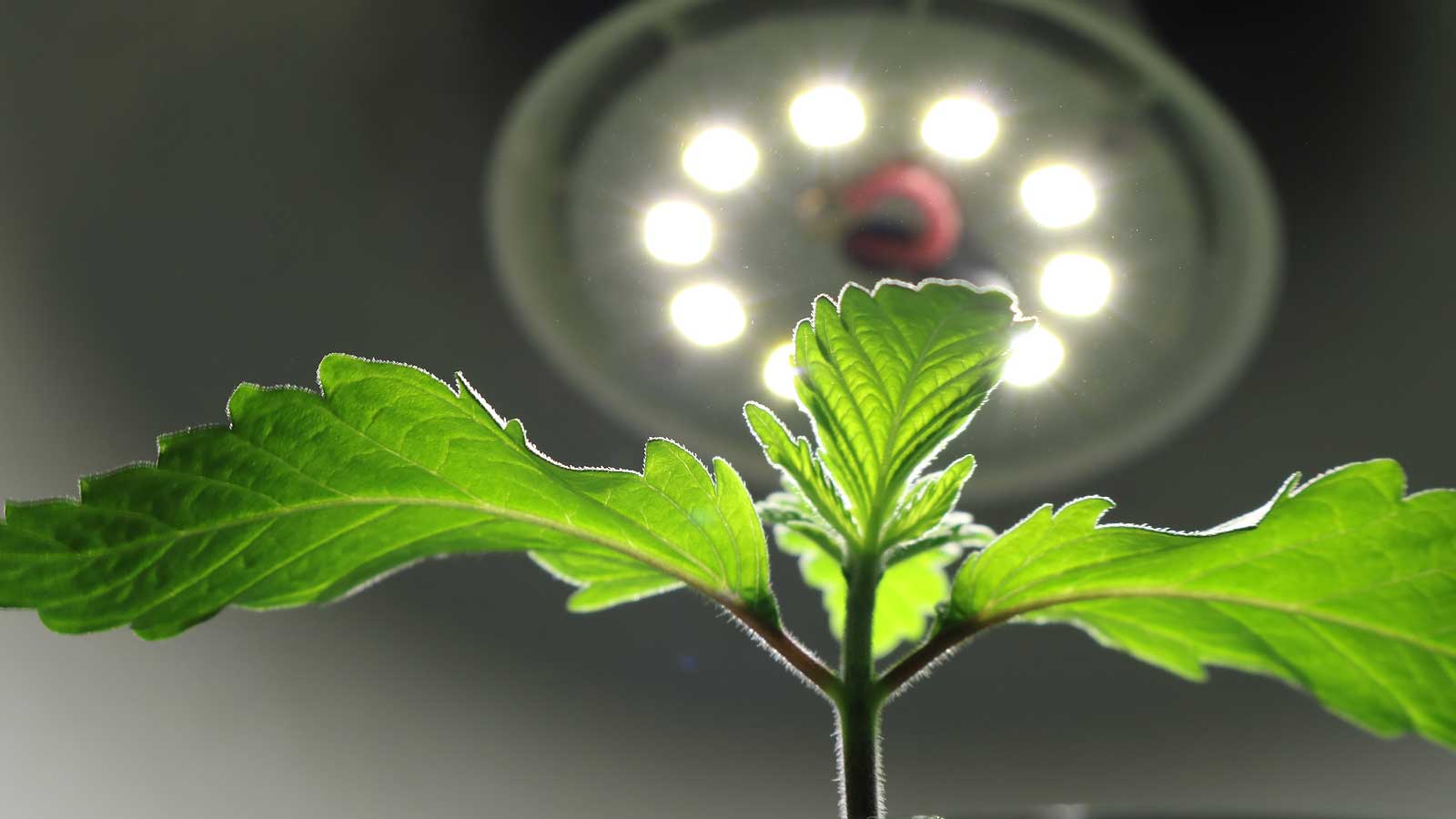
The traditional high-pressure sodium light has a high wattage and runs hot that you have to increase coldness in your room by increasing air conditioning. LED grow lights last longer, run cooler, and use about half the energy of traditional grow lights. There are a lot of LED grow lights in the market that differs in quality and energy use. Additionally, some offer rebates for low-energy LEDs that are top quality for the indoors.

You can also try compact fluorescent lamps or CFL lights during daylight. CFL during the vegetative stage, along with sunlight, will cut your costs and give you better buds.

4. Put insulation around your grow space

Growers unknowingly overuse their heaters, cooling equipment, and humidifier because they’re preventing outdoor air from entering their growing space. Leaks also allow indoor air to escape. The solution to this is to air seal and insulate. Air sealing and insulation projects are done by a Home Performance with ENERGY STAR® contractor.

5. Upgrade on your cooling and heating equipment

Traditional HVAC systems bring in outdoor air to save on cooling the ambient air. This isn’t ideal for cannabis growers as it can also mean introducing pests and contaminants that cause mildew and disease. The revolutionized cold-climate heat pumps deliver cooling and heating with little energy use.

Larger growers (with more than 6,000 square feet of canopy) may find it more cost-friendly with a chilled water system. In this system, chilled water circulates and removes heat from the building before returning to a chiller to cool again. You can slow the fan speed and reduce the water temperature for better heat removal, without a separate dehumidifier.

6. Install an efficient humidifier

Growers use humidifiers to prevent mold. Be sure to get the smallest model in proportion to your grow space to avoid unnecessary energy use.

7. Stay Clear of Auto-Flowering Strains

When grown indoors, they require 18 or more hours of light per day, depending on the size of your grow. The feminized strains only require 12 hours of light. Try moving your plants outside so they can soak up some natural light too.

8. Go for the Screen of Green Method

The best way to maximize the amount of light your plants are getting without leaving them in the light for longer is by using SCROG. A screen is placed above the plants to anchor the plants as they are spaced out evenly to the canopy. This allows more light to reach lower tiers and will surely make the plants healthier and the electric bill lower.

9. Learn more about Cannabis Energy Efficiency Incentives

Many utilities have developed energy efficiency programs to collaborate with cannabis grow operations. Here are some:

· Excel Energy (Colorado and Michigan)

· National Grid (Massachusetts).

· Pugent Sound Energy (Washington)

· Sacramento Municipal Utility District (California)

They have programs such as rebate and incentive programs for HVAC and lighting upgrades.

If you are a licensed commercial cultivator, your local utility company is bound by law to service your account. You are entitled to enjoy and take part in any of the incentive programs your utility offers.

10. If you have enough budget, you can rent out the STEM box.

Licensed growers can rent the STEM box and grow plants in them. A STEM box is a prebuilt modular grow system. It uses science, technology, engineering, and math to create pot the most energy-efficient way.

It is a vertical, self-contained, hydroponic pot farm. Roots are mounted in 24 plastic columns that slide in and out for harvesting. They are automatically fed precise amounts of water and nutrients. A 5-ton air-conditioning system keeps 240 plants happy. The state-of-the-art bright LED lights are powerful and positioned just right to maximize plant canopy exposure.

11. Growers embrace the Internet of Things for energy efficiency

More cultivators are installing internet-of-things (IOT) technologies in greenhouses to optimize the use of power, water, and nutrients.

Tech-savvy growers are going to build greenhouses with sensors to track variables such as heat and humidity. It is used to assess growing conditions throughout the facility and to reduce wastage of raw materials such as energy and water.

The level of environmental control is equal to the most advanced building management systems found in the commercial and industrial power sectors. It also gives a more granular picture of the greenhouse environment, allowing growers to recognize the presence of localized microclimates that could affect cannabis yield.

12. Growers might opt to use microgrids to cut energy bills

Combining solar energy with battery storage and co-generation plants is what microgrid is all about. Sadly, funding a microgrid installation is a problem for most growers. It would cost $3 million or more to install a microgrid. Banks would also be hesitant to lend money to businesses that are operating outside of federal law.

To overcome this problem, a company is working with niche investors to offer microgrids with a full finance package. Let’s just wait and see if the technology would be worth all that money.

Reminder to save energy

From the mouth of the experienced growers to the eyes of the novices, the tips are “gold” when wisely used and not just read. We need a constant reminder to conserve energy not only as a cannabis grower but as a steward of the earth.

Genetic Feminized Cannabis Seeds Are Genetically Engineered: Fact or Fiction?

Nearly anyone who wanted to grow crops or homes livestock for a living practices the ancient art of selective breeding. Those who aren’t willingly put themselves at a significant disadvantage and break with an established standard, or to use the more up-to-date method in cultivation.

Cautiously breeding plants or livestock to reduce or eliminate such characteristics and magnify others; in the development of a better plant, a very tasty fruit with high yields and good pest and blight resistance is something that has been done for centuries due to its great significance.

And what freaks out some people and some nations, including Europe, to ban GMO crops.

Whereas others, chief among them the United States, to accept warmly lab-honed crops, are that you can breed a certain gene in or out of one generation instead of 20.

Genetic feminized seeds are seeds produced in a way that maximizes the likelihood of female plants being the resulting cannabis plants. Or, it induces a normal female and not a hermaphrodite. This is essential because only female cannabis is capable of producing buds, which for most growers, is the main concern and the best beauty of it. The rate of success is labeled as about 99 percent, depending on the seeds you buy (you need to take some precautions in buying).  This ensures that feminized plants can produce the expected results efficiently and effectively. Thus, saving you from more works or needed to accomplished strategies.

“Feminized seeds are genetically engineered,” this is a common myth that worries some growers, but it is important to distinguish between “engineered” and “modified.” Therefore, let us define what is “genetically engineered” and “genetically modified.”

Genetic engineering involves the introduction of DNA into other species, such as lettuce and bean connections. Genetic modification, on the other hand, includes modifying the breeding process, which can occur naturally, ensuring that the whole system stays normal.

Cannabis has been genetically engineered for the underground and medical markets, but not using the modern methods that get called “GMO.” The alteration of cannabis genetics accomplished by combining traditional breeding methods with sloppy, “old-school” techniques such as chemical mutagenesis and induced polyploidy.

In other words, different business people used toxic substances to cause genetic changes, or used colchicine to induce the plants to double the number of chromosomes in each cell. Some of these plants were growing better and/or producing more THC.  Modern marijuana is, therefore, so much more powerful.

We can conclude that some marijuana strains or companies already genetically engineered some feminized Cannabis Seeds. Even though it is not surprising to know that, we should by far say that it is normal in this new era.

Application of Genetic Engineering

Genetic engineering techniques are used only when all other techniques have been exhausted, i.e., when the feature to be introduced is not present in the crop’s germplasm; the feature is very difficult to improve by conventional breeding methods. And when it takes a very long time for conventional breeding methods to introduce and/or improve this feature in the crop.

Genetically engineered plants are commonly referred to as transgenic crops or GM crops. Current plant breeding is a multidisciplinary and organized system in which a large number of methods and elements are used and incorporated into conventional breeding techniques, bioinformatics, molecular genetics, molecular biology, and genetic engineering.

Comparing Conventional Breeding and Genetic Engineering

Conventional Breeding

Genetic Engineering

§  Limited to exchanges between the same or very closely related species.

§  Little or no guarantee of any particular gene combination from the million of crosses generated.

§  Undesirable genes can be transferred along with desirable genes.

§  It takes a long time to achieve the desired results.

§  It allows the direct transfer of one or just a few genes, between either closely or distantly related organisms.

§  Crop improvement can be achieved in a shorter time compared to conventional breeding.

§  Allows plants to be modified by removing or switching off particular genes.

And now, let’s bring some of the benefits and disadvantages of a genetically engineered seed.

Benefits of Genetic Engineering in Feminized Cannabis Seeds

  • Genetically engineered seeds implanted with soil bacteria proteins called Bacillus thuringiensis (Bt) take on the insect-killing abilities of the proteins. Then crops grown from these seeds are safe from a specific plague (researchers say that Bt seeds are also less likely to spray insecticide).
  • The field can then be sprayed, leaving the modified plants unharmed.
  • Faster growing strains.
  • Medicinal seeds that could be used as vaccines or other medicines.
  • It can withstand weather extremes and fluctuations.
  • It allows farmers and growers to preserve the good quality of strains more efficiently by using special substances.
  • With genetic engineering, growers will have more income.
  • Higher yield but lower costs.
  • New kinds of products.

Disadvantages of Genetic Engineering in Feminized Cannabis Seeds

  • It can pose significant allergy risks to people.
  • When we remove a certain pest that is harmful to crops, we could also be removing a food source for a certain species.
  • It could prove toxic to some organisms, which can lead to their reduced numbers or even extinction.
  • May contribute to the reduced effectiveness of some medical ailments.
  • May impose unnatural taste.
  • Might encourage authorities (some) to implement higher tariffs to growers.
  • It can be a threat to human health as it can create a new type of disease.

But here comes another real question is the rising of the other type of altering the genes, the “Genetically Modified Organism,” which is by far different on to genetically engineered.

And since cannabis Sativa, both the taxonomic definition of recreational marijuana and the source material for CBD, is one of the hottest agricultural product in the word, the obvious answer to the obvious question: “Is there GMO weed?” It’s almost certainly yes, and there some stories about it.

Genetically modified crops are almost unheard of outside traditional industrial farming and are not currently available to the home gardener. The industry is highly regulated, and the alteration is the point of sale of such seeds. It would be almost impossible to buy Genetically Modified seeds erroneously.

Pharmaceutical companies are the first people wanting to produce GM weed; they have the cash to make that possible. They are on a wave’s edge as medical marijuana begins entering conventional medicine. At the moment this industry has an annual valuation of just hundreds of millions, but this business will grow exponentially, in a few years I expect the drug market for marijuana medical drugs to be worth literally billion, as cannabis starts to enter the mainstream medicine of pain relief, MS, ADHD, sleep problems, insomnia, cancer treatment, etc.

Genetically Modified marijuana could be produced to expand into large plants in the “leaf” form that could produce enormous amounts of harvest over perhaps several years.  Nonetheless, if and when the pharmaceutical companies begin to realize the true financial medicinal promise of ganja, Genetically Modified hemp will be pursued objectively.

Genetic feminized Cannabis Seeds could be genetically modified by modifying individual genes and specific parts of plant DNA in a way that specifically promotes the development of certain cannabinoid compounds. Natural cannabis contains more than 85 cannabinoid compounds, the most common of which is THC.

Pharmaceutical companies would find they have to persuade everyone that it is not possible to achieve the effects of a unique cannabis drug with regular plants. We will cultivate their own raw materials by embracing medical marijuana and use the various active ingredients of different medicines in different combinations. It is the perfect business model, a raw product that is easy and cheap to cultivate and numerous drugs, all with very little prices.

Pharmaceutical companies will invest heavily in the genetic engineering of a marijuana plant that generates ultra-high levels of the entire range of cannabinoid chemicals. The aim will be to remove and separate them from thousands of tons of bud into individual cannabinoids on an industrial scale.

I expect to find their way into drugs for very specific medical reasons until single cannabinoids are isolated. This is the only way to eliminate the “risk” of imported cannabis to pharmaceutical companies; they will simply say their formulations are more successful because they are more advanced.

Meanwhile, through working with growing cooperatives, the traditional cannabis seed breeders will continue to make the most useful contributions to the medical marijuana movement. Personally, I am sure that all marijuana is medically effective, but there are some strains that the medical users of marijuana often know better.

So maybe in the not-too-distant future, we’ll see genetically modified cannabis. I think it’s going to take five years to get the confidence to reveal plans to try it, and another five years to show us the results.

I’m sure the medical marijuana campaign will be very interested, but have you ever thought what might be the consequences and interactions for the average stoner? Can Genetically Modify marijuana offer you weed that is radically different from what we enjoy today? Maybe weeds that don’t stink when you cultivate them, or weeds with a different buzz? As ridiculous as these questions sound, I plan on them being posed for real one day.

Cannabinoid Biosynthesis: Reshaping Traditional Extraction Techniques

The marijuana or cannabis industry is, however, faced with lots of road-blocks. If it’s not issues concerning its legalization, it will be its cost of commercial production, the cannabis market is becoming a challenging sector with its numerous issues, but don’t lose hope as this will soon be a thing of the past.

A leading producer of medicinal cannabis, Organigram inc., however, made a whopping $10 million investment in Hyacinth biologicals, bolstering its access to the biotechnology production of bio-identical marijuana recipes in a laboratory without expensive growing process. All this is done through a process called cannabinoid biosynthesis.

Cannabinoid Biosynthesis, what is it?

In summary, it is an enzyme-catalyzed procedure which points to the production of a hard chemical substance from a basic pre-cursors in a living-organism. As regards cannabis, bio-synthesis might be utilized to alternate a cannabinoid which biologically, is identical to the ones provided by the material, not like the synthetic producing of cannabinoids.

It involves the insertion of a gene into yeast or similar organisms like E. coli, and allowing it to grow from three to five days intervals, and then utilizing the proprietary enzymes to produce the molecules into different cannabinoids

Human biology: Its role in the Cannabinoid Biosynthesis Process

As we continued our discussion, the endocannabinoid system is very vital in maintaining body physique. Science claims that cannabinoid and other compounds of cannabis plays an important part in regulating various physiological-systems in the human body and brain.

Aside from its legal delays on research ecosystem, a lot of minor cannabinoid takes place in bits such as .1, .01 or even worst still, .001% of the plant-material, thereby skyrocketing the cost of astronomical research. With cannabinoid biosynthesis, the cost of research methodology is reduced, making it very easy to carry out medicinal research discoveries and the understanding of the human endocannabinoid system (ECS)

Impact of Biosynthesis on the Cannabis Industry?

Traditional cannabis making has encountered lots of setbacks recently, which includes legalization, production costs, and also lots of fake products in the market.

As the manufacturing of synthetic cannabinoids, it is a potential avenue of running over the restrictions or rather the prohibitions of agricultural cannabis production. A lot of efforts in this area, however, never materialized. Biosynthesis is a very powerful technology that has a great impact on the manufacturing of cannabis.

  • Volume problem; the amount of produced cannabis gave rise to little amounts of cannabis for medicinal purposes.
  • Cost of savings; biosynthesis, however, might mean scaled manufacturing/production with half of the whole cost reduce or even bypassed.
  • Consistency; the increasing demand for cannabis production shows means that significant cannabis on resources. Strain-plants demands lots of watering, electricity and also land for cultivation. Strain ingestible and derivatives add up to a big extent, market sales. Biosynthesis helps to lower the production time and process if applied.
  • Cannabinoid; we have not yet left behind the understanding of minor cannabis and the endocannabinoid system. The access and the cost of testing, so to say minor cannabinoid. With biosynthesis, the cost of testing these new minor cannabis is lowered or even avoided.
  • Pure-cannabinoid, InMed, which is a Canada based biopharmaceutical company, makes use of biosynthesis to produce cannabinoid products with high purity, with no traces of pesticides and with a consistent fashion factors existing-cultivation procedures that cant is accomplished easily.

Leading Cannabinoid Biosynthesis Companies

Biosynthesis is microeconomics in contact with science and drawing increasing interest in the potentials of cannabis. Without sufficient cannabis-related products to carter to the increasing demand, it led to price skyrocketing.

As seen in the same way as Genentech made access to insulin much easier. However, insulin was gotten from the pancreas of cows and pigs and as well as aspirin being produced from the bark of the tree. Below is a list of the company into cannabis biosynthesis.

  • Hyacinth Bio; This is a biotechnology company having its base in Montreal and is the leader in the area of cannabinoid science.
  • Anandia Labs; this company was bought by aurora cannabis in the year 2018. Anandia Labs is a leader when it comes to cannabis testing, genetics, and researching and development.
  • Ginkgo bio-works this company was founded by MIT scientists and had a partnership with Canadian LP, Chronos group, and it has become a leading cannabis company.

There are many ways of cannabis extraction and removal from its plant matrix, according to pharm-out consultants. They posited that medicinal marijuana has considerable experience in cannabis extraction signs and processes.

This team of consultants promises to give out detailed information on the different alternatives of medicinal marijuana extraction methods and designs to extract strain materials into various chemical segments. These processes are used to separate particular compounds, such as this listed 113 cannabinoid, inclusive of medicinal cannabinoid products and medicinal cannabis having THC content.

Commonly medicinal marijuana extraction processes are as follows;

Medicinal marijuana extraction

Medicinal marijuana depends on the alcoholic solvent, like ethanol, which dissolves the strained material, usually the filtered, and going further, removing the alcohol employing evaporation.

However, there are international regulations on the residual solvents in pharmaceuticals. The major challenges faced recently is the polarity of these solvents, which means that its tendency to have a mixture of water and dissolve water-soluble molecules such as chlorophyll.

It should be noted that there are some regulations and standards in the solvents that are permitted for pharmaceutical uses which are dependent on toxicologically driven information, methanol, for instance, has a two-class solvent and the end product should have less than 3000-ppm and a permitted-daily exposure of about 30mg per day.

Going further, you will see that Ethanol is a third class solvent which has better limits.

This process can be carried out at the normal atmospheric pressure or possibly, under a vacuum, which often consumes lots of time. The tool should be well prepared as ethanol is very prone to combustion.

Carbon-dioxide marijuana extraction

Rather than use alcohol, this process separates marijuana contents from the plant matrix with carbon-dioxide. Although its high heat pressure is used to convert the carbon dioxide- which means that it is consecutively in a gaseous and liquid state. Making use of any re-agent might add a cost and clean up-time, which gave rise to considering different processes in which carbon dioxide extraction is one.

The apparatus expenditure for this process orders bigger than the alcohol extraction, however, it gives off higher yields, and the lower value is wasted. The cannabis contents already extracted, this super-critical carbon dioxide migrates into a liquid form which is reusable. As a result, a few re-agent is utilized. Making this process very economical and reducing the rate of wastage.

Hydro-carbon extraction

Making use of butane as the extracting solvent creates a substance called butane-hash Oil. To do this, this method begins with cannabis and liquid-form butane, which is put in a heated and pressured system. Making use of the evaporation-vacuum, it is, however, possible to separate the butane-solvent. This vacuum starts the conversion of the butane from a liquid state into a vapor state, enabling easier removal process.

Extraction using Solvent-free 

It’s noteworthy to mention the fundamental process which is applicable for the preparation and possibly, extracting a large portion of contents from the plant-matrix. Grounding and filtering can be used to remove Kief from the buds of marijuana.

These trichomes are used by female cannabis flowers as a protective structure during their flowering periods. Its sour taste with blends of pungent aromas makes the plant cannabis unapproachable by pests and herbivorous animals. Research also suggests that these trichomes also inhibit the growth of fungi.

The removal of Kiel from the cannabis inflorescence makes it look like a pollen grain. The terpenoid and cannabinoid production is specifically found in the trichomes; however, this powder can be put together to improve the potent or can also be consumed separately as a single product.

Hashish, or traditionally hash, is also a solvent-free, primary cannabis extract. The bottom line is to make sure that trichomes are removed from the plant-material as it may have some particles. There are two major processes involved in the creation of hash, which include using frozen cannabis buds and smashing it open into much smaller pieces.

As this is done, the trichomes are left out and would be sieved out, then follows packaging into block forms. Another primary process of solvent-free hash removal utilizes icing-water to extract the trichomes from its buds. After exposing to the sun for drying, next is packing in a hashish block.

Over the years, Rosin becomes very popular. Gotten from flowers, kief or hash, it is a transparent compound having a sap like simultaneously.

Its produced by heating and applying pressure to the material that one intends to extract from and produces a product that has the same time frame, costly, and solvent-based extraction.

This process which scientist says is very economical for separating terpenoid and cannabinoid with lesser remnants of butaneous solvents. This method’s simple and most effective way is best to none.

A normal heating mechanism is utilized to extract the material; however, at a designated boiling and pressure point, the extraction is scraped off or ultrasonically, is increased.

Low-Stress Training For Your Cannabis Guide

Life is, indeed, unfair. You may think that the discount item you bought for $10 at the store was cheap, and just a few meters away, a thrift store sells the same item for only $3. I mean, how sad is that? Extremely soul crashing. The same goes for our beloved cannabis plants. One stem will get all the sunlight while others are left lonely in the dark. Luckily, in the gardener’s world, Low-Stress Training exists. What is it exactly? How will it benefit the plant? Isn’t giving stress to the plant bad? You will know all the answers in a few.

Low-Stress Training For Your Cannabis is a Good Stress

Low-Stress Training (LST) simply put into words is to bend and tie the plants in order to train them into a shape that grows more efficiently. It does not involve harming the plant.

Auxin is a plant hormone that dictates a plant’s growth. It is highly concentrated at the top of the plant, and more of the growing focus is upwards through the main stalk. Training techniques are utilized to reduce this focused upward growth and encourage the growth of an even canopy with an increased number of buds instead of one main bud. Overall, low-stress training is a gentle way to make sure all parts of the plant get enough sunlight and for the plant not to get too tall. So, it isn’t bad.

Low-Stress Training Throughout History

Cannabis connoisseurs most probably know that plants normally develop a few healthier buds toward the top of the plant, with several smaller buds below. The same happens to many other flowers, fruits, and veggies on earth.

Over centuries, propagators have thought of ways to get more out of their plants using simple training techniques. Techniques such as topping and pruning plants, bending, Screen of Green, and all manner of other methods. Although different from each other, each one ensures the best use of space, light, and resources.

The ancient Egyptians are thought to have used low-stress training to horizontally grow fig trees more than 3,000 years ago. A famed method known as espalier was talked about in 17th century Europe. Espaliered hedgerows of fruit trees were a common sight. Aesthetically used in apple and pear orchards, it resulted in beautiful landscapes. Thus, low-stress training is a modern term for an old technique used to force fruiting trees to grow in a flat structure.

The Science Behind Low-Stress Training for Your Cannabis

Phototropism is a phenomenon known when plant growth responds to light stimulus. The parts of the stem that are bent and now shaded will start to produce more growth hormones called auxins. This increases cell elongation on the sun-deprived side of the plant, with the effect of directing the growing tip towards the light. The lower branches will now be able to take in more energy and light. You can bend the secondary stems once they are formed, giving way to the tertiary stems to receive sunlight. You can now decide to begin flowering, depending on the available surface area and the number of plants being cultivated.

Advantages of Low-Stress Training for Your Cannabis

  • You can expect bigger yields from the exact same setup without the need to adjust to other factors.
  • Plants produce many big colas. Instead of just a single main cola and lots of tiny ones, your plant will grow plenty of large and healthy colas for toking.
  • Advantageous in situations with high humidity during the flowering period, as growing one enormous bud makes the plants more prone to mold or bud-rot since air is concentrated at it alone. If we develop a larger quantity of smaller flowers, the air is evenly distributed over the plant.
  • An even light coverage means all the buds will be ready at the same time, contrary to untrained plants where the upper flowers mature before the lower ones. This allows harvesters to work more efficiently, cutting down whole plants rather than having to remove one and then come back for another.
  • Total control over the height, shape, and size of the plant. Indoor growers’ most likely benefit on this, especially those with limited spaces that need to stunt the vertical growth of the plant. Also, this keeps the tops of the plants at the proper distance from grow lamps. Outdoors, growers who need to maintain a discreet height and to keep the garden out of sight below a wall or fence can take advantage of LST.

Disadvantages of Low-Stress Training for Your Cannabis

Its only drawback so far is that since the low-stress training is done hands-on and continuously (until no lower buds exist), the grower of a large cannabis garden may be exhausted at the end of the day from all the manual labor he or she will do.

When Do I Start Low-Stress Training?

The plant has to establish a strong root system before you can start. The best indicator is to count the nodes of a young plant.

The top of the plant is the main node, and under this, a second and third node will grow. The secondary nodes are developed after the main stem and will always stay behind the main top. Wait for the second node to form, and then you can start the training. Although not advisable, you can also apply LST a few weeks into flowering. Just make sure the stems are still flexible and won’t just snap. The flowering stretch is still considered a part of the vegetative phase, and the plant will still be able to be trained. No low-stress training should be done after this.

To Cut or To Top?

Some growers pinch or cut off the tops of their plants before starting low-stress training work. It is not a requirement but can be helpful as doing so can break the apical dominance of the marijuana plant, divides the main cola, and creates a more uniformed base of the plant for easier training.

It is a separate preparatory step and not part of LST. Other plant training methods are often used combined with LST to achieve the optimal results, and topping a young plant is very common to prepare the ground for low-stress training.

The 2 Types of Low-Stress Training (LST) Methods

The LST method involves bending the plant as it grows and tying the branches down. We will further discuss this on a step by step basis on a later part of the article.

The Screen of Green or ScROG

This method involves using a screen to create a ceiling. Instead of tying it down, you wait for the plant to grow through the screen, or you pull them through it. The entire plant is spread out to allow for better light to reach the entire plant. Once the branches begin to make their way through, you simply thrust the branches back down into the screen, weaving the branches around it. You will have a well-supported growing area that will produce more even colas.

Low-Stress Training Using a Trellis or Mesh

You can use a trellis or mesh to separate and support the branches as this is practical and easy on the budget. The trellis is situated horizontally above the plant, and the branches weaved through the holes to hold them in place and shape the plant according to the growers’ needs. Vertically placed, this allows the grower to train the plant in two dimensions and a great way of supporting plants and saving space in the garden.

You can also employ a tubular trellis entirely surrounding the plant. This is a method preferred by outdoor growers in places where plants can grow to truly monstrous proportions, cultivated on soil or in huge pots of 400 gallons or greater capacity and with one or more layers of trellis mesh surrounding the plant to ensure full support for long branches with heavy buds.

Low-Stress Training and Weight Training for Plants

You can use small weights to gently and gradually bend branches. This has the same benefits as using a trellis, and at the same time, it strengths the branches and prepares them for the weight of the buds to come. It is particularly useful in outdoor cultivation, where using small weights offers the advantage of allowing plants to move and sway in the wind.

The weights themselves should be small, and not too heavy. You can improvise from many household objects like steel nuts and washers attached by a thread, or old wine bottle corks with a wire pushed through the center and bent to make a hook at each end. Don’t forget to remove the weights as the buds increase in size and weight to avoid breakage.

Materials for Low-Stress Training

  • A young marijuana plant seedling. If you want more, then you may add.
  • Plant Twisty Ties or plastic clips are used by many to secure stems in place after bending them over. You can get creative and use everyday household items such as pipe cleaners, cloth hangers, etc. Don’t use anything “sharp” like chicken wire because it cuts and damages the plants as it grows.
  • A Pair of sharp scissors
  • Duct tape – For securing ties and for patching up snapped branches. A quick graft in using duct tape won’t cause any lasting damage to your cannabis plant, and it should heal quickly. Try adding a bit of aloe vera to the interior plant to improve healing even further.
  • Thin wood or bamboo stakes of about 30 centimeters for support.
  • A small hand drill- You can drill several holes on the sides of the rim for attachment of the wires.

A Step by Step Guide on Low-Stress Training

Step 1: Select a Flexible Stem

Carefully feel how flexible the stem or branch is that you want to bend, so you know if you can work with it easily. If there is a tendency to snap, choose another. Visualize the type of shape you would like your plant. If you want, you can also pinch out the top leaves.

Step 2: Tie the Loftiest Branch

Tie the highest branch of the plant around the last internode, the space between the last set of leaves and the second-last set of leaves. It should be at a lower level than the rest of the plant. It is essential that you start low-stress training as soon as possible or when the plant is still young.

Keep all the stems about the same distance from the light. Bend using a twisty tie to secure it gently but firmly in position. Bend it in the direction you want it to go.

Here are some reminders that can help you when it comes to bending the stem:

  • Remember to “Aim for The Sweet Spot.” The sweet spot is that space where the right intensity of light falls. As it gains distance, light intensity drops, and so does the energy for photosynthesis. Therefore, it is of utmost importance that the leaves occupy the sweet spot in the grow room.
  • You help them find the sweet spot of light energy as you bend branches lower and in contrast to each other. With a proper distance, you can expect an increased yield.
  • Be Gentle. Do this very slowly and carefully. Once it breaks, you can’t undo it.
  • Only bend soft growth – New is soft and pliable while old is stiff.
  • Start Training Early – Start training them when they are still young. It is much easier to bend and saves you time as it has fewer nodes.

Step 3: Arrange According to Your Wants

Continue by organizing your canopy by bending the stems to the right places. You may arrange according to a shape you have in mind.

Step 4: Watch and Wait

The branch will begin to grow up again after 24 hours of bending. Under a powerful light, it can take as fast as three hours. It will start low as the rest of the branches. As the secondary branches start to receive more light and grow up, you need to train them as well.

Step 5: Tie and Repeat

Once your canopy is properly filled and uniform, you can repeat the tying process.

Step 6: Flowering

Once your cannabis plants start to flower, they will grow hastily. At this stage, pruning the lower branches that have zero chance of reaching or getting any light is a good idea, it will encourage the plant to be more productive up top where it matters. It also will allow better ventilation for your plants.

Another technique some growers do is to turn the lights off two full days before harvest. The light should not touch the plants at all. This tricks the plant, making it think it’s dying. It will then release all the resin in its system, placing it right onto the buds that have formed. At harvest, you will have beautiful crystallized trichome-rich buds in no time.

Does Low-Stress Training Have Any Effect on Auto-flowering Plants?

Auto-flowering plants depend on age to fully mature and produce buds. Less light or more light does not change its flowering cycle. Because of this, it can reach full maturity within just two or three months.

One thing to keep in mind for auto-flowering plants, they should never be cut. Plants typically need some time to recover an invasive procedure such as cutting, time that auto-flowering plants just don’t have.

All is Fair in Low-Stress Training

Now that you have read upon the stress-free effect your cannabis plant can get from Low-Stress Training; you may start early with a young seedling waiting to be shaped into a perfectly uniformed canopy and with lots of large buds to grow. It’s as easy as bending and then securing the stem to be able to produce crops of higher yields.

I hope this guide was helpful enough for you to realize that when a cannabis grower’s skill gives plants an equal chance of healthier growth, then you can truly say that all is fair in Low-Stress Training.

Why PH Monitoring Is Essential to Guarantee Weed Growing Success

The letters “EC” represent Electric Conductivity. The EC stands for the amount of salt substance – or the measure of supplements in the soil or the water – you’re giving your plants.

The pH scale ranges from 0 to 14. The pH estimation of unadulterated water is 7. We call this neutral. At the point when the pH of a substance is lower than 7, it’s acidic; any worth higher than 7 is called basic or fundamental. Lemon juice is acidic and has a pH of 2. Lime has a pH of 9 and is subsequently fundamental.

The pH is a logarithmic scale: if something is twice as acidic (multiple times all the more free hydrogen particles), the pH drops by one unit. If a substance is twice as acidic, the pH drops by two units.

Soil with a pH of 4.5 is along these lines a hundred times more acidic than soil with a pH of 6.5. Soils with such a low pH have a turnover-bringing down impact. Cannabis plants that develop in such an acidic soil will doubtlessly experience the ill effects of an absence of nutrients because the roots are less fit for retaining supplements in such an acidic domain.


The Importance of the Right pH Cannabis Growing

Plants utilize certain supplements from the soil to grow and bloom, for example, nitrogen, phosphor, iron, and magnesium. These supplements act distinctively at various pH levels. This is because the pH figures out what the mixes of those supplements will do; break up.

You can contrast it with calcium in faucet water. In case that the water is cold, you won’t see it by any means, and it’s disintegrated. Be that as it may, when you bubble it, the dissolvability diminishes, and it hastens. Or on the other hand, when you break down calcium in with disintegrated magnesium, it encourages and transforms into gypsum.

The pH does a comparative thing. At a specific degree of acridity, a few components structure different compounds that aren’t absorbable by the underlying roots of the plant. In a condition where the pH is excessively low, for example, when it is exceptionally hard for your cannabis plant to assimilate magnesium. This leaves remaining magnesium in the soil; however, it’s never again accessible to the plant. This can prompt an absence of magnesium, making your plant stunted.

Low pH

High pH

For this situation, your plant will give indications of a magnesium deficiency. The center leaves turn yellow and white, while the veins stay green. Giving your plant more magnesium, be that as it may, isn’t the remedy, because there’s as of now enough of it in the soil. The plant can’t ingest it. The remedy is to build the pH of the soil, so your plant can assimilate the magnesium once more.

As a rule, composts and mineral supplements are less retained at a higher pH. If there should arise an occurrence of a low pH, the accessibility may be excessively huge, causing an abundance. If you cultivate cannabis on soil, it’s ideal for keeping up a pH of 6. In case that you cultivate it on Rockwool or on another kind of hydro, attempt to keep up a pH of 5.5.

Step by step instructions to measure the pH Cannabis Growing

  • Turn on the meter
  • Put it in the water
  • Read the worth

The water you provide for your plants impacts the pH estimation of the soil they live in. To accomplish ideal outcomes, you ought to give your plants water with the correct pH. There are a few different ways to identify your water’s pH cannabis growing.

The least expensive method is to utilize pH strips. Hold the strip submerged for a few seconds and hold up 30 seconds. The shading 3D squares will change, and by contrasting them with the hues on the crate, you can decide the pH of the water. The disadvantage of these strips is that they’re not precise. Likewise, you may need to quantify on various occasions for each watering whether you need to modify the pH worth or you continue utilizing another strip.

  • PH ought to be 6
  • Use pH down
  • Take any drops
  • Add pH down
  • Mix well
  • Until pH is 6
  • Expanding or diminishing the pH value
  • Diminishing the pH value

Since faucet water consistently contains some mineral supplements, the pH of the water will never be correct (pH 7), yet it will, for the most part, be higher. This is additionally because of the way that acidic water influences copper channels. The manure you give your plants through the water will bring down the pH, yet to get to a definite pH value of 6, you, for the most part, would need to bring down.

The ideal approach to do this is with pH down. You can buy this at stores since it’s additionally utilized for pools and aquariums. pH down normally comprises of nitric or phosphoric corrosive and has a pH of 0.3. One drip of nitric corrosive on 2.5 gallons of water will bring down the pH by 1.

Expanding the pH value

If your water’s pH is too low in the wake of including your supplements, it’s conceivable to expand it a piece. The ideal approach to do this is by utilizing pH up (potassium hydroxide), likewise accessible at stores. One drip of it in 2.5 gallons of water will build the pH.

In case you’re cultivating pines, it’s better to accept that the soil is acidic, in light that the pine trees germinate in acidic soil. A simple method to expand the pH of acidic soil is to sprinkle lime. Lime improves the structure of the soil and invigorates the hydrogen particles, expanding the pH. Sprinkle a full hand for every 10 square feet and let the rain retain it into the soil. Measure the pH of the soil after a decent retain.


Importance of Estimating the pH for Successful Cannabis growing

The benefit of cultivating on the soil is that it shapes a pathway for water and supplements, so a pH won’t quickly be adverse to the plant. Notwithstanding, the effects are that supplement salts can gather, expanding the EC value, and bringing down the pHs. For this situation, the incentive at the underlying root of the plant will be altogether different from the supplement water you’re giving, which could mess up the whole thing. A wide range of elements impacts the admission of supplements.

Suppose it has been a piece excessively cold in your cultivating room. A low temperature diminishes the vaporization through the leaves. This brings down the suction intensity of the plant, which is, in reality, imperative to ingest supplements through the roots. These supplements will stay in the soil and will gather, making the roots increasingly acidic. Also, a high sharpness of the soil thusly diminishes the working of the root hairs, further compounding the plant’s capacity to ingest supplements. Along these lines, the EC and pH of your supplement water can be great; however, the plant can, in any case, experience a lack or overabundance of supplements. That is the reason it’s imperative to gauge the pH and EC estimations of your soil once in a while.

Likewise, in case you’re developing outside, it’s a smart thought to take an example of the soil you’re giving your plants a chance to develop in. It’s simple and can counteract a lot of issues later on.

  • Estimating the pH
  • Mix 1 section soil with 1 section demineralized water
  • Let it sit for 24 hours and mix it every so often
  • put it through an espresso channel
  • measure the pH estimation of the water

Presently we’ll examine an increasingly bit by bit portrayal, and you’ll be given a shopping list. To start with, how about we talk about the materials needed;

  • Estimating the pH of your soil
  • pH meter
  • Demineralized water
  • 2 Measuring cups
  • 4 Coffee channels

Take 3.5 fl ounces of soil, as near the roots as could be expected under the circumstances, and blend this in with 3.5 fl ounces of demineralized water in your estimating cup. Demineralized water doesn’t contain salts along these lines having an EC of 0. The pH at room temperature ought to be 7.0. You can buy demineralized water at a supermarket or drugstore. Give the blend a chance to sit for 24 hours and routinely mix it a piece to ensure all salts will appropriately break up in the water.

Following 24 hours, you put the blend through an espresso channel into the other estimating cup. Rehash this procedure until you have an unmistakable fluid. Measure the pH estimations of this fluid to discover what the qualities around the underlying roots of your plant are. The pH ought to be around 6.

  • Take plant from the pot
  • Shake off some soil
  • Mix with demi water
  • Stir and let sit
  • Filter
  • Measure pH

Following 24 hours, you put the blend through an espresso channel into the other estimating cup. Rehash this procedure until you have a reasonable fluid. Measure the pH estimations of this fluid to discover what the qualities around the underlying root of your plant are. The pH ought to be around 6.

On the off chance that your EC in the soil is 1.0 and you need it to be 1.5, whenever you water the plant, use water with an EC estimation of 2.0. With this strategy, the EC estimation of your soil will get about 1.5. Take another estimation following two or three days to be it’s.

Estimating the pH Estimation of Rockwool

Rockwool is touchy to crummy pH levels since it doesn’t make a cushion for supplements or hydrogen particles. Most Rockwool cubes that are made for cultivating have a pH of 7. You should bring down this before you can begin cultivating. You can do this by leaving them in 5.5 pH water medium-term. The Rockwool will assume the estimation of the water.

Since Rockwool doesn’t have support, you need to give much nearer consideration to your pH. Other than washing the sections, you’ll likewise need to routinely quantify the pH estimation of the chunks. This is entirely simple; take distinctive water tests in the mats with a syringe. The best spot to direct aright pH estimation is near the roots. Put all water tests in an estimating cup and measure the pH.

If this is excessively high, you’ll need to flush it for more. In situations that it’s excessively low, you’ll need to expand the pH of the supplement water a piece until you get the right qualities.