500 NEW MARIJUANA SEEDS RELEASED

Advanced Outdoor Growing Techniques


In the cannabis industry, growers are always looking for ways to grow more plants and get better results. New technologies such as advanced outdoor growing techniques have made it easier for them to do this. These tools help growers produce more cannabis without harming the environment or the quality of the product. So, they can grow more plants without causing damage. Here are some advanced outdoor growing techniques you can incorporate for you to know and explore how to grow marijuana plants outdoors.

Understanding the Yield Gap Dilemma

advanced outdoor growing techniques

The yield gap shows the difference between how much cannabis is currently grown and the most it could produce ideally. It’s important to make sure we’re growing cannabis in the best possible way to get the most out of each plant. Things like the quality and amount of light, how long the plants get light for, and the temperature and humidity all play a big role in how much cannabis we can grow. Making sure these factors are just right can help us reach the full potential of each cannabis plant.

Harnessing Scientific Insights for Cultivation

advanced outdoor growing techniques

For growers who want to grow cannabis better, scientific research is like a light showing the way. Scientists have done experiments to understand how things like the environment affect cannabis plants. This helps growers know what to do based on evidence.

Leveraging LED Lighting for Enhanced Efficiency

LED lighting technology is a huge improvement for indoor growing. It gives growers a lot of control over how much and what kind of light their plants get. By adjusting the lights to fit the needs of different types of cannabis, LED lights help plants grow better. They use less energy and make the plants grow stronger and healthier.

Optimizing Nutrient Utilization with PGPR

Plant-Growth Promoting Rhizobacteria (PGPR) are helpful microbes that work together with cannabis roots, making them stronger and healthier. They help the roots absorb more nutrients from the soil and make the soil better for growing. PGPR also protects the plants from getting sick and from things like bad weather. They do this by releasing substances that help the plants grow and fight off harmful things. This partnership between PGPR and cannabis plants leads to bigger plants, more cannabinoids, and plants that can handle tough conditions better.

Exploring Advanced Cultivation Techniques

Hydroponic Cultivation: Maximizing Efficiency

Hydroponic systems change how we grow plants by not using soil. Instead, they give plants nutrients directly through water. There are different types of hydroponic systems like Deep Water Culture (DWC), Nutrient Film Technique (NFT), and Aeroponics. These systems are popular for growing cannabis because they let growers control how much nutrients and water the plants get. They also help keep the environment just right for the plants to grow well.

Organic Cultivation: Sustainable and High-Quality

Organic farming focuses on keeping the soil healthy and supporting a variety of living things. Instead of using man-made chemicals, organic farmers use natural materials and living organisms to help their plants grow. They take care of the tiny living things in the soil, like helpful bacteria, fungi, and worms, to create a soil full of nutrients. This helps the plants grow strong, fight off diseases, and develop unique flavors.

Hybrid Approaches: Balancing Efficiency and Affordability

Hybrid cultivation blends the best parts of both hydroponic and organic farming. It combines new technology with old-fashioned knowledge to get the best results. Hybrid growers use soil beds filled with natural materials like compost, vermicompost, and helpful microorganisms. This mix helps them grow cannabis in a way that’s efficient, affordable, and good for the environment. It ensures they can produce a lot of cannabis without harming the planet.

Harnessing the Power of Rhizobacteria

Understanding the Role of Rhizobacteria

Rhizobacteria do many important jobs in the soil. They act as natural fertilizers, pest controllers, and helpers for plants. These helpful microbes form close relationships with plant roots, which helps them with things like getting nutrients, fighting off bad bugs, and handling tough situations like bad weather. This makes the plants stronger, helps them produce more, and lets them survive better even when things aren’t ideal.

Integrating Rhizobacteria into Cultivation Practices

Using rhizobacterial inoculants in farming is a smart way to take care of the soil. It means adding helpful microorganisms to the soil to make plants healthier and grow better. When growers add specific strains of these good microbes to the soil, it helps the roots grow better, gives the plants more food, and protects them from problems like bugs and bad weather. This helps farmers grow more crops, makes the crops better quality, and keeps the whole farming system stronger and more resilient. So, using rhizobacterial inoculants is a good idea for farmers who want their crops to thrive.

Conclusion

In summary, getting the most out of growing cannabis means looking at everything together. That includes using the best technology, being really careful about science, and taking care of nature. When growers use new ways to grow cannabis, and make sure the good tiny living things in the soil are there, and focus on making sure everything is good for the planet and the quality of the product, they can make cannabis plants as good as they can be while keeping nature and people safe. As the cannabis world keeps changing, it’s going to be important for scientists, growers, and people who make rules to work together. That way, they can keep making things better, teach people the best ways to grow, and make sure cannabis is grown responsibly for a long time.

FAQs

Q: What is the optimal temperature range for cannabis cultivation?
A: The ideal temperature range for growing cannabis is between 70°F to 85°F (21°C to 29°C). Avoid temperatures below 60°F (15°C) or above 90°F (32°C) as it can stress the plants.

Q: Can I grow cannabis indoors without soil?
A: Yes, you can grow cannabis indoors without soil using hydroponic systems. These systems deliver nutrients directly to the plant’s roots through a nutrient-rich solution, leading to faster growth and higher yields.

Q: How can I increase THC levels in my cannabis plants?
A: To increase THC levels, you can extend the flowering period of your cannabis plants. This can be achieved by reducing the vegetative period and providing optimal lighting and nutrient conditions during flowering.

Q: Is organic cannabis cultivation better for the environment?
A: Yes, organic cannabis cultivation is better for the environment as it promotes soil health, reduces chemical usage, and minimizes environmental impact. Organic practices also produce cannabis with a more natural flavor profile.

Q: Can rhizobacteria help prevent plant diseases?
A: Yes, rhizobacteria can help prevent plant diseases by enhancing the plant’s natural defenses and creating a healthier soil environment that is less hospitable to pathogens. Regular application of rhizobacterial solutions can improve overall plant resilience.

Building Marijuana Grow Box in 5 Easy Steps

Indoor growing has become a trend in cultivating plants. As a matter of fact, there are various methods or techniques employed to satisfy indoor cannabis cultivation. There are those who do hydroponics, greenhouse styled growing rooms or lab-based. 

However, if you’re out of budget, then there are some alternative ways that you could recreate in order to grow cannabis effectively. One of the most popular and efficient ways is through the use of ‘boxes’. 

If you’re curious on how to make these boxes, then we’ll give you somehow an idea on how to transform regular boxes to become a cannabis planting area. It will just take you five steps. Scan below to find out for more

1. To Plan First is the Most Important

Not everyone knows this, but you should be able to take a LOT of time with planning. Constructing marijuana boxes would be relatively easy. However, the planning won’t be. 

Moreover, you shouldn’t be unprepared when starting to plant cannabis. That is why it’s important that everything should be ready and any potential risks that could happen should be taken into consideration upon planning. 

First of all, one should know the important parameters that should be examined upon growing cannabis plants. There are four key requirements for cultivating cannabis plants. This includes the following;

Light

It’s important that you should buy lighting equipment as an alternative to sunlight. Common grow lights used by a lot of indoor growers are LED lights, High-Pressure Sodium (HPS) lamps, and Metal Halide (MH) lamps. 

Temperature

To maintain an optimum temperature for growing cannabis plants, it’s essential that you should be equipped with an efficient ventilation system. Also, it has a temperature sensor or thermometer that could be used in measuring the temperature accurately. Marijuana plants grow at temperatures around 20 C to 25 C respectively. 

Enclosure

The cannabis plants should be kept in an isolated and closed container or box. This should be done to ensure that there’ll be no pests that could cause any harm to your cannabis plants. Likewise, this would be an efficient method to keep the smell of cannabis from escaping outside the box. 

To do this, its important to cover conveniently any possible holes that could be done into the box. For basics, you should get a PVC Pipe, a duct tape, and mylar for stability and secure air circulation inside the box. 

Humidity

Moisture could cause disruption to cannabis cultivation. That is why it’s vital to keep it optimum for cannabis growing. To assist this, installing humidity sensors and humidifiers would be a good addition to your marijuana growing box to conveniently monitor the humidity levels while cultivation. 

Also, make sure that you have sufficient finances when growing cannabis plants. Energy consumption will cost a lot during the growing period. It’s important that you should be ready. 

Safety is also an issue that should be addressed. Regular monitoring should be done to avoid unnecessary hazards of fire or electric shock during the process. It’s vital that one should be acquainted with safety precautions before its late. 

2. The Size and Location of the Grow Box

Decide the size of your box and how many plants that you’ll be cultivating inside the box. It’s important to know that the plants should conveniently grow without any hassle throughout their entire life in the box. One should consider also how tall the plant would be and the length of duration for cannabis cultivation when deciding the size of the box. It’s critical to promote maximum growth for better yields of the plants itself. 

Aside from that, you should have been able to decide the location where to put the grow box. As much as possible, it should stay hidden from a lot of people and consequently, safe from any attacks to any animals or pests.

 Its also important to seek a location that would be near for electrical plugs, sockets, or any sources of water. In that way, one will not be able to waste effort or money to make things easier. 

3. The Framework and Design of the Grow Box

You should be able to provide at least a rough sketch or an idea of what to build using the limited materials that you have. There are a lot of ideas that you could check into the internet. Respectively, you could use an old fridge, a plastic box, a cupboard, a cabinet, or make something on your own as a framework as starters. 

In part of designing, you should also consider the circuitry and the placement of grow lights, filters, and the ventilation system. It should be conveniently located appropriately to consider several factors like safety and ease of cultivation. 

4. Construction of the Box

In building the box, it’s important to do it step by step. Don’t rush over things as it will cause a lot of confusion during the installation. 

Though the design of growing boxes varies, it’s still vital to do things in an organized and well-arranged manner.

In constructing, you’ll first take consideration on the framework and the enclosure of the box. It should be kept closed as much as possible. If wrapping with a polyethylene bag or duct taping it around would help for total enclosure, then it would be good. 

The next thing that you should install is the lighting equipment, ventilation system, filters, and sensors. There are a lot of ways to install these things. One tip is to read and just follow instructions. Do the research and it will surely be much easier for you. 

5. Grow Your Cannabis Plants

Before putting your pots with seeds on it, test out first the growing box. Do it for a day or two without any plants on it. This would help to at least give you a concrete idea of how things would go during cultivation. 

After then, the challenge itself is cultivating exactly the plants. Make sure that you regularly monitor its growth. Accordingly, you should also be informed with the change of cycles and conditions that should be maintained each growing phase. 

The Final Word

Yes, this ain’t steps how to build cannabis box rather than just tips on how to do it. As there are a lot of ways to create a cannabis growing box, we’ll just give you the basics rather on how to do it. 

Overall, the essential thing is that you’ll continuously research. Let your inner creativity shines and is your own master when constructing the box. There ain’t no steps or rules to follow. Its all thinking about the welfare of the cannabis plants and what’s exactly is best for these plants.  

Harvesting 101: The Best Time to Harvest Indoor Cannabis Seeds

You probably have already planted your best indoor Cannabis Seeds. Now, the next time you need to fully understand is when you should harvest them. You must harvest your strains at the right time. Doping so will avoid any stress on your plants and seeds. It will give your plant enough time to yield right. Through this article, we will share with you some amazing details and info that will help you harvest your strains right. Read on and you will certainly learn a lot. 

Best Indoor Cannabis Seeds

Yield time is the most satisfying and thrilling feature of refining cannabis for many cultivators. After months of seeing your plants gradually transform from sprouts into completely flowering plants, it’s virtually time to grasp for the trimmers and progress to dry and treatment your abundance. Though, it’s significant to remain persistent and not become too hurried. There are many signs you need to be conscious of and guard for on equally the macro and micro stages to make certain your plants are accurately prepared.

Reaping cannabis flowers at just the exact time guarantees the best class. Doing so too early can decrease equally harvests and strength, and doing so too late can outcome in THC degradation and a far more sedative and lethargic high.

There is a great discussion surrounding precisely when to crop buds. There are over-all rules for each cannabis category in respects to the best time. Indica strains are typically completed after 8 weeks of a peak, and sativa strains subsequently a 10-week passé of blossoming. Autoflowering strains frequently take about 10 weeks after the sprout stage. Though these rules can be accommodating in approximating when yield time may happen, more care to feature is essential to make certain you are spot on with your judgment.

Slight information of cannabis structure is mandatory to make an exact valuation of maturity and of when your cannabis plants are prepared to be collected. Below we clarify how some fragments of the cannabis shrub that show signs that drying and curing are just about the bend.

FAN LEAVES WILL TURN BUTTERY

It doesn’t take much functional information to classify this alteration. Fan leaves are the big and extensive leaves that help as energy-forming solar boards for your shrub. Throughout the vegetative stage, yellow leaves aren’t a decent thing and frequently point in the direction of alimentary shortages. Though, if your plant is laden with floras, fan leaves will start to turn buttery and expire as much of the resources are absorbed towards the blossoms. This is an informal way to spot and a reliable sign that crop time is near.

PISTILS WILL START TO TURN PINK

This is where a little cannabis structure can go a long means. Becoming familiar with cannabis pistils will aid you to classify when it’s time to start cutting florae. Pistils are hair-like constructions upon cannabis florae that arise from the calyx and can effortlessly be recognized with the naked eye. Pistils comprise the generative structures of the female cannabis shrub and will grow a seed if fertilized by a male. These constructions are white initial on in the peak stage and turn to darker colors of red, chocolate, and carroty as the florae move closer to yield.

If furthermost of the pistils are still perceptibly white, then it’s moreover early to crop and your plants must be left to established for a little longer. Cultivators should delay until as a minimum 50% of pistils have turned shadier to guarantee near greatest THC stages. Start trimming flowers when 60–70% of pistils have turned shady for the uppermost stages of THC. Those cultivators watching for a more pitting and bodily high should delay until 70–90% of pistils have altered colors, as more THC will have rehabilitated to CBN at this phase.

TRICHOMES WILL TURN CLOUDY WHITE IN APPEARANCE

Trichomes are significant functional parts that bid signs for crop time, though on a much more micro stage. Trichomes are miniature mushroom-shaped glands that inhabit the plants and sugar leaves and crop the valued resin that comprises cannabinoids and terpenes. Trichomes are too minor to be correctly measured with the naked eye, consequently, enlarging tools are mandatory to get a quick look.

A jeweler’s loupe is a small hand-held telescopic device that can be used to get up adjacent and private with trichomes. Moreover, a digital hand-held microscope will deliver a stronger image of the condition of your trichomes, nonetheless at more of a price.

Under intensification, trichomes will look vibrant and have crystal-like look throughout the initial phase of blossoming, suggesting low strength and underripe plants.

Further down the peak timeline, trichomes will start to show a more overcast appearance and cloudy color. When these resin plants are only partially cloudy, plants are still not completely molded and will have a low odor outline. There’s still some period to wait.

Ultimately trichomes will develop mostly gray. At this phase, they hold the utmost stages of THC and will crop the most penetrating psychoactive effects. This is the argument when most cultivators will want to crop their yield.

If left extended, trichomes will turn from a gray color into an orangey one. Gathering at this phase will crop a more tranquilizer and bodily high.

It’s significant to note that each grower has a diverse view on when to crop their cannabis plants. Some growers like to crop earlier though others favor later, which is why a thoughtful of the knowledge of cannabis botany is so useful.

Growing cannabis is a repeated learning procedure. Contingent on the crop, a perfect crop may be primary or advanced in the trichome growth. Since this erraticism, rising the same heredities and working with similar strains for more than one crop is fortified.

Conclusion

It is important that you fully understand the perfect time when to harvest your plants. Make sure as well that you only plant the Best Indoor Cannabis Seeds to fully enjoy its crop time.

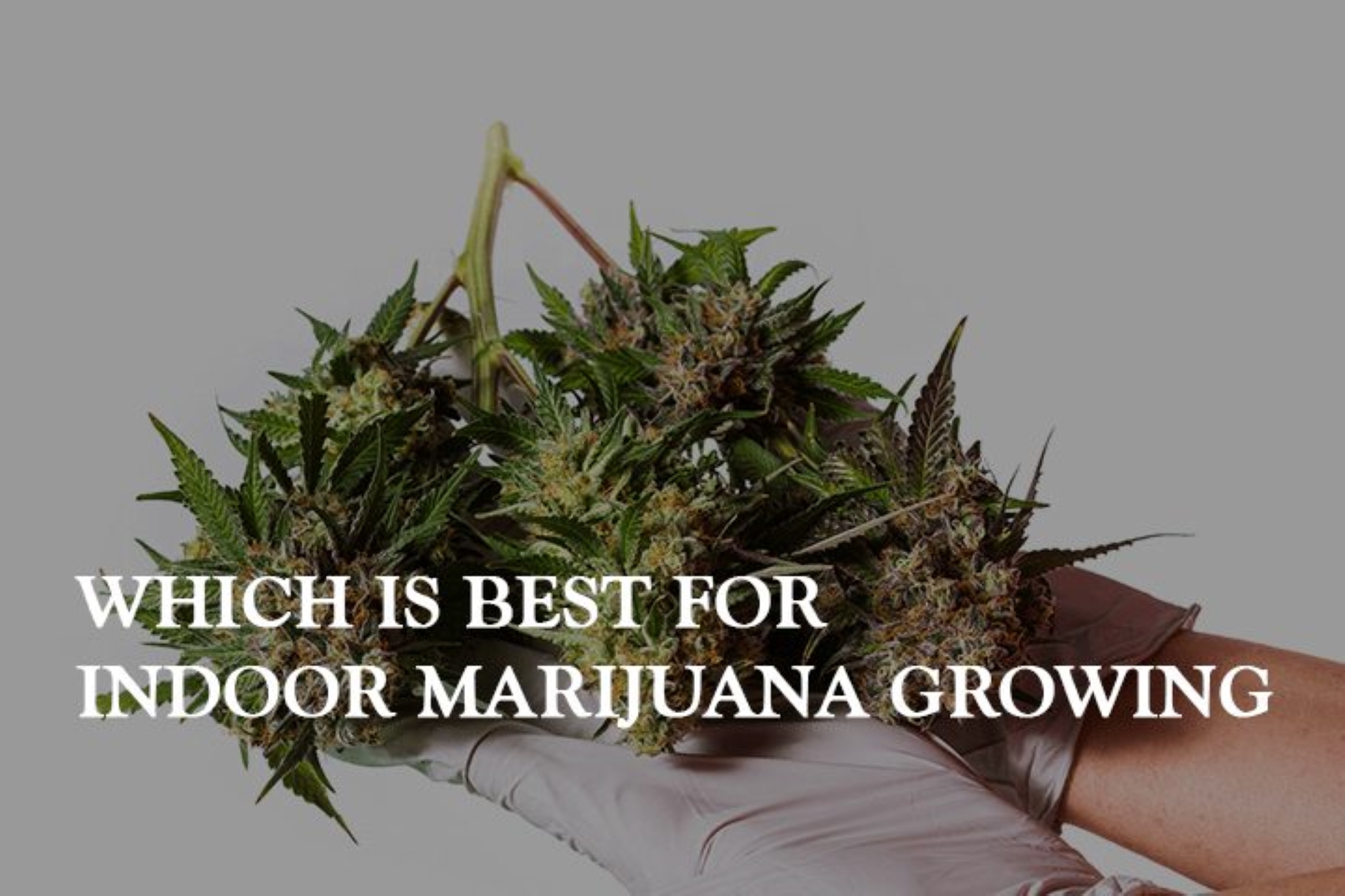
Potting Soil or Gardening Soil: Which is Best for Indoor Marijuana Growing?

You might have learned the basics of Indoor Marijuana Growing together with its relevance, importance, and scope of the said practice in modern society where we live today. Indeed, this gardening movement is an important technique in these high times where most of the governments in our world.

However, as we go along this practice, you might have this dilemma in choosing the right soil for your Cannabis Seeds. Will you ever go for Potting Soil? Or with the Gardening ones? Which is Best for Indoor Marijuana Growing?

Highlighting the Soil

Soil is one of the universal elements in our world. It is the source of nutrition, home, and water purification for all of its living inhabitants. It is made up of different organic matters, minerals, liquids, gases, and various organisms. When mixed, they are effectively capable of supporting life.

For the plants, soils are the primary source of life. It is in these vast mixtures scattered in different parts of the world, from their humble seeds that germinated in time. These mixtures supported their needed minerals and managed to help them exist in the past billions of years.

Gardening Soil

Gardening Soilis the typical soil that you have seen in the farms or mountainsides which are full of minerals and nutrients that are good for your plants. It is the conventional topsoil where the trees in the forest are planted on. This type of soil is suitable for outdoor planting with natural conditioners such as those mixtures from the compost pit.

Potted Soil

On the other hand, potting soil is the mixture of organic compounds which are packed in a pot, meant to be used for plants for indoor settings. These plants have to grow far and relatively controlled exposure from the sunlight and other atmospheric conditions which may affect their growth when placed outside. Because this soil is not exposed outside, it has to be more concentrated to provide good nutrition for the hidden plants.

Factors to Consider for your Successful Indoor Marijuana Growing

• Types of Soil

a. Loam
The best and most used type of soil for the plants around the world, loam soils is the balanced mixture of clay, sand, and silt which helps the seed to germinate easier due to the said balance of the three important soils but are extreme.
b. Clay
The heaviest among the six types, this soil is relatively high in nutrients due to its liquid properties but is unideal for the plants that must grow in the rainy season or endure the scorching heat during the dry season. This soil is fragile and sensitive when it comes to the climate.
c. Sand
This is the most acidic in all of the soils, considering its low, dry, and light properties that makes an ordinary jungle plant may not grow on this type of soil. However, some plants can be easily planted in a desert and nobody will ever tell you on when to come back on that remote area, just to check your growing plant, in case if it grows.
d. Silt
This soil is light and convenient to use. It holds moistures better than the sandy soil. It is made up of medium-sized particles and because of this, the silt soil can easily get compacted upon usage.
e. Peat
One of the most common types of soils being used for garden purposes, peats are one of the most moisturized and rich in organic matter. This type of soil is good for ornamentals and other small plants that need to be separated with the other plants growing with loam.
f. Chalk
The most alkaline content in the rest of the soils, this type of soil is good for the plants who do not need acidic conditions for growth and are shallow, low in fertility but in other variants- it can hold greater nutrition than the clay soils and higher water capacity.

• Properties of Soil for Successful Marijuana Growth

a. Physical Texture
Your soil must be of natural formation to make it accommodating to the seeds needed to plant over them and create natural pockets and minimal rooms for ventilation and abundant nutrient supplies from the depths of this soil. At the end of the day, it’s your soil that must be primarily responsible for the successful growth of your plants.
a. Porosity
Your soil must be good enough to create spaces for water and gas deposits. This soil composition can help the roots of your plants to better absorb the liquids, minerals, and in rare cases, gases which can contribute to the growth of the plants.
b. Consistency
Your soil must be good enough to have a uniform texture and formation to avoid any deprived right for a plant to grow. If your soil has different types and was mixed, such as the loam and sandy, then chances are that the nutrition that your plant may gain in that soil will go lower and this will significantly affect the quality of your Marijuana Plant.
c. Temperature
Just like our rooms, your soil temperature matters, especially when you live in places where extreme weather conditions may happen from daily to monthly. As we all know, one cannot be able to survive so much coldness and immense heat because these temperatures can make our body systems malfunction and eventually stop. What more if the plants will face the same situation, considering their thinner body systems, more fragile parts, and smaller capacities which are susceptible to sudden change of atmospheric heat.
d. Color
Another thing to consider is your soil’s color which affects the buyers’ minds immediately. Your ideal soil must be in loam and if another strain mixes, it may result in weaker strains.
One may not consider buying light brown soils than buying the darker colors. Also, one must know that traditionally, the ideal soils must be a part of the vast topsoil in the world- which is usually dark brown.
e. Resistivity
Is your soil good enough to retract the current electric condition that can destroy your plant especially when it is dry? If your soil continues to be a good conductor of electricity despite being dry, it means that your soil is too metallic and may not be good for your plants’ growth, putting the minerals that can be absorbed by your plant be electrically charged, polarized and may not penetrate the internal systems of your plant.

• Nutrients and Minerals

a. Nitrate
This is the form of Nitrogen that your plants need. This is the mineral which gives your plants the vibrant colors they grow in the future- from green, red, violet or other ecological colors through the chlorophyll production. Nitrate also helps your plant to develop strong and enduring foliage.
b. Phosphorus
This mineral is the main factor that helps your plants develop good roots and flowers. It helps your plants endure the changing environmental concerns, such as drought and winter.
c. Potassium
It contributes to your plants’ early growth and development, as well as its water retention until it matures further for a few more weeks. It also helps them to fight diseases and harmful insect intervention.
d. Magnesium
Like the Nitrate, Magnesium is also responsible for the color development of your plants, especially your leaves.
e. Sulfur
It helps your plants to fight many diseases that it may acquire through the air or water. Sometimes, it may acquire through human intervention. It also assists your plant to develop other important minerals like Amino Acids, Vitamins, Proteins, and Enzymes.
f. Calcium
This mineral is the one responsible for the growth and development of cell walls of our strains. If well-developed, the cell walls of your plants will effectively combat the diseases it has to suppress and is necessary for the biological metabolism and nitrate uptake of your plant.

Conclusion

Depending on the strain, type of cultivation and your desired nature, your plants will still grow even if it is intended for Indoor Marijuana Growing or Outdoor displays.

Your Gardening Soil is good for the strains which need to be exposed by direct sunlight to produce good and high-quality foods, enriching their THC and CBD contents and are great for long-term use.

However, Potted Soil boasts another nature of Indoor Marijuana with its Ruderalis and other Indica Plants as the primary targets of the said indoor practice. This soil is good for keeping the plants healthy despite the absence of sunlight in their lives. After all, these are still plants- they have lives and choose to act well despite the setbacks being imposed by their owners or farmers.

In the end, you must choose on whether you will plant  marijuana growing or plant Outdoors before continuing to check your supplier’s attention due to some problems with your purchased soil. Enjoy gardening!