




500 NEW MARIJUANA SEEDS RELEASED

Exploring Cannabis Growing Mediums

Cultivating marijuana requires careful consideration of the cannabis growing medium and style. Choosing between hydroponics, traditional soil, or innovative options like coco coir can significantly impact your yields and bud quality. This comprehensive guide will delve into each cannabis growing medium, weighing its pros and cons, ease of use, effects on crop yields, and bud quality. Whether you’re a novice or an experienced grower, this tutorial aims to assist you in determining the right approach for your cannabis cultivation journey.

Cultivating Cannabis in Soil
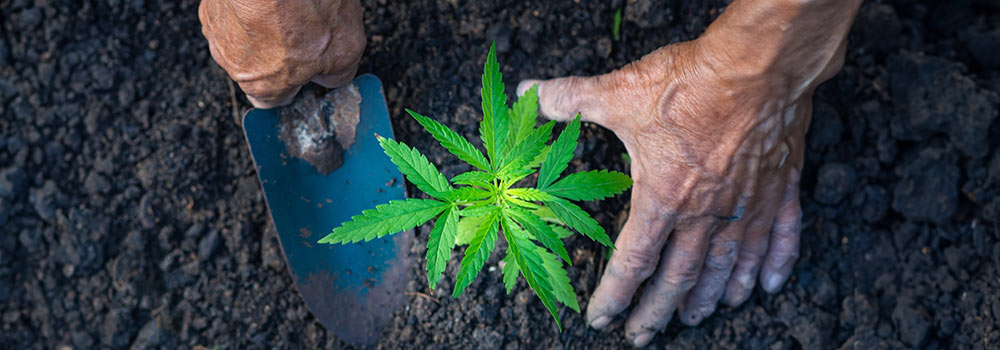
Cannabis in Soil

Growing cannabis in soil remains a preferred choice, especially for beginners and those with prior gardening experience. If you’re familiar with nurturing other plants in soil or maintaining a garden, this option may align seamlessly with your existing knowledge.

Pros and Cons of Soil-Based Cultivation

Pros

Growing cannabis in soil offers several advantages, particularly for individuals well-versed in traditional gardening practices. It closely resembles cultivating other plants like tomatoes or corn. Hand-watering container-grown cannabis simplifies the management process, making it accessible to many.

For outdoor growers, using soil is often the preferred method due to cannabis’ natural habitat. Soil-based outdoor cultivation is intuitive and requires less intervention. Employing composted “super soil” eliminates the need for synthetic nutrients or pH management, appealing to those seeking a low-maintenance approach.

There are two options for soil-based cannabis cultivation: Option 1 involves purchasing soil from a store and adding nutrients incrementally during growth. Option 2 entails amending and composting your specialized “super soil” for cannabis or purchasing pre-composted super soil. Although the latter option demands more initial effort, it’s a simpler route for experienced composters. It’s worth noting that some growers believe that using organic composted super soil with a rich microbial ecosystem enhances cannabis’ taste and aroma by increasing terpene and terpenoid production.

However, a downside of soil-based cannabis cultivation is its susceptibility to pests, necessitating increased maintenance compared to hydroponic systems.

Cons

Soil-based cultivation does have a few drawbacks. The presence of pests in soil poses a constant threat to plants, making soil growers more vulnerable to infestations than their hydroponic counterparts.

Another disadvantage is the longer growth cycle associated with soil-based cultivation compared to soilless or hydroponic setups. Hydroponic plants, in general, exhibit faster growth rates, particularly during the vegetative stage.

Setting Up Soil-Based Cultivation
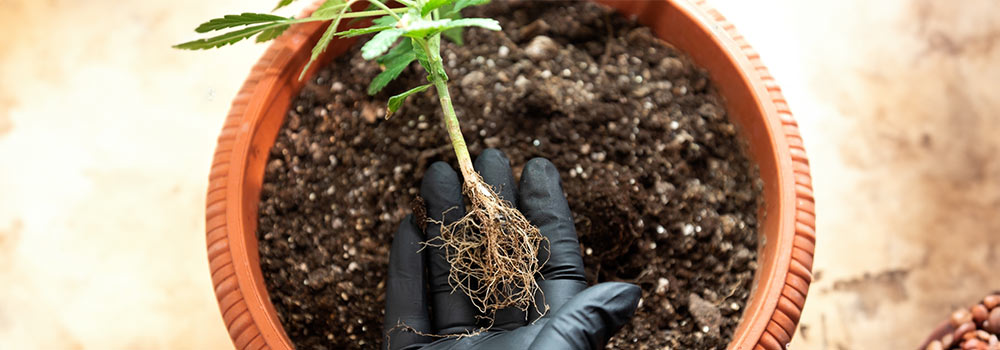
Setting Up Soil-Based Cultivation

When it comes to setup costs, soil-based cannabis cultivation is relatively budget-friendly. All you need is soil and a suitable container. Common choices for soil mixes include Fox Farms Happy Frog and Fox Farms Ocean Forest, although any high-quality organic soil mix suffices. However, avoid using soil with “extended-release” nutrients, and consider adding 30% perlite and 10% vermiculite if the soil appears dense. Composting your super soil is a proven method for optimal results. As for containers, classic plastic pots, terra cotta pots, smart pots (fabric pots), and air pots are all viable options. Standard gardening pots work well when adding perlite to ensure proper aeration for cannabis roots. Smart and air pots offer additional air circulation to the root zones, reducing the need for extra aeration or perlite in soil mixes.

Regarding setup effort, soil-based cultivation demands relatively little effort compared to other methods, especially when compared to soilless mixes. Your primary focus will likely revolve around selecting the appropriate soil and nutrients.

Maintaining Your Soil-Based System
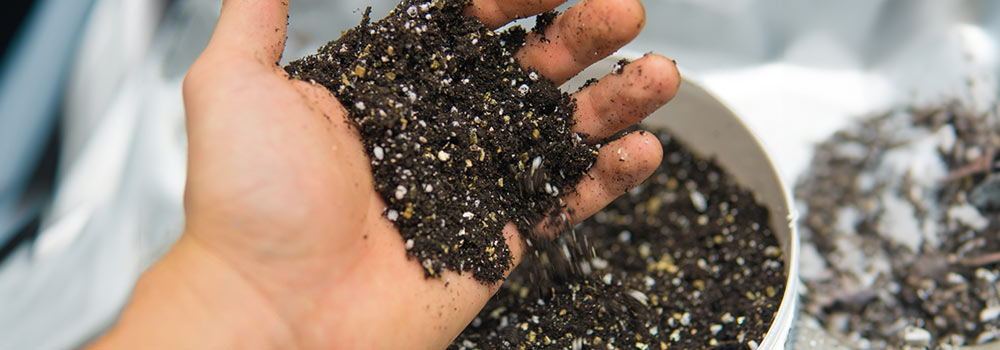
Maintaining Your Soil-Based System

The ongoing cost of soil-based cultivation remains relatively low after the initial setup, with the primary expense being soil replacement for each growth cycle. Reusing soil can yield satisfactory results if you know how to amend it with the necessary nutrients. Additionally, occasional container replacements may be necessary if they become damaged.

Maintenance efforts for soil-based cultivation primarily involve regular watering, nutrient supplementation as required, and pH management for non-composted super soil setups. While soil-based grows tend to have slower growth rates than hydroponic methods, optimal growth can still be achieved with proper environmental conditions and ample lighting. The vegetative stage typically spans 1-3 months, while the flowering/budding stage can extend for 2-3 months, depending on the strain. It’s worth noting that debates among growers persist regarding whether cannabis grown in organic supersoil truly possesses the best taste and aroma profile, especially when compared to hydroponic alternatives.

For first-time growers, it’s crucial to remain closely involved with your garden, especially if you need more experience. While experienced growers can afford more time away from their gardens, checking on your plants at least once daily is advisable. While constant watering isn’t necessary, larger containers hold more water, giving growers more flexibility. Nonetheless, unforeseen events like pest infestations or accidental damage can occur at any time, underscoring the importance of vigilance.

Choosing the right growing medium, such as soil-based cultivation, is critical for cannabis growers. By weighing the pros and cons, understanding setup requirements, and committing to diligent maintenance, you can ensure a successful cannabis cultivation experience. Whether you opt for soil or explore other mediums, your journey toward high-quality buds begins with a solid foundation of knowledge and dedication.

Cultivating Cannabis in Hydroponics
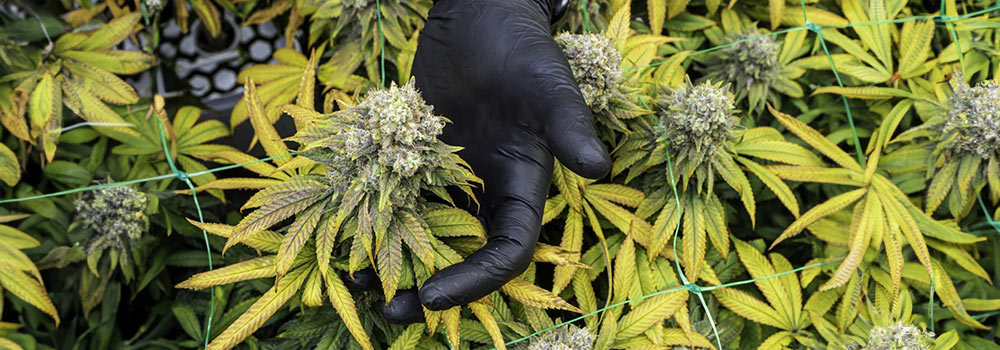
Cultivating Cannabis in Hydroponics

When we mention hydroponics, the image of plants thriving in a water-based environment often comes to mind. However, it’s essential to clarify that any medium other than soil, including soilless options like coco coir, falls under the hydroponics umbrella. To distinguish solution culture hydroponics from other forms, solution culture encompasses hydroponic methods without the use of an inert medium.

In this section, our focus centers on hydroponic systems where cannabis roots grow directly in water or require the maintenance of a water reservoir. In the subsequent section, we will delve into soilless mediums, a technically hydroponic approach that often feels more akin to traditional soil cultivation.

Pros and Cons of Hydroponic Cannabis Cultivation

Pros

Hydroponic cultivation presents numerous advantages over alternative methods. First and foremost, it facilitates faster vegetative growth, resulting in earlier harvests. Additionally, experienced hydroponic growers can typically achieve larger yields than their soil-growing counterparts, provided they have access to the same conditions, such as light and nutrients.

Another notable advantage is hydroponic systems’ reduced susceptibility to pest infestations. Many pests rely on soil during their life cycle, which is absent in hydroponic setups. While it’s still possible to introduce pests into a hydroponic environment, the risk is significantly lower compared to soil-based cultivation. Furthermore, some hydroponic techniques require relatively low maintenance, with certain options being as straightforward as soil-based cultivation in terms of ease.

Cons

Hydroponic setups usually entail a higher initial investment compared to other cultivation methods and may involve some do-it-yourself (DIY) work. Proper nutrient management can be challenging for hydroponic growers, particularly when employing supplements from different manufacturers. Following a proven nutrient formula becomes crucial in this context. Additionally, hydroponic growers must promptly address any issues, as root problems can pose challenges. However, steps can be taken to ensure healthy roots, including providing sufficient oxygen and maintaining water temperatures around 70°F (20°C).

Certain hydroponic methods demand high maintenance levels and frequent monitoring to achieve optimal growth rates. Moreover, hydroponic outdoor cultivation presents challenges due to difficulties in controlling essential variables such as sterility, temperature, and pump power.

Exploring Different Types of Hydroponic Setups
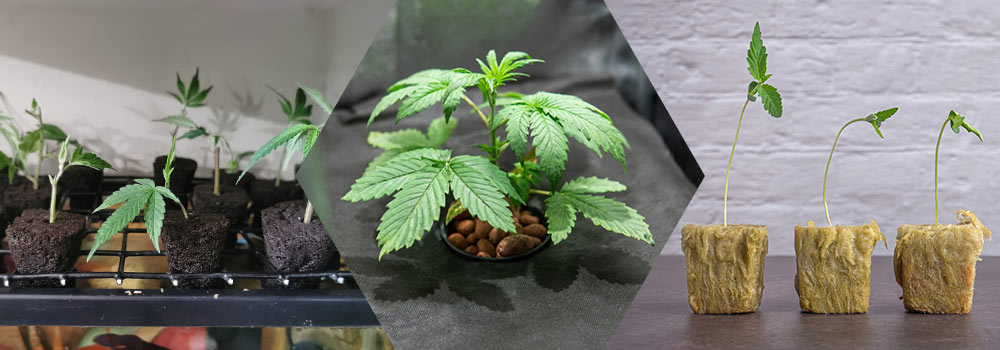
Exploring Different Types of Hydroponic Setups

DWC (Deep Water Culture):

This hydroponic system suspends plants in a nutrient-rich water solution, with air stones providing oxygen to the roots. It’s a simple yet effective system, particularly favored by beginners.

Top-Fed DWC (Bubbleponics):

A variation of DWC, in which plants are suspended in a water solution, and water is fed to the container’s top through a drip line or spray nozzle. This approach supplies roots with both oxygen and water, promoting faster growth.

NFT (Nutrient Film Technique):

In this system, a thin film of nutrient-rich water flows through a slanted tray or tube, with plants placed in small net cups, allowing their roots to dangle in the water. Continuous nutrient flow is required for optimal plant growth.

Ebb & Flow (Flood & Drain):

This hydroponic system involves flooding the growing container with a nutrient solution for a set period and draining it back into a reservoir. This approach enhances nutrient uptake and growth rates but necessitates a timer and drainage system.

Aquaponics (Fish for Nutrients):

Combining hydroponics with aquaculture, this system cultivates fish in a tank, utilizing their waste to fertilize hydroponically grown plants. The plants, in turn, purify the water, creating a sustainable closed-loop system.

Aeroponics (Misted Air):

Plants are suspended in the air, and their roots are misted with a nutrient-rich solution in this system. This method optimizes oxygenation and nutrient absorption by the roots, leading to faster growth and larger yields.

Drip System (Automatic Watering):

Hydroponic cultivation involving dripping nutrient solution onto the base of each plant through a drip line or tubing. This system is relatively simple and requires minimal maintenance.

Hand-Watered Hydro (Soil-Hydro Fusion):

A fusion of soil and hydroponics, where plants grow in soil, but water and nutrients are supplied through a hydroponic system. This approach combines the benefits of both methods, allowing better control over nutrient uptake and faster growth rates. However, careful management of watering and nutrient levels is essential.

Setting Up Hydroponic Cultivation
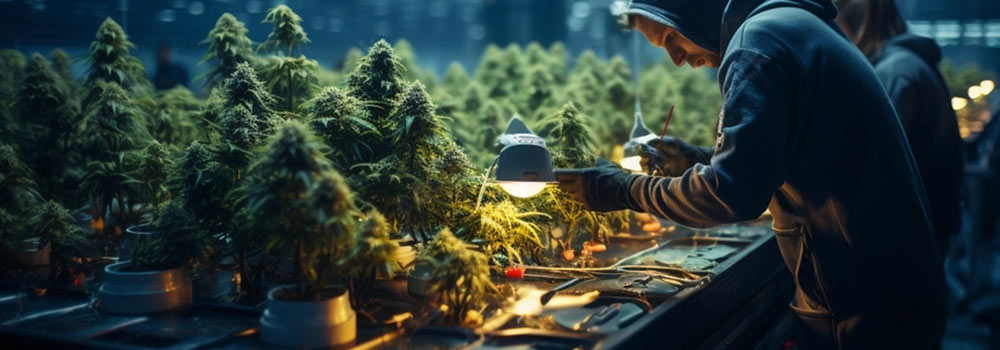
Setting Up Hydroponic Cultivation

The cost of establishing a hydroponic system can vary significantly based on its complexity. DIY systems can be budget-friendly if you’re willing to assemble them yourself, with parts readily available at hardware stores. Alternatively, kits containing all the necessary components are also accessible and can be competitively priced compared to DIY options. Setting up a hydroponic system may require some effort, so conducting thorough research and emulating a proven setup for your first growth cycle is essential. Systems incorporating timers may necessitate some adjustments to ensure proper functionality, while aquaponics demands additional time and effort to establish a fish-supporting tank.

Maintaining Your Hydroponic System
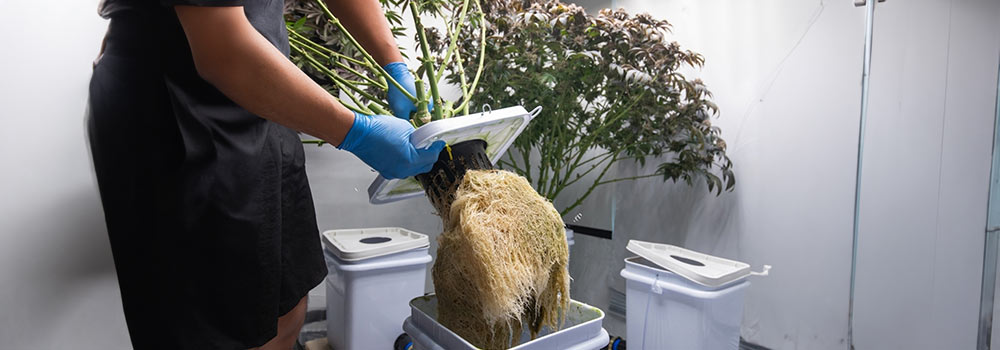
Maintaining Your Hydroponic System

Hydroponic maintenance costs primarily revolve around nutrients and grow lights, with occasional tubing, pumps, and air stones replacements. First-time growers may need to invest more effort in maintenance, but experienced growers can maintain a hydroponic setup in as little as half an hour per week. Hydroponic systems generally promote faster vegetative growth, although flowering/budding duration is still determined by genetics. The amount of time you can be away from your hydroponic garden depends on the specific setup, with larger reservoirs allowing for more extended absences and finely tuned systems requiring more frequent checks. To avoid unforeseen events, checking on your plants at least once a day is advisable.

Hydroponic cannabis cultivation offers various advantages and options, catering to growers of all levels of expertise. By carefully considering the pros and cons, selecting an appropriate hydroponic setup, and maintaining it diligently, you can embark on a successful journey towards cultivating high-quality cannabis with precision and efficiency.

Cultivating Cannabis Soilless

Cultivating Cannabis Soilless

As the popularity of indoor cannabis cultivation continues to soar, soilless mediums like coco coir, perlite, vermiculite, and rock wool are gaining widespread acclaim among growers. These alternatives provide a clean, consistent, and highly customizable growing environment, empowering cultivators to finely control nutrient delivery, water absorption, and root aeration. Among these, coco coir stands out, revered for its exceptional water retention capacity, neutral pH, and low electrical conductivity (EC) levels, making it a preferred choice for hydroponic and soilless systems. Whether you’re a seasoned grower or a novice, understanding the advantages and drawbacks of different soilless mediums is paramount for maximizing yields and nurturing robust cannabis plants.

Pros and Cons of Soilless Cannabis Cultivation

Pros

Growing cannabis in soilless mediums, such as coco coir, has gained immense popularity among cultivators, primarily due to its distinct advantages over traditional soil-based methods. One of the most notable benefits is the significantly accelerated vegetative growth it facilitates. Furthermore, soilless mediums tend to be less attractive to pests and generally require easier management. When employing hand-watering techniques, growing in a soilless medium demands a level of effort akin to soil cultivation. Consequently, soilless mediums present a convenient and efficient option for cannabis growers.

Cons

While soilless mediums like coco coir can indeed deliver faster growth rates for cannabis plants compared to traditional soil, they may not match the rapid growth achieved in full hydroponic setups with optimal oxygen supply. However, for some growers, achieving the right nutrient balance in soilless mediums can be a challenge, especially when utilizing a variety of nutrient and supplement products from different companies. Overcoming this challenge necessitates adhering to a proven cannabis nutrient formula tailored to the chosen growing medium.

Setting Up Soilless Cultivation
Setting Up Soilless Cultivation

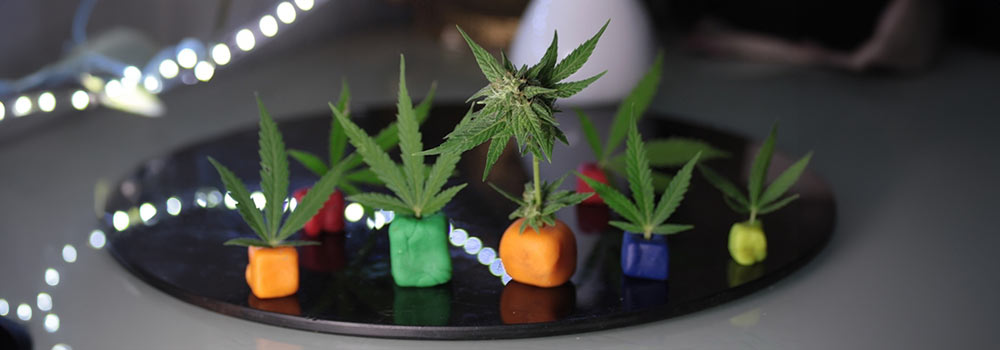
Soilless growing mediums, such as coco coir, have gained favor among cannabis cultivators due to their capacity for accelerating vegetative growth and mitigating pest issues. However, establishing the ideal soilless mix requires careful consideration, especially for less experienced growers. A recommended soilless mix for cannabis comprises hydrated coco coir bricks blended with 30% perlite and 10% vermiculite. Container choices range from classic plastic pots to terra cotta pots, smart pots, and air pots, each offering varying potting mix densities. Although the setup process for soilless systems demands minimal effort, selecting the right mix and nutrients may necessitate research, as soil-based nutrients are typically unsuitable for soilless cultivation.

Maintaining Your Soilless System
Maintaining Your Soilless System

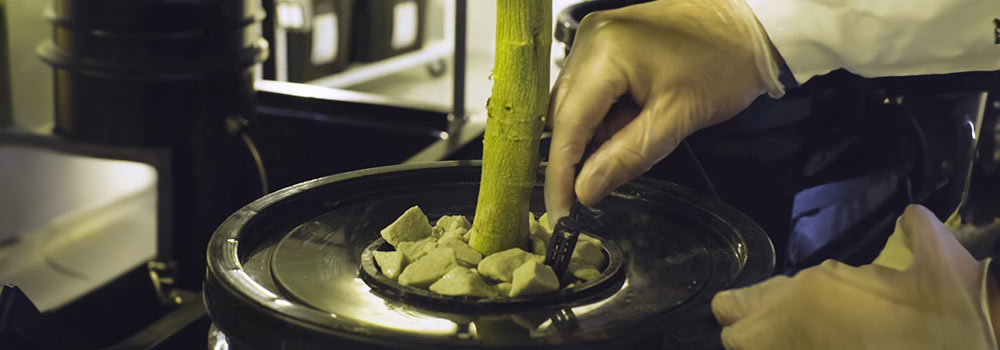
Soilless cultivation presents numerous benefits and considerations. The primary ongoing cost involves replacing the potting mix with each growth cycle, as reusing old potting mixes can lead to the accumulation of nutrient salts that are challenging to flush out effectively. Additionally, containers may require replacement over time. Maintenance tasks encompass watering the plants, administering nutrients, and regulating the pH of the root zone, a critical aspect when cultivating in a soilless mix to ensure optimal nutrient availability to the plant roots. Soilless mixes generally facilitate faster growth rates than traditional soil, particularly when complemented by an ideal environment and ample lighting.

For less experienced growers, maintaining a close presence in the garden during the first growth cycle is advisable. In contrast, experienced cultivators can safely allocate more time away, especially when employing larger containers with enhanced water-holding capacities. Nonetheless, regularly inspecting the plants, ideally at least once a day, remains prudent to forestall nutrient deficiencies, prevent plants from toppling, or address any unforeseen events demanding prompt attention.

Mastering soilless cannabis cultivation is a rewarding endeavor that empowers growers to optimize growth and harvests while mitigating certain challenges associated with traditional soil-based methods. By harnessing the unique benefits of soilless mediums, carefully managing nutrient balance, and adhering to vigilant maintenance practices, cultivators can embark on a journey towards nurturing thriving and bountiful cannabis crops.
Knowing The Right Cannabis Grow Lights

Indoor cannabis cultivation is a craft that relies on precise environmental control. Without natural sunlight, choosing cannabis grow lights becomes paramount to ensure optimal plant development and bountiful yields. Let’s delve into indoor cannabis cultivation and explore how the right grow lights can make all the difference.

Unleashing the Potential of Grow Lights

Potential of Grow Lights

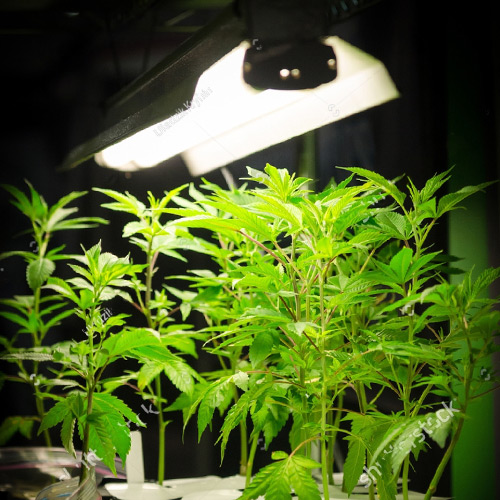
Indoor cannabis growers without access to natural sunlight must rely on grow lights to cultivate their plants effectively. These artificial grow lights serve as a substitute for the sun and facilitate the growth of plants and their buds. As light is essential to the plant’s development, without sufficient illumination, even a thriving cannabis plant will yield minimal buds.

The 3 Main Categories of Cannabis Grow Lights

Cannabis Grow Lights

When it comes to cannabis grow lights, there are three primary categories to consider, each with its own advantages and disadvantages.

High-Intensity Discharge (HID) Lights

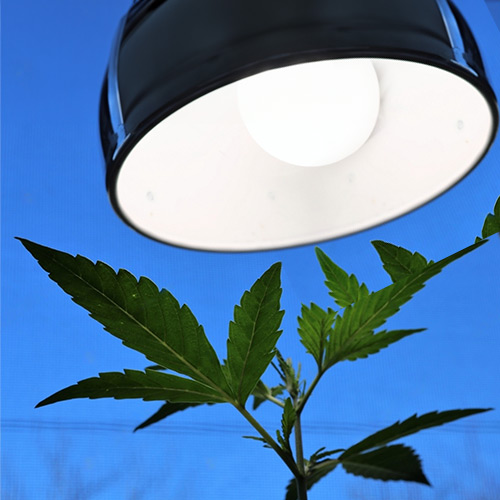
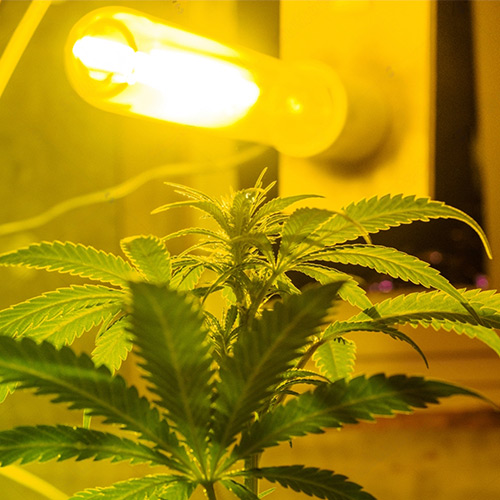
HID lights are the most common grow lights used for marijuana cultivation. They produce a lot of light and heat, which can benefit plant growth, but they also require proper ventilation and cooling to prevent plant damage. The two types of HID lights commonly used for marijuana cultivation are Metal Halide (MH) and High-Pressure Sodium (HPS) lights.

High-Intensity Discharge (HID) Lights

Light-Emitting Diode (LED) Lights

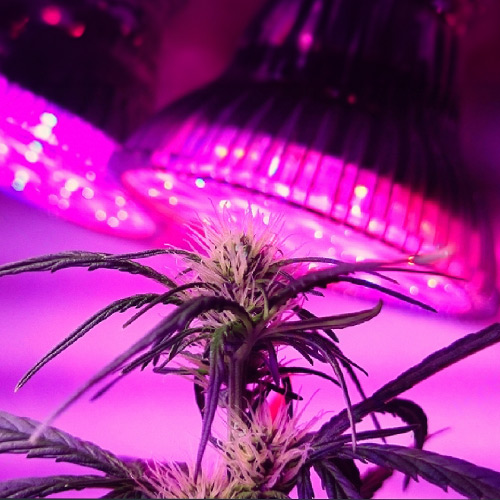
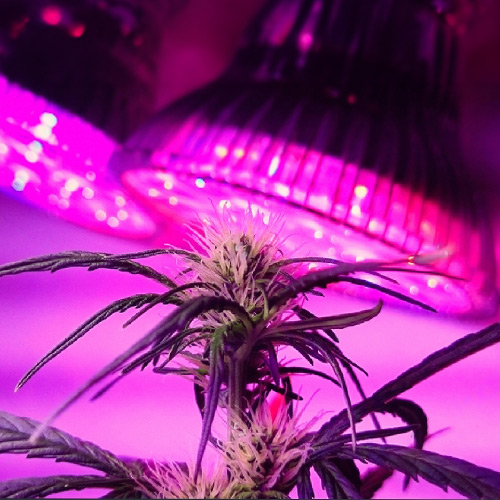
LED grow lights are becoming increasingly popular for marijuana cultivation due to their energy efficiency, long lifespan, and ability to produce specific light wavelengths that can enhance plant growth. They produce less heat than HID lights, which can benefit indoor cultivation where temperature control is important.

Light-Emitting Diode (LED) Lights

Fluorescent Lights

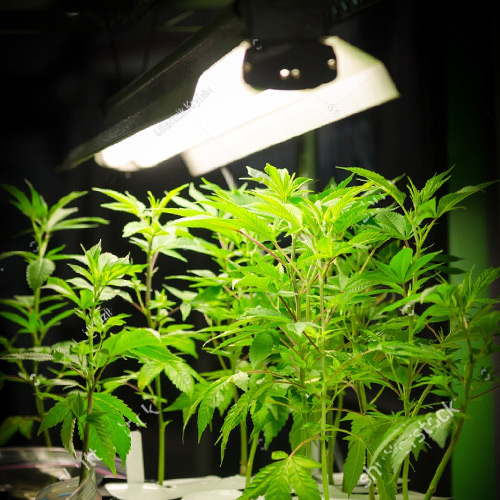
Fluorescent lights are another type of grow light used for marijuana cultivation but are less commonly used than HID and LED lights. They are less intense than HID and LED lights but are more energy-efficient and can be used for smaller grows or as supplemental lighting. The two types of fluorescent lights commonly used for marijuana cultivation are T5 and CFL (Compact Fluorescent Light) bulbs.

Fluorescent Lights

High-Intensity Discharge (HID) Lights in Detail

High-Intensity Discharge (HID) Lights

HID grow lights are significantly more efficient and utilize bulky, peculiarly shaped bulbs. Typically, these bulbs are affixed to a reflector or hood to reflect and concentrate the emitted light onto the plants. While HID lights are highly effective at promoting cannabis growth, they tend to generate substantial heat and require an exhaust system to dissipate the excess warmth.

Metal Halide (MH)

Metal Halide (MH)

Metal Halide grow lights are utilized during the vegetative stage of growth since they emit a bluish light that is particularly favorable to vegetative plants. However, these lights can also be used throughout the entire growth cycle, including the harvest stage.

High-Pressure Sodium (HPS)

High-Pressure Sodium (HPS)

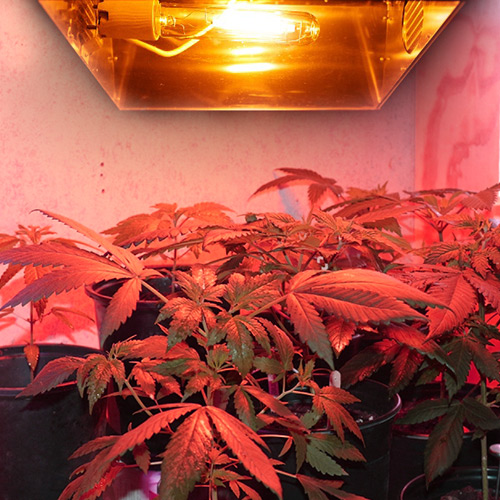
During the flowering stage of cannabis growth, High-Pressure Sodium (HPS) grow lights are frequently utilized due to their high efficiency and ability to stimulate bud production with their yellow light spectrum. These lights are currently the most efficient grow lights available to yield more buds per watt of electricity consumed, which is a major reason for their widespread popularity.

Ceramic Metal Halide (CMH, LEC, Light Emitting Ceramic)

Ceramic Metal Halide

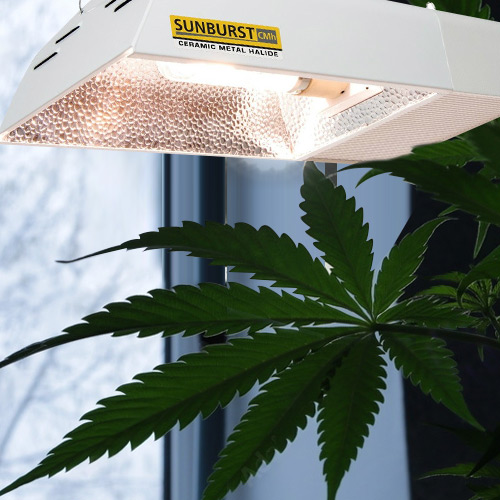
It’s important to note that “LEC” and “CMH” are interchangeable terms used to describe the same type of grow light: Ceramic Metal Halide. These bulbs are classified as High-Intensity Discharge (HID) lights and employ ceramic components similar to those used in High-Pressure Sodium (HPS) bulbs, resulting in higher efficiency than regular Metal Halide (MH) lights, although still not quite as efficient as HPS bulbs.

Pros and Cons of HID Grow Lights

Pros:

HID grow lights are highly efficient and provide the highest yields per watt of any grow light.

HPS grow lights, in particular, are the most efficient type of HID light and are best for the flowering stage of cannabis growth. With HPS grow lights during the flowering stage, you can expect around 0.5-1 gram of yield per watt if properly used.

HID lights are easy to use, can be hung appropriately from the plants without any guesswork (unlike LEDs), and don’t require constant adjustments (like fluorescents).

Cons:

HID bulbs produce a significant amount of heat, which can be concentrated and intense. To prevent excessive heat and heat-related damage to plants, a hood is usually required, and some form of cooling is needed, especially for bulbs with power above 250W.

Setting up an exhaust fan with ducting to vent out the heat generated by HID lighting can be challenging and discouraging for some growers.

HID lighting requires more parts than other lighting types. Unlike fluorescents, which only require a bulb and fixture, or most LEDs, which are just the light itself, HID setups include a bulb, fixture, external ballast, and an additional cable (not including the exhaust system parts).

Light-Emitting Diode (LED) Lights: A Modern Alternative

Light-Emitting Diode (LED) Lights

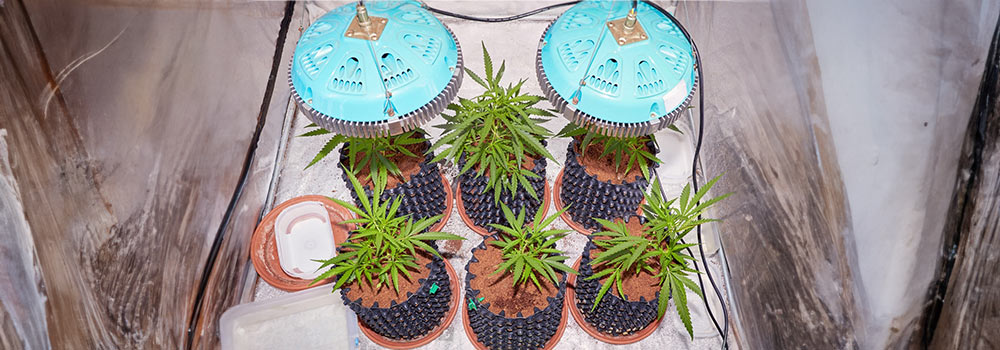
LED grow lights have gained significant popularity among cannabis cultivators as a substitute for HPS grow lights. One of their primary advantages is that they tend to operate at cooler temperatures and frequently have integrated cooling systems. Additionally, they can be conveniently plugged into a wall and hung over plants, making them more user-friendly than HID grow lights. Due to their superior penetration capabilities, LEDs do not need to be moved frequently like fluorescents.

Pros and Cons of Light-Emitting Diode (LED) Lights

Pros:

Unlike HID bulbs, LED grow lights have built-in cooling systems that prevent heat from contaminating plants.

Smaller LED lights can be plugged directly into the wall and hung up over plants without additional setup.

Some growers report that LED lights produce more resinous buds than other types of lights when used alone or combined with HPS grow lights.

Cons:

Although LED lights produce less heat than HPS bulbs, larger models may still need to be vented with an exhaust fan to prevent overheating.

LEDs generally yield slightly less per watt than HPS grow lights, but results can vary depending on the specific lamp and grower experience.

LED lights require more space between the lamp and plants than other lights, which can be challenging in smaller grow spaces.

Fluorescent Lights: A Budget-Friendly Option

Fluorescent Lights

Various types of fluorescent grow lights are available in different shapes and sizes, ranging from twisty bulbs to elongated tubes. Fluorescents are well-liked as they offer efficient and pleasant lighting for human use while consuming less electricity, making them a great choice for low-key indoor gardening, such as herb gardens.

CFL Grow Lights

CFL Grow Lights

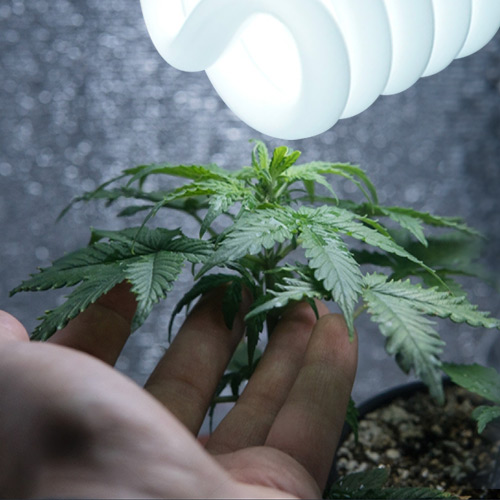
CFL grow lights are compact fluorescent bulbs easily found in stores where traditional light bulbs are sold. These bulbs emit a suitable spectrum of light for growing cannabis and are versatile enough to fit into small spaces like a cabinet. Keeping the CFLs close to the plants is recommended to achieve the best yields and growth.

T5 Grow Lights

T5 Grow Lights

T5 grow lights are among the most commonly found types of grow lights that are utilized to grow a wide variety of plants. Therefore, they are typically available at various home improvement and garden stores. T5 lights are significantly broader than CFLs and generally come in a panel format. However, they can still be positioned just a few inches away from plants without the risk of causing any damage or burning them.

Pros and Cons of Fluorescent Lights

Pros:

They are affordable.

Fluorescents consume minimal electricity and generate low heat, especially when not overcrowded in small areas.

Fluorescents provide an ideal light spectrum for growing cannabis.

They can be kept in close proximity to plants, making them ideal for short spaces.

Fluorescent lights are among the best options for clones, seedlings, and young plants. Using larger lights on young plants risks burning them and wastes energy. Fluorescents can save money on electricity during the first few weeks of growth compared to high-powered grow lights.

Cons:

Fluorescents produce smaller yields per watt than other grow light types when used during the flowering stage when buds are forming. Typically, using fluorescents, you can expect around 0.25 grams of buds per watt of electricity (based on actual watts drawn from the wall, not equivalent watts), while LEDs and HPS lights can provide 2-4 times as much yield per watt.

The light emitted by fluorescent lamps does not penetrate deep into the plant, so they are more suitable for plants trained to grow short and flat. They are not powerful enough to support the growth of tall plants during the flowering stage.

In conclusion, choosing the right grow lights for your indoor cannabis cultivation is essential for success. Each type of grow light has its unique benefits and drawbacks, and the choice ultimately depends on your specific needs, space, and budget. With the right lighting setup, you can maximize the potential of your indoor cannabis garden and enjoy a bountiful harvest.

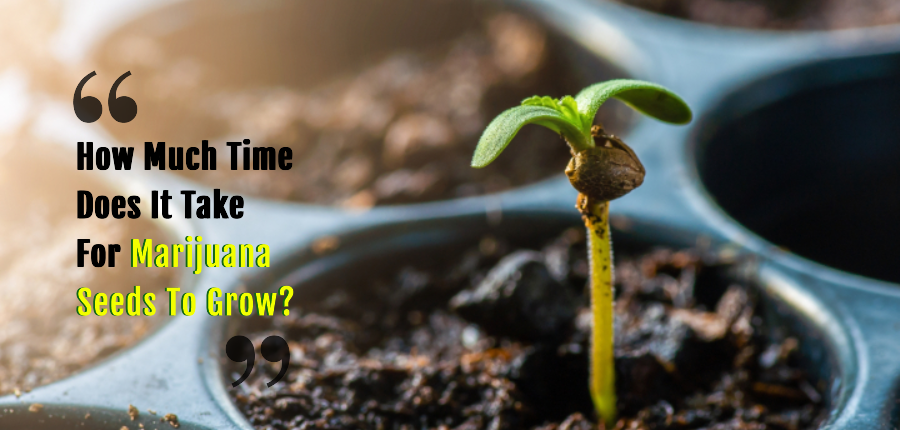
How Much Time Does It Take For Marijuana Seeds To Grow?

Growing marijuana seeds is popular for different reasons, like for fun or to help with health. There are many different kinds of seeds to choose from that suit different tastes. It can be a good idea to grow your own plants because it can save money in the long run instead of buying them from a store. But it’s important to know that growing marijuana seeds is not as easy as taking care of a regular plant. It takes skill and care at every stage of growth.

Unlike plants like daisies that can grow with just sunlight and water, marijuana seeds need extra attention and time to grow well. You have to give them the right care to make sure they grow healthy and strong.

Is It Worth Waiting To Grow Marijuana Seeds?

Marijuana seeds can take different amounts of time to grow, and it depends on a few things. When growing marijuana seeds indoors, it usually takes about 3 to 5 months for weeds to become fully grown. But there are things that can make the growing time shorter or longer. Some of these things include whether you start with a seedling or a clone, how much weed you want to grow, and the way you’re growing it (like using hydroponics, growing indoors or outdoors, or in a greenhouse).

The kind of weed you’re growing also affects how long it takes to grow. There are different types of weed, like Indica, Sativa, or hybrids. Each type has its own characteristics and flowering times. Indica strains usually have a shorter flowering period of about 8 to 12 weeks. Sativa strains generally take longer to flower, usually around 10 to 16 weeks. Hybrid strains can have different flowering times depending on their genes, which come from both Indica and Sativa.

So, when thinking about how long it takes for weeds to grow, it’s important to consider the type of strain you’re growing and the specific way you’re growing it.

What Is The Reason For The Lengthy Duration?

Growing cannabis involves following several important steps to ensure successful cultivation. Here’s an overview of these steps, explained in a simple and easy-to-understand way:

Choose the Right Strain: Pick a type of cannabis that matches what you want and can grow well in your environment.

Start the Seeds: Begin by getting the seeds to sprout in a moist and controlled place.

Young Plants: When the seeds have sprouted, they become seedlings. Take care of them by giving them enough light, the right temperature, humidity, and water.

Leaf and Stem Growth: During this stage, the plants focus on growing leaves and stems. Make sure they get plenty of light (about 18 hours a day) and keep the temperature and humidity just right. Trim and shape the plants as needed to help them grow better.

Flowering: Change the lighting schedule to make the plants start producing buds. This is done by giving them only 12 hours of light per day. Watch them closely during this time and keep the temperature, humidity, and ventilation at suitable levels to avoid problems like mold.

Giving Nutrients: Feed the plants with the right nutrients throughout their growth stages. Use special fertilizers made for cannabis that have the right nutrients for healthy growth.

Watering: Water the plants when the soil starts to dry out, but be careful not to give them too much water. Too much water can harm the roots. Use water that has the right acidity level to help the plants absorb nutrients.

Managing Pests and Diseases: Keep an eye out for pests like bugs or diseases that can harm the plants. Take measures to prevent them, and if needed, use treatments that are safe for the plants.

Harvesting: The time to harvest depends on the type of cannabis and the effects you want. Look at the trichomes (small resin glands) on the buds using a magnifying tool. Harvest when the trichomes look how you want them—usually cloudy or amber.

Drying and Curing: After harvesting, dry the buds in a place with moderate humidity and good airflow. Once dry, store the buds in airtight containers. Open the containers occasionally to release moisture and improve the flavor, smell, and smoothness of the buds.

Remember, each step requires attention, patience, and care. Research and learn about the specific needs of your chosen cannabis strain to create the best conditions for growing healthy plants with good quality and yield.

How Long Does It Take For Indica Strains To Grow?

If you want to grow plants quickly and get more of them, choosing Indica strains can be really helpful. Indica strains take a shorter time to grow, usually around 8 to 12 weeks. They also give you a lot of plants to harvest. That’s why many people who grow plants like to choose Indica strains. When you grow them indoors, you can have more cycles of growing because they grow fast. If you grow them outside, you can have multiple cycles before it gets too cold.

One good thing about growing Indica strains is how they grow. They are shorter and bushier compared to the tall and thin Sativa strains. This makes them great for growing indoors or in small gardens. Because they don’t grow very tall, you can easily take care of them and fit them in small spaces. This is also good if you want to grow cannabis in places where people might not see it.

How Long Does It Take For Sativa Strains To Grow?

Sativa strains are a type of cannabis that gives you an energetic and exciting experience. They make you feel more awake and ready to take on things. Growing Sativa plants is not easy, though. They take a longer time to bloom, usually around 10 to 12 weeks. So you need to be patient while waiting for them to grow. Another thing to know is that Sativa plants usually don’t produce as much as Indica plants do.

Sativa plants can grow really tall, even up to 20 feet if they are grown outside. This can cause problems if you want to keep your plants hidden or private from nosy neighbors. Even if you grow them indoors, Sativa plants can still grow really tall and spread out. This can be tricky if you don’t have a lot of space, and you’ll need to be careful to control their height and shape by using special techniques.

How Long Does It Take For Hybrid Strains To Grow?

Hybrid strains are special plants that come from mixing two different types of marijuana plants called Sativa and Indica. These hybrid plants can grow in different ways depending on their family background. Usually, hybrid plants grow quickly at first, like Sativa plants, but they may have a shorter flowering time like Indica plants.

People who grow marijuana choose hybrid strains because they can get bigger amounts of marijuana faster. Hybrids combine the good qualities of both Sativa and Indica, so they are liked by both growers and users. These plants can produce more marijuana, grow faster, and have different effects that people like.

Hybrid strains are popular because they give people a special experience that fits their preferences. Whether someone likes Sativa, Indica, or a mix of both, there are different hybrid options to choose from. This way, people can find the type of marijuana that is just right for them.

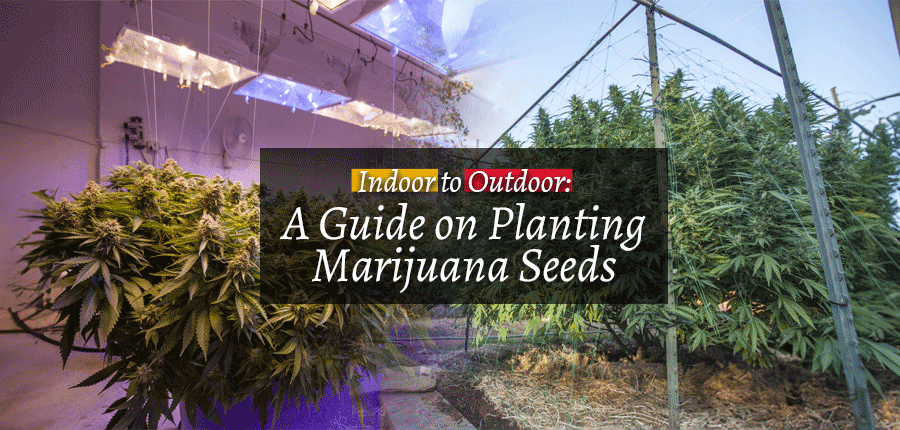
Indoor to Outdoor: A Guide On Planting Marijuana Seeds

There are two primary methods for growing: indoor marijuana seeds and outdoor marijuana seeds. Each approach has its own advantages and disadvantages, so it’s important to carefully consider which one is most suitable for the specific type of cannabis you wish to cultivate, whether it’s outdoor marijuana seeds or indoor marijuana seeds.

At times, growers opt to transfer their cannabis plants from one location to another, despite the potential stress it may cause. However, this can be a beneficial solution to ensure optimal plant growth. There are instances when moving the plants is preferred over permanently keeping them indoors or outdoors.

In this article, we will delve further into this cultivation technique. Additionally, we will provide valuable tips and guidelines related to these different growing conditions in switching cannabis from indoor to outdoor.

What prompts the transplantation of switching cannabis from indoor to outdoor?

Many growers choose to move their indoor plants outside for different reasons. One important reason is that it helps the cannabis plants grow better. When you transfer a cannabis plant to the outdoors, it has more room for its roots to grow compared to indoor growing. This allows the plant to grow taller and produce more buds.

Another reason is the impact of the environment. The climate and weather conditions play a crucial role in the growth of cannabis plants. In places with changing seasons, it may not be ideal to grow cannabis plants outside all the time. Starting the plants indoors and then moving them outdoors helps them adjust to the climate.

Finances can also be a factor in deciding to transplant cannabis plants. Indoor growing can be expensive due to the costs of lighting, nutrients, and ventilation. If growers don’t have enough money to maintain indoor growing conditions, it can be more cost-effective to move the plants outdoors.

To sum up, switching cannabis from indoor to outdoor can promote better growth, adaptability to the climate, and help save money on indoor growing expenses.

When should the transfer of plants take place?

Transferring cannabis plants is not something you can do whenever you want. If it’s done improperly or at the wrong time, the plants could die. Before you transfer a cannabis plant, it’s important to have enough knowledge about the process.

Here are a few things to remember when transferring cannabis plants:

Check the roots: The roots of the plant are important for its growth. Make sure the plant has a healthy root system before you move it. Look for white roots without any discoloration or darkening, which could indicate that it’s root-bound.

Count the leaves: The plant should have at least four to six leaves before you transfer it. However, this can vary depending on the strain of cannabis you’re growing.

Wait for the vegetative stage: The best time to transfer a cannabis plant is during its vegetative stage. This allows the plant to stretch and grow before it enters the flowering phase. Transferring the plant during this period will promote additional growth.

Commencing the Indoor Planting Journey

If you’re growing cannabis plants, it’s recommended to move them after around 45 days from when you start growing them. If you have a greenhouse, it’s best to start growing the plants outside where they can get natural sunlight. Later, you can shift them to artificial light for about 16 to 18 hours a day.

But if you’re growing cannabis indoors, it’s better to wait for at least 60 days before moving the plants outside.

Also, remember that you can use techniques like pruning, trimming, or training to make sure the plants get enough sunlight and produce more. Just be careful and do it correctly to avoid any mistakes that could cause problems.

Preparing Prior to Transitioning to the Outdoors

Before you move the plants, it’s important to make sure everything is ready. The ground should be properly prepared with holes, and the soil should have enough nutrients for the plants to grow well. Take note of the lighting and environmental conditions too. It’s crucial to place the plants in a warm and stable climate so they don’t get stressed during the transfer.

The best time to move cannabis plants is during early to late spring, when many other plants are also being cultivated. This is a good time because the weather is not too harsh, unlike in the summer. By transferring the plants during this season, they will have a better chance to adjust to the new environment

Relocating Your Cannabis Plants to an Outdoor Environment

When you transfer your plants outdoors, it’s crucial to do it gradually. We need to prevent the plants from getting stressed because of the new surroundings. Allow the plants enough time to adapt to the different environmental conditions.

A helpful approach is to begin by growing the plants under the shade of trees or a tent. Then, slowly expose them to direct sunlight until they can comfortably handle the outdoor environment.

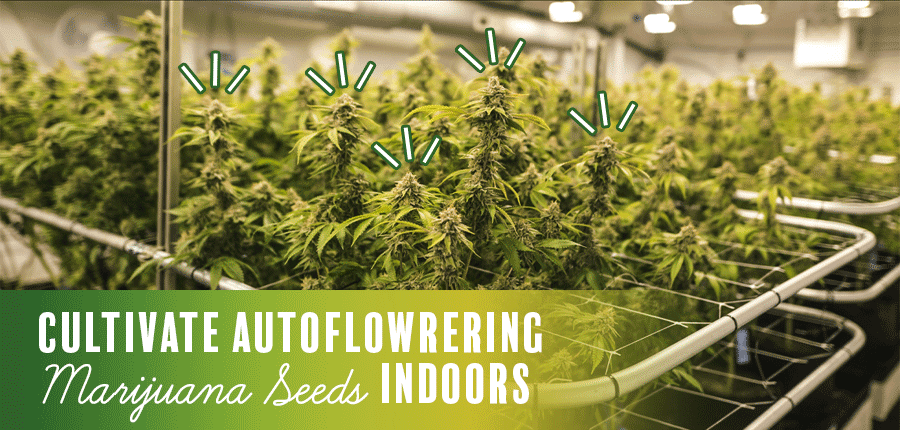
How Can You Cultivate Autoflowering Marijuana Seeds Indoors?

Growing autoflower marijuana seeds indoors offers a unique and convenient solution for cannabis enthusiasts looking to cultivate their plants within the comfort of their homes. While various strains of marijuana can be grown indoors, these specialized seeds are specifically designed for indoor cultivation, ensuring optimal growth and yield in limited spaces. With their compact size, fast growth cycle, and ability to flower automatically, indoor autoflowering marijuana seeds have become increasingly popular among novice and experienced growers. This article will explore the characteristics and benefits of growing autoflower marijuana seeds indoors, shedding light on why they are an excellent choice for indoor cultivation projects. Whether you are a cannabis enthusiast looking to embark on your growing journey or an experienced grower seeking new possibilities, understanding these seeds’ advantages and unique features will undoubtedly enhance your indoor cultivation experience.

Advantages Of Growing Autoflower Marijuana Seeds Indoors

Growing marijuana indoors provides growers with the advantage of having complete control over the cultivation environment. Unlike outdoor cultivation, where weather conditions, pests, and natural sunlight are beyond the grower’s control, indoor growing allows for a stable and controlled environment. Each aspect of the growing process, including light, nutrients, air circulation, temperature, and water supply, can be meticulously managed to optimize plant growth and yield.

One of the main reasons many growers prefer indoor cultivation is the elimination of reliance on external factors like open water and weather conditions. With indoor growing, growers are not at the mercy of unpredictable weather patterns or water availability. This makes it easier to maintain a consistent and reliable growing environment throughout growth.

Another advantage of indoor marijuana cultivation is the ability to grow plants year-round. Unlike outdoor cultivation, which is often limited to specific seasons, indoor growers have the flexibility to start and harvest crops at any time of the year. This continuous cultivation cycle allows for a steady supply of fresh marijuana, regardless of the external climate.

When choosing the right seeds for indoor cultivation, a wide range of options are available. Many marijuana seed breeders offer diverse strains specifically tailored for indoor growing. These strains have been carefully developed to thrive in the controlled conditions of an indoor garden, ensuring optimal growth, yield, and potency.

Within the selection of indoor marijuana seeds, you can find a variety of exceptional and world-famous strains. Whether you’re a novice or an experienced grower, there are options to suit every budget and taste. From award-winning varieties to specially crafted hybrids, the market offers a vast array of indoor marijuana seeds to cater to the unique preferences of individual growers.

By selecting the right indoor marijuana seeds, growers can embark on a rewarding journey of cultivating high-quality cannabis within the confines of their homes. With careful attention to detail and the support of advanced cultivation techniques, indoor cultivation can yield impressive results, providing a constant supply of premium marijuana throughout the year.

Things To Consider Before Growing Autoflowering Marijuana Seeds Indoors

When choosing indoor marijuana seeds, personal preferences play a crucial role. Consider the desired effects of the strain you’re looking for. Sativa strains are known for their uplifting and energizing effects, while Indica strains offer a more relaxing and sedating experience. Hybrid autoflowering strains balance the two, offering the best of both worlds. The market offers various marijuana variations to cater to different budgets and individual preferences, ensuring something for everyone.

Another factor to consider is the space available for cultivation. Some strains can adapt to your specific setup if you have limited floor space but a high ceiling or vice versa. Many seed breeders provide height guidelines for each strain, allowing growers to choose seeds that comfortably fit within their indoor growing space.

Experience level is also an important consideration. Some strains are particularly recommended for beginners, as they are more resilient and forgiving, making them easier to cultivate successfully. These strains are often labeled or marketed as suitable for novice growers. On the other hand, some strains may require more expertise and attention to detail to achieve their full potential. These strains can be a great choice for experienced growers looking for a challenge and willing to invest the necessary time and effort.

Unlike outdoor cultivation, where the region’s climate plays a significant role in strain selection, indoor cultivation provides a controlled environment. You don’t need to worry about filtering your strain choices based on the weather conditions in your area. Since the indoor growing environment is separate from external factors, strains recommended for indoor cultivation can thrive regardless of the climate outside. Whether you live in a hot and sunny region or a temperate/continental or Mediterranean climate, you can choose from various strains suited for indoor cultivation.

Consider your preferences, available space, and experience level when selecting indoor marijuana seeds. Considering these factors, you can find the perfect strains that align with your desired effects, fit your growing space, and cater to your cultivation expertise.

Common Problems In Growing Autoflowering Marijuana Seeds

Genetics: Avoid poor genetics by purchasing autoflowering cannabis seeds from experienced and reputable dealers. Premium seeds ensure expected results.

Yield: Research the strain’s growing requirements to prevent poor yield caused by factors like lighting, nutrition, and stress. Reducing stress is essential for better results.

Growth: Overcome stunted growth caused by nutrient deficiencies, reduced lighting, pests, and environmental factors. Eliminating negative factors and following grow instructions can enhance plant growth.

Dealing with Pests: Combat pests like spider mites, which can devastate crops quickly. Managing pests is crucial to salvage your plants.

Equipment Challenges: Selecting, using, installing, and maintaining equipment for cannabis growing can be complicated. Understanding different equipment is key to optimizing the growth of indoor autoflowering cannabis plants.

Indoor or Outdoor Growing: Consider the advantages and disadvantages of growing autoflowering cannabis indoors and outdoors. Indoor cultivation provides control but comes with higher costs, while outdoor cultivation is less stressful but lacks environmental control.

Private/Stealth Growing: Maintain privacy and prevent unwanted attention to ensure the successful growth and development of your cannabis plants.

Getting Updated Information: Stay informed about the latest cannabis seeds and strains to avoid mistakes and achieve better results. Seek reliable sources of information.

Overall Costs of Operation: Indoor autoflowering cannabis growing can be costlier due to expensive seeds and maintenance requirements. Factor in equipment, electricity, and energy conservation while planning your budget.

Why Consider Buying Indoor Marijuana Seeds From Rocket Seeds

Our selection of indoor marijuana seeds here at Rocket Seeds encompasses a wide range of highly suitable strains for indoor cultivation. Whether you prefer feminized or autoflowering seeds, we offer various strains that excel in indoor growing environments. Most of the strains in our collection are compact or of standard height, making them ideal for indoor cultivation where space may be a limitation. However, for those fortunate enough to have ample vertical space, we also have a splendid variety of seed types that can produce taller plants.

In addition to accommodating different plant heights, our indoor marijuana seed selection also caters to growers with varying time constraints. We offer a broad spectrum of strains with average or short flowering times, perfect for individuals seeking quicker turnaround. However, if potency or yield is your priority and you are okay with a longer flowering period, we have strains that deliver exceptional strength and productivity.

Whether you lean towards the soothing effects of an Indica or the uplifting qualities of a Sativa, the choice ultimately lies with you. Our collection encompasses various strains, allowing you to explore and find the perfect fit for your preferences. And if you find yourself torn between the two, our hybrid autoflowering seeds offer a fantastic compromise, providing you with the best of both worlds.

To assist you in narrowing down the strains that best suit your needs, we have implemented an online platform where you can browse available marijuana variants. You can easily filter and sort strains based on regular, feminized, or autoflowering criteria, plant height, yield, price, seed bank, flowering time, and Indica/Sativa balance.

By utilizing our online resources, you can efficiently navigate through the extensive selection of indoor marijuana strains, ensuring that you find the perfect seeds that align with your specific requirements. Whether you’re seeking renowned award-winning strains or simply looking for the right balance of characteristics, our collection offers diverse options to meet your indoor cultivation needs.

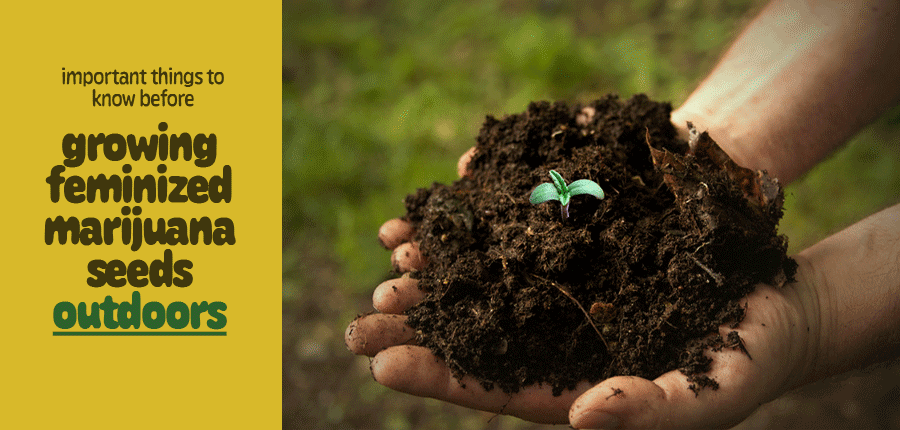
Important Things to Know Before Growing Feminized Marijuana Seeds Outdoors

If you’re considering growing feminized marijuana seeds outdoors, several crucial factors must be considered. Selecting the right feminized cannabis strain, finding the perfect location, and preparing the optimal growing medium. However, having the patience and dedication to see the entire process through is equally vital.

This comprehensive article will discuss everything you need to know about growing feminized marijuana seeds outdoors. Whether you reside in a country where outdoor cultivation is permitted or simply want to explore the possibilities, this guide will provide valuable insights and practical tips.

Understanding Male vs. Female Marijuana Plants

Marijuana plants can produce either male or female seeds through natural breeding or established cultivation techniques. Regular seeds have an equal chance of producing both male and female plants. This means that growers working with regular seeds have a fifty-fifty probability of obtaining feminized marijuana from each seed.

However, cultivating marijuana from regular seeds can be inefficient. It’s akin to running a bakery that ends up discarding half of its pastry rolls. Growers working with regular seeds must be prepared for the possibility that a significant portion of their marijuana plants may turn out to be male. While male cannabis plants have their uses, excess can hinder the growth of the desired female plants and impact the overall yield.

Pros of Growing Feminized Cannabis Seeds

Prevention of Pollination: By using feminized cannabis seeds, you eliminate the risk of pollination from male plants, ensuring the development of seedless buds with optimal potency.

Simplified Cultivation: With feminized seeds, you don’t need to worry about identifying and removing male plants during the pre-flowering stage. This simplifies the cultivation process, saving you time and effort.

Increased Success Rate: Feminized seeds have nearly perfect success in producing female plants. This means you won’t have to allocate space for plants that will ultimately be removed from the growing area.

Bud Production: All feminized cannabis plants will generate buds, ensuring a bountiful harvest of high-quality flowers.

Cons of Growing Feminized Cannabis Seeds

Reliability of Seed Dealers: It’s important to source feminized seeds from reliable and reputable dealers to avoid the risk of obtaining low-quality or hermaphroditic plants.

Breeding Limitations: If you want to develop new and unique strains, you’ll need male seeds for effective breeding techniques. Feminized seeds may not be the best option in this case.

Seed Production: If you intend to produce seeds, feminized seeds are unsuitable since they inhibit the growth of male plants necessary for pollination.

Advantages of Outdoor Cultivation

Growing marijuana outdoors can simplify the cultivation process by eliminating the need for artificial lighting and climate control. The natural environment takes care of these aspects, with sunlight providing essential energy for plant growth, wind aiding air circulation, and rain and soil providing necessary nutrients and protection. While occasional watering and using fertilizer or compost may be required, outdoor cultivation can be cost-effective and efficient.

Factors to Consider for Outdoor Cultivation

Location
When planning an outdoor grow, choosing an appropriate location is crucial. Consider the sun’s movement throughout the day and select a spot that receives ample sunlight during both the flowering and vegetative stages. Some potential locations for outdoor cultivation include open fields, forests (with access to water sources), roof terraces, personal gardens (with proper security measures), and balconies (using black plastic sheets for discreetness).

Climate
Climate plays a significant role in the success of outdoor feminized marijuana cultivation. While a sunny climate is often ideal, not all regions offer the same favorable conditions. It’s important to research your area’s climate and consider factors such as temperature, humidity, and seasonal variations to ensure the optimal growth of your plants.

Pest and Mold Prevention
Outdoor cultivation exposes plants to various natural threats, including pests, fungi, stress, and hungry creatures that may be attracted to your cannabis crops. To mitigate these risks, select outdoor feminized marijuana seeds resilient to diseases and molds. Additionally, organic pesticides can help eradicate pests if they affect your feminized plants.

Making The Most of Your Cannabis Growing Space: A Full Guide

Although most people have enough space to grow cannabis, many growers are limited to small indoor spaces. However, that doesn’t mean you can’t grow excellent cannabis; it’s quite the opposite. You can maximize your growing space and create incredible cannabis from small areas with the correct techniques.

In this article, we will give you 11 key tips to make your cannabis growing space more efficient.

1. Choose the Right Strain

Choosing the right strain is paramount to maximizing your growing space (especially in a small growing space). Typically, ruderalis strains or indica strains offer more advantages over sativas because of their lack of stretch during the flowering period, compact size and short internodes.

With that said, that doesn’t mean you can’t use sativa strains in small growing spaces. If you have the right vegetative period and training, you can achieve incredible results with sativa, even if you’re a hobbyist.

2. Maximize the Size and Density of the Plants

Each strain comes with specific properties and behaviors; these can offer clues to the grower to bring the best out of the plants. For example, if a certain cannabis strain continues to branch after the switch to flowering, you may require more space per plant.

Most importantly, finding the best balance between the size and density of your preferred strains allows your plants to achieve healthy, strong and dense buds. If you get the balance wrong, you’ll likely end up with underdeveloped buds which fall short of their maximum yield.

3. Make Sure Your Light Distribution Is Maximized

You must ensure you get the maximum possible light on your floor space, regardless of how small. More importantly, you need to distribute the light evenly around the growth space. Therefore, you need the right lighting system built around your growth space.

4. Regulate the Temperature

You’ll need to ensure the room’s temperature stays between 70 to 85 degrees Fahrenheit when the lights are on and 58 to 70 degrees Fahrenheit when the lights are off. However, the room’s temperature should depend on the cannabis strain.

For example, sativas are more tolerant of high temperatures, whereas indicas prefer colder temperatures. There are three primary tools to measure and regulate temperature:

  • A thermometer
  • A hygrometer
  • An infrared thermometer

You can also control the temperature through lighting, airflow, ACs and heaters. In addition, you can control the humidity through dehumidifiers, airflow, water, and humidifiers.

5. Use Vertical Space

If you have limited floor space, you should grow upwards. Indoor tent technology is improving all the time. As a result, there are increasing options for tents that divide vertically. However, if the high price tag puts you off, you could create your own vertical compartments.

But if you choose the DIY option, ensure the floors of your compartments and the side supports can withstand the weight of mature cannabis plants.

6. Use Compact Lighting

Compact lighting is key to achieving excellent cannabis growth. Many small growing spaces—especially indoor ones—struggle to use high-wattage lighting. That’s often because of heat issues and the size of the lights.

However, if you have small tents—such as less than a meter squared—you should use LED lighting systems or CFL because they’re often small and compact. In addition, they also include built-in reflectors, which offer unidirectional light without requiring reflectors.

7. Optimize Your Equipment

There’s no point buying expensive equipment if you’re not going to optimize it. If you have a small grow space, the equipment you choose and how you use it will hugely impact your cannabis growth.

If you’re using HPS lighting, you could use a cool-running ballast, such as the ReVolt. It claims to run 15% cooler than other ballasts, which ensures the room temperature doesn’t spiral out of control and ruin your cannabis.

Another superb option is the fans that you can place on the sides of your tent; this will ensure you save floor space.

8. Apply the SCROG Technique

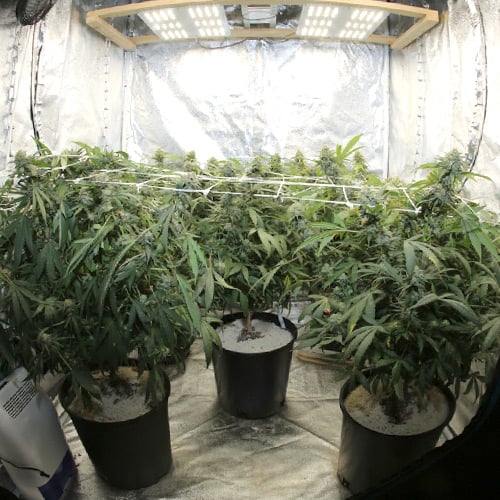
The SCROG technique is essential for smaller growing spaces because it promotes the neat growth of flowers and enables light to penetrate equally across the flower sites. The SCROG process is straightforward. You place a screen between the plants and the light source. As the plants grow toward the light, the branches will grow through the screen, and you can tie them with a string or twine. As a result, you can maximize light penetration by training the branches to fill out.

9. Use Hydroponics

Hydroponics can preserve enormous amounts of space compared with classic container grows if you have the ideal setup. For example, when you use containers, you’ll need substantial space for the roots to grow freely and access the required number of nutrients.

However, when you use hydroponics, the roots can occupy a much smaller space because nutrient-rich water is continually renewed, which helps the roots to grow in a smaller area.

10. Discourage Stretching

Stretching is a complete nightmare for any grower because it often results in loose and light buds—which can reduce yield and waste money. However, stretching is even worse for small-scale growers; it can result in your plants growing beyond their light source. If you’re using hot lights, you can badly burn your plants.

The best way to minimize stretching is to ensure your light source is at the perfect distance from the plants. For example, the further away your plants are from the lights, the better it is when growing in a small space. However, if all else fails, use topping and training techniques to prevent stretching.

11. Find the Right Cannabis Soil

First-time growers need quality potting soil to provide their plants with enough nutrients. The cannabis industry regularly calls this soil “super soil” because it can grow a cannabis plant from start to finish without any issues. You can make this soil yourself by using worm castings, bat guano and other components mixed with good soil.

However, you’ll likely feel overwhelmed when you look for soil in a store. You may find words like biochar, compost, plant food, bone meal, etc. Many companies will offer a superb structure with basic nutrients; they allow you to fill in the nutritional gaps.

In Summary

Having a small space to grow cannabis doesn’t mean you can’t grow superb marijuana. If you follow the tips above, you’ll maximize your growing space, regardless of how small it is.

Top 10 Spring Strains: Best Outdoor Growing Strains

When planning your outdoor grow, be sure to invest in the right seeds for the best flowers and harvest. Whether you want to specialize in a particular type or want to try for a great variety, take time to research your marijuana seed collection to result in a great season and product. Breeders have created some high-performing weed seeds with ideal capabilities that make them tailor-made for medical and recreational usage.


White Widow Feminized 


A mellow hybrid, White Widow mixes the euphoria of a Brazilian sativa with the relaxation of a South Indian indica. One of the most recognized strains in the world, add White Widow feminized seeds to your outdoor grow for an amazing season. It will reach heights up to eight feet and complete a grow season in about 3 months. White Widow grows best in warmer climates, but you can plant them from Mexico and Canada and anywhere in between.


Using these feminized seeds helps you get the best value and bushiest nugs, as every plant will be female. Bred by a legendary Dutchman named Shantibaba, it’s won numerous awards, including the Cannabis Cup in 1995.


Girl Scout Cookies Auto  

Autoflowering seeds are a great tool for consistent harvests, fast. They also start flowering depending on the growth and development of the plant instead of light cycles or seasonal photoperiod, meaning you might be able to fit in multiple grows in the time it normally takes you to do one.

After about 9 weeks, you’ll start to see crystally, dense buds with the proper care. Girl Scout Cookies Auto is a cross between OG Kush and Durban Poison and is one of the most recognized strains in the world. Indica forward, it grows into characteristic dense bushes that can yield as much as 600 grams per square meter.

This hybrid has strong genetics and produces large, resinous buds. Girl Scout Cookies Auto can be grown outdoors in warm and temperate climates. It’s a good choice for first-time growers, as it’s relatively easy to cultivate.


Purple Haze 


Growing Purple Haze Cannabis Seeds is a goal for marijuana enthusiasts alike. Popularized by the 1967 hit by Hendrix, it delivers an uplifting and energizing high. The iconic purple buds are 80% sativa dominant and are a pungent cross of a Haze variety and Purple Thai. These feminine seeds grow to maturity outdoors after a 65-day flowering season. Relatively small plants, you’ll be able to grow more in one space.

The THC level is higher, at around 20%. The smoke is smooth with a lemony aftertaste. The buzz is cerebral and creative, perfect for enjoying music or getting lost in a good book. If you’re looking to bring some of that magic purple haze into your garden, then consider growing Purple Haze Cannabis Seeds.


Durban Poison 


Durban Poison is a strain imported in the ’90s from Durban, South Africa and it is one of the most popular types of bud in the world. Resilient in many types of weather, it’s relatively maintenance-free and produces strong buds with more than 20% THC content. The ideal temperatures are between 65- and 85-degrees Fahrenheit.


It has a distinct smell that’s slightly fruity, and it produces more resin than most other buds. These feminized seeds will deliver amazing quality flowers, with up to 350 grams per square meter. 


Super Silver Haze 


Our premium autoflower Super Silver Haze seeds gives quality buds for your outdoor grow after only 7 to 9 weeks. This cross of Northern Lights and Haze does well in hot and humid climates between 70 and 80 degrees. Super Silver Haze is sativa dominant and actually requires minimum feeding for best results.

It grows to a medium size and contains 17% THC. Invigorating and light, our Super Silver Haze seeds grow like a dream.


OG Kush 

Choose from 5 seed packets, 10 seeds packets, or 25 seeds packet when buying your OG Kush seeds. This autoflower strain produces big, sunny buds with premium OG Kush genetics. It also does its best when growing outdoors, in mostly dry conditions. If you increase its nutrition and CO2 uptake with a good fertilizing regimen, you can increase yields by up to 20%.


Northern Lights 


Experience growing the legendary Northern Lights strain with an autoflower cross for faster, more reliable buds. The indica strain grows resinous, purple-hued buds with an earthy, dank aroma. They are dense and tightly packed, with spacious nodes for maximum growth. Some of its noticed effects are fast-acting pain relief and euphoria.


Gorilla Glue #4 


Gorilla Glue #4 is a power-packed strain bred from Chem Sis, Sour Dub, and Diesel Chocolate. It’s also one of our most popular strains and it was the winner of the Cannabis Cup in 2014.  You can get more than 100 grams per plant when grown outdoors. It’s a heavy feeder and its ideal temperature sits at 80 degrees Fahrenheit, and you’ll be rewarded with chunky buds.


Blue Dream


Blue Dream is a hardy strain that’s ideal for outdoor grows. They create beautiful, heady buds, and the plants can also grow enormously tall. Our feminized seed stock is a great pick because the blue-tinged nugs are guaranteed. Blue Dream in particular has a high among of alpha-pinene, which helps to reduce inflammation.


Alaskan Thunder Fuck 


This fruity-forward sativa is rumored to have originated in the valleys of the Alaskan wilderness. Due to it being from Alaska, it favors colder climates, but it is crossed with an Afghani indica so it can still produce high yields in warmer climates. It grows frosty buds that help promote creativity and relaxation. Careful growing techniques, like cropping, help prevent it from growing too tall and can help increase the yield.


Understanding Cannabis Seedling Stage

Cannabis plants are known to be very hardy and resilient plants. You can find these growing in almost all environments, warm, chilly, tropical, or Mediterranean-like climates. This plant is fun to grow too and in fact, you can cultivate this at home. If you wish to grow cannabis plants at home whether, for recreational or medicinal use, you need to understand the different stages of plant growth most especially the cannabis seedling stage. 

The seedling phase sets the stage for the growth and development of your plants. When you diligently take care of your seedlings, you will surely grow healthy and productive plants. 

What is the Cannabis Seedling Stage?

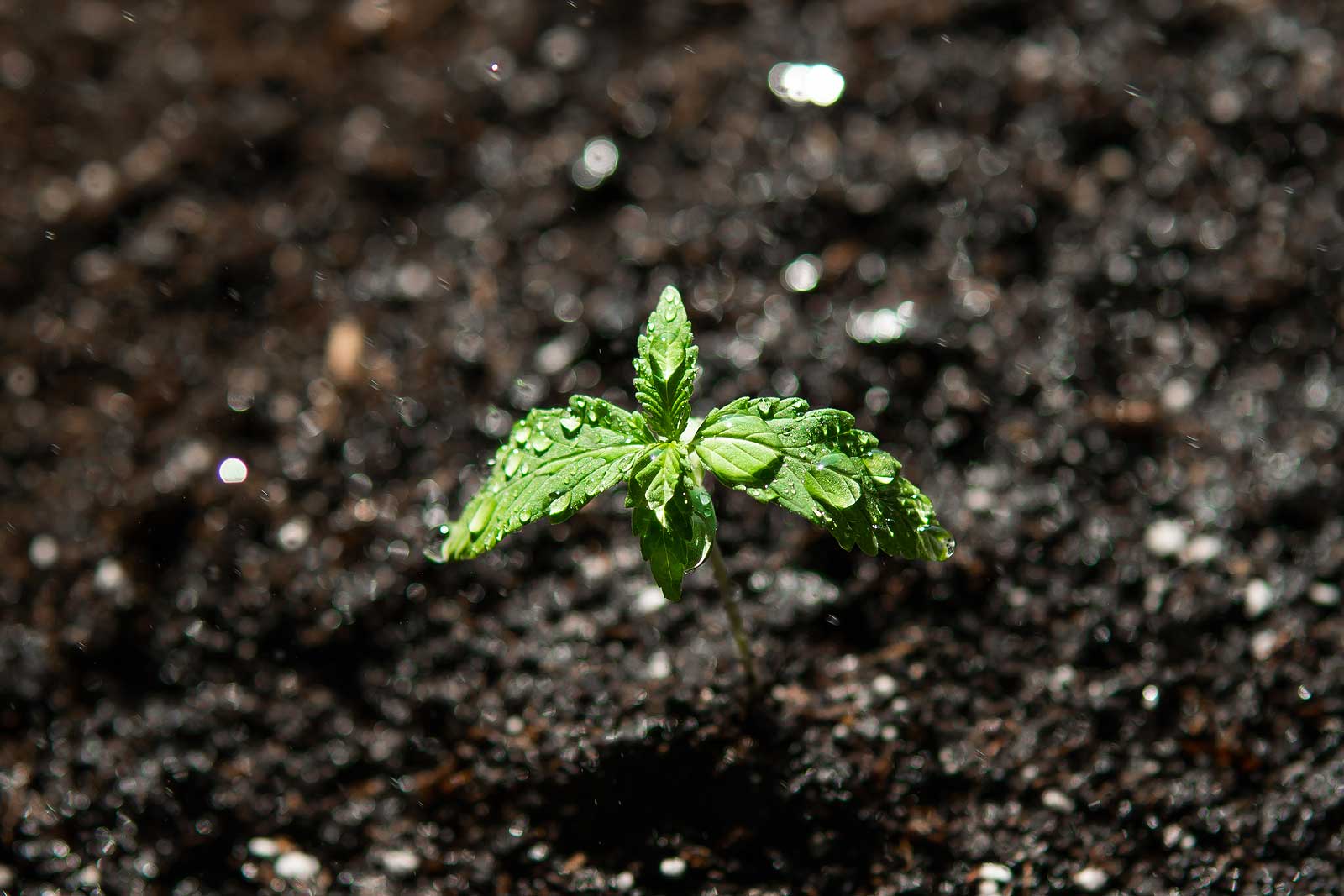
The seedling phase starts right after the cannabis seed sprouts. After a few days of being nestled in soft and comfortable soil, the seed will break open from its seams, and out comes the taproot. This main root screws itself downwards until it reaches deep into the soil where it can grow complex roots. When it’s firmly anchored, the seed will raise the husk that contains the two halves.

The two halves of the husk are called cotyledons and are round-shaped leaves. Immediately after the cotyledons sprout from the seed, it will gather enough light to manufacture the plant’s first food.  Meanwhile, the feeder roots emerge from the taproot and will continue to move through the soil to gather nutrients and water. These complex roots continue to strengthen its grip to further steady the plant.

First Leaves of the Marijuana Seedling

Once the seedling is firmly anchored to the ground, the first leaves of the plant or the cotyledons will soon emerge. The two primary leaves have a unique shape and form. These will grow from the middle of the split of the seeds. These round-shaped leaves are known as sucker leaves and these means that the seedlings are ready to grow more leaves.

In between the sucker leaves, three-lobed leaves will form resembling chicken feet.  Right after the three-lobed leaves will sprout leaves with five lobes and then after, leaves with seven lobes. The leaves with seven lobes are the most recognizable ones because these look like regular marijuana leaves. 

Keep Seedlings Protected

The very first thing you must do as soon as your Cannabis Seeds sprout and start to form new leaves is to protect it. Seedlings are vulnerable to almost anything from birds that may fly by and eat it as a snack to severe heat from the sun. If you sprouted seedlings outdoors in soil, you can improvise some kind of cover.

You may use a plastic bottle as cover for your precious seedlings. Recycle plastic bottles by washing them and cutting these in half. Use the top half to create a transparent dome over the young plant. Aside from the mouth of the bottle, poke more holes on the side of the bottle to allow air to move through. This makeshift dome will also shield plants from the sun and rain. You can use almost all types of plastic bottles as long as these are clean. Make sure to press the bottle deeply in the soil so it won’t be blown away by the wind.

Protect seedlings better by growing these indoors. With indoor growing, you can protect seedlings from the harsh climate, from wild birds and pests. Also, keeping seeds indoors will help keep your plants safe from prying eyes especially if it’s illegal to grow cannabis in your area. 

How Much Light Do Seedlings Need?

Seedlings need a lot of light to manufacture new plant parts and food to be utilized by the plant as well. If you’re growing your seedlings outdoors, place the potted plants in a shaded area, not directly under the sun as this can dry up the soil quickly, and damage plant parts. If the day becomes too hot, take the plants in a covered area like your patio or porch. Be sensitive to your plants’ needs; if you feel hot then these are likely feeling the same way!

If you are growing your plants indoors, plan out your lighting setup. Provide bright light as much as possible. Use CFL or LED lighting during this phase. You may use high-intensity lamps but it will only be a waste of electricity because your plants are still too small. A CFL lamp would do with 20-hour light and a 4-hour dark schedule would do.

Some growers prefer to keep a 24-hour light schedule to fully sustain the growth of their seedlings but actually, seedlings need dark hours too. Roots grow better during the night time or dark hours. Allowing 4 to 6 hours of darkness would be enough to stimulate natural lighting, the kind that nature provides.

Light Problems

The most common lighting problem at this phase is your plants not getting enough light. When you notice that the seedlings are stretching or growing unusually taller, this means that these are trying to reach up and look for a light source. All plants in the seedling and growing phases do this. Some plants may even crawl to a light source that it senses along the ground. 

If you don’t correct this, it may be too late for your young plants. Stretched stems will grow frail and can easily break once more leaves grow from these. Also, it would be difficult to prop stretched stems. Cutting the stretched stems may seem to be the best option. Some growers attest that their plants were able to recover from cutting the stretched parts but there is also a possibility of stressing the seedlings. 

Therefore, the key to cannabis plant stretching is to catch the signs early and correct lighting problems early as well. 

And as too little light is bad to seedlings, too much can also be worse. Seedlings that are left too long out in direct sunlight can wilt and dry. Remember that the roots of these plants are still underdeveloped and may not be able to take in water as quickly as large and mature plants. The key is to keep the soil moist longer to allow the roots to drink water at its own pace. 

If the seedlings are left out in the sun or very hot indoor light for too long, the soil and roots can dry up and this will affect the way your plants take in water. The seedling will soon wilt and die. Therefore, it’s important to maintain a proper distance from the seedling and the light source. A good four or more inches would do well if you are using CFL lamps. A good rule is to place your hand under the lamp. If it’s too hot for you then it’s too hot for your plants.  

To save overheating seedlings, take these to a shaded area and water the soil. Let the soil soak in water with excess draining from the hole on the pot. Place a box or an umbrella over the seedlings that are grown directly from the soil. Water the ground until it soaks. Monitor your plants well. These may recover but very wilted seedlings rarely do recover.    

How Much Water Do Seedlings Need?

After the light, your young plants also need water. Water mobilizes nutrients so these can be easily taken up by the roots. And when it comes to the amount of water to use, it depends on the time of day you’re watering your plants, the type of soil you are using, and the climate.

If you’re using proper soil for cannabis (available in most cannabis growing centers) you only need just the right amount of water because this will be absorbed better and the excess drained from the growing container. 

When rainfall is scarce and it’s too hot, you may need to water your plants more than once a day. Of course, all these apply to cannabis seedlings sowed outdoors. For indoor plants, consider watering only when the soil is dry. When you see that the soil is wet or moist then forego watering for a day.

When your plants are outdoors, it would be best to water during the early morning, this is because it still takes a few more hours before it gets very hot. This means that the soil can still absorb more water.  

Watering Problems

Two common problems with watering are underwatering and overwatering. Both can be very devastating to plants especially during the seedling phase. 

Suspect overwatering when your plants look very dewy and fat with water still pooling on the soil surrounding it. If this happens even after a few hours of watering, then your plants are over-watered. If this happens often, or you overlook this then your plants may end up dying.

Underwatering is twice as dangerous to plants as well. This happens if you fail to water your plants for quite some time or the climate is just too hot then your plants. Signs include limp stems and leaves, drooping stems and dry or cracked soil or ground surrounding the plant

To solve overwatering, let the soil dry by increasing heat and by enhancing airflow inside the growing area. Use a small fan (a desk or oscillating fan) will dry up the soil in no time. Plus, the added breeze can help strengthen the stems of plants.

To resolve underwatering, add water immediately to drooping plants. If you’re growing plants in pots, water until you see excess draining from the potholes. Place the pots in a shaded area of your garden or growing area.

What are the Nutrients Needed by Seedlings?

Seedlings may not need nutrients. Your young plants have all the nutrients they need to grow healthy from the nutrients contained in the seed cotyledons. However, some growers agree that a little bit of help won’t be a problem. 

At this stage, plants need fertilizer with high amounts of nitrogen, a nutrient that helps enhance plant growth and development. With nitrogen, your seedlings will grow healthier and stronger stems and roots, grow more leaves to help with food production and for overall plant health. 

Choose fertilizer products meant for the seedling phase (please check the labels!) and follow the instructions on how to apply these to your plant.  

What are the Ideal Temperature and Humidity Levels of Your Growing Area?

Assuming you’re growing cannabis indoors or inside a growing area, you need to maintain this area’s temperature and humidity levels. Seedlings love warmer temperatures around 73 degrees Fahrenheit. But if you feel that this is too hot then you can move the growing lamp further away. You can tell that the seedlings are too warm when you see their leaves curling upwards and have formed a canoe-like shape.

When it comes to the ideal humidity for seedlings, the best would be a higher humidity at around 60 to 70%. You must reduce it gradually as your cannabis plants begin to grow and mature. By the time your plants are in the flowering phase, the humidity levels should be at around 50% or less to avoid mold growth. Follow this schedule:

  • Seedling phase week 1– 60 to 70%
  • Growing phase week 2 – 60%
  • Growing phase week 3 – 60%
  • Flowering phase week 4 – 55%
  • Flowering phase week 5 – 50%
  • Flowering phase week 6  – 50%
  • Flowering phase week 7 – 50%
  • Flowering phase week 8 – 45%
  • Flowering phase  week 9 – 45% 
  • Flowering phase  week 10 – 45% 
  • Flowering phase  week 11 – 40%
  • Flowering phase week 12 – 40%

To improve humidity levels inside your room, use a humidifier/dehumidifier. To increase humidity, use a digital humidifier. This will accurately correct and monitor humidity levels. You may also spray water on the walls and floor of the growing area to improve humidity. 

To reduce humidity, open doors, windows or use a fan. A dehumidifier will instantly correct humidity levels and monitor these as well. To accurately measure humidity, use a digital hygrometer- thermometer. 

The cannabis seedling stage is short but a very important stage phase of your plants’ development. Handle your plants well and care for it the best way you can during the seedling phase and you will be rewarded immensely during the flowering stage.

Autoflowering Feeding Schedule

Just like other plants, autoflowering cannabis also requires its own growing requirements. In order for them to thrive and produce high yields, growers must be able to supply them with the nutrients that they need. In this article, you will be able to learn about different types of nutrients and the autoflower feeding schedule that you should provide for it.

The Basics Of Plant Nutrients

Before you begin to plan your autoflower feeding schedule, you should learn to familiarize yourself with the different plant nutrients needed by your plants. This is normally categorized into two: macronutrients and micronutrients.

Macronutrients are given this name because they are commonly applied through using large quantities. This group is comprised of NPK or Nitrogen, Phosphorous, and Potassium. On the other hand, micronutrients are comprised of Manganese, Iron, Zinc, Copper, Sulfur, Calcium, and Magnesium. They are given to the plants in smaller amounts.

Both sets of nutrients are supplied to the plant in different ways, which can be via a slow-release powder, nutrients mixed with water, and through mixing with pre-amended soil. One of the most important things to remember is that there is a tendency to feed too little and too much to your plant, and that is the main reason why you should study the autoflower feeding schedule carefully.

Organic vs. Inorganic Nutrients

The organic method of feeding cannabis plants comes with the theory that enriching the growing medium will also enrich the plant in a natural way. This would mean that you will not directly feed your plant. You will focus on taking care of your medium so that microorganisms will grow on the medium, break them down to smaller pieces so that the plant will be able to absorb them well.

This technique is used so that the plant will decide on its own how much it will absorb the nutrients that it needs. This will avoid having problems with going overboard with the nutrients because the plant decides on what it actually needs.

On the other hand, inorganic nutrients work through providing the nutrients by getting the exact amount of nutrients that it needs. Because everything will be addressed by your plant, the grower must be aware of the breakdown of the nutrients needed by the plants. As the exact numbers change from one to strain to another, you should first check and verify the needs of the strain that you choose to grow.

For autoflowering strains, it is essential that you know how to identify what are the nutrients that the plant requires because going overboard with organic nutrients will just waste all of them, and too much use of inorganic products will help you avoid burning all your plants. If you are unsure, you can always check on the manufacturers because they can provide that to you, and they must know everything about the plants that they sell.

Autoflower Feeding Schedule For Seedlings

At this moment, the seedlings only have a few leaves. They have two little ones that are called cotyledons, and they provide the plants the nutrition that they require at this young age until they mature and develop more leaves. Though the plant is still quite small, this first two weeks of the plant’s life is very crucial because the development is very fragile and mistakes at this point can harm the success of the yields at the end of the life cycle.

The nutrients that you should go with should only amount to 1/8 of the suggested amount. You should take caution in giving too much to your autoflower. There are many experts that even state that water alone will be enough to sustain the plant in its first two weeks. Overfeeding, in the worst case, will kill your plant.

Remember to read and research the exact nutrients that you should give as it depends on the strain and the growing medium that you will use.

Autoflower Feeding Schedule at the Vegetative Stage

Because you are growing an autoflowering cannabis plant, it will just breeze through the vegetative stage as it will quickly transition to flowering. You can observe this when the autoflowering plant is growing quite faster. At this point, you will be safe to give ½ of the recommended value of the nutrients. The emphasis on this part must be macronutrients, or Nitrogen, Phosphorous, and Potassium. In terms of weight, the Nitrogen must be larger compared to the other two. You may also decide to give them micronutrients – but only in smaller amounts.

Autoflower Feeding Schedule at the Flowering Stage

When the flowering stage of your cannabis plant is reached, you should begin realigning the distribution of the nutrients for your plant. The amount of Nitrogen should be lessened, and more Potassium and Phosphorous should be introduced. Phosphorous will help your plant to produce more buds and fully bloom, so you should provide this to your plant to trigger the flowering stage.

Flushing

Before the harvest season comes, you can get some slow-release nutrients through pellets that you can place in the growing medium. This will release the nutrients while you water your plant – or in simple terms, you will be able to flush them out.

Summary of the Autoflower Nutrient Schedule

Week of Growth Stage of Growth Amount of Nutrients to Provide
1 Seedling Water
2 Vegetative stage 1/8 vegetative nutrient mix
3 Vegetative stage ¼ vegetative nutrient mix
4 Pre-flowering stage ½ vegetative nutrient mix
5 Little flowers growing 1/8 vegetative nutrient mix &¼ blooming nutrient mix
6 Flowering stage ½ blooming nutrient mix
7 Flowering stage ½ blooming nutrient mix
8 Ripening stage Flushing
9 Harvesting stage Flushing

Final Thoughts

If you are planning to grow autoflower seeds, you should study about their specific requirements and understand each part that is different from each other. You can use this autoflower feeding schedule guide, but it is still essential to keep on reading related articles and ask from experts until you are comfortable with the things that you know.

Feminized Cannabis Growing Problems and Troubleshooting Guide

Even if you are new in the world of cannabis cultivation, you should probably know that growing female cannabis can give lots of benefits for your growth. If you know how to do things properly, you have the opportunity to grow beautiful marijuana plants that can produce amazing yields.

In this article, the focus will be on feminized Cannabis Seeds. Growing them is generally much easier – because growers will be assured that the plant will grow up as females every time. If you want to know more, keep on reading.

What Are Feminized Cannabis Seeds?

Feminized Cannabis Seeds are genetically modified by expert horticulturists in order to ensure that growers will be able to get female cannabis plants every time. Basically, this means that getting feminized seeds from a trusted and reputable seed bank will give you a guarantee of 80 to 99 percent, depending on the company that will grow old as female plants.

But, guaranteeing they are feminized does not mean that the growing process will be easy breezy. Growers can still encounter some problems while cultivating their plants.

Common Growing Problems When Using Feminized Seeds

1. Plant Stress

In the technological methods used to produce feminized seeds, some of the processes can make the seeds weak. Most of the time, this is because of the hormones or the chemicals applied by breeders and horticulturists.

The usual process involves forcing the female cannabis plants into producing the pollen sacs of the male plants so that they can generate pollen for reproduction. This means that the false male pollen from the female plant meets the pistils of another female plant with the outcome of fully feminized seeds.

Unfortunately, though the plant will be able to grow only females, the resulting seeds have the genetic weakness to become more vulnerable against stress.

What does this mean? It means that when the plant feels stressed, the female plant will produce seeds instead of buds, produce fewer trichomes which means becoming less potent, attract pests that will harm the plant, and become easily infected by plant diseases.

2. Hermaphroditic Plants

One of the things that you would never want to encounter with feminized seeds is having them end up being a hermaphrodite plant. These plants appear to be a female plant, but a closer look would show that it also possesses male reproductive organs and end up producing pollen.

According to several cannabis growers, feminized cannabis can produce hermaphrodites, and their theories have been effectively proven. In this situation, a mother plant had to be manipulated at some point for it to produce some pollen to get a female seed. So, this pollen is applied to different female cannabis plants, and fertilization occurs. Then, the breed produced will only be females because they are all coming from female origins. However, this means that every time you possess a female seed, this seed has a parent that produced male organs when you check on its hereditary information.

So, how are hermaphroditic plants produced?

First is through chemical incitement. This happens when a female cannabis plant is exposed to chemicals like colloidal silver and gibberellic acid at the beginning of its flowering phase. Because of these chemicals, the plant feels pressured to produce pollen despite being female in its sexual orientation. This method is very effective and is usually done by seed banks.

The second method is rodelization. This strategy means making the flowers mature in extended periods. When the flowers develop past their maturity time without experiencing fertilization, the female plant naturally produces some male pollen within its flowers in order to attempt doing self-fertilization and begins seed production.

The third way is through exposure to high stress. When the plant is exposed to too high temperatures, light leaks, and inconsistent lighting schedules, the exposure to extreme levels of stress can lead to even a perfectly healthy cannabis plant to produce some hermaphroditic strains.

The fourth way is through bad genes. If a plant is borne through messed up genetics that has a history of producing hermaphrodites, it also has the chance to do so despite the grower growing it under optimal conditions.

3. Seedy Buds

Another effect of hermaphroditic plants is producing seedy buds. What does this mean? In ideal conditions, cannabis cultivators are attempting to produce buds that do not have seeds. But, having a few seeds within the buds will not spoil the entire grow. However, having some seeds within the buds will hurt the amount of your harvest because the cannabis plant will use all of its energy into producing some seeds instead of producing more buds. Most of the time, buds that have seeds inside are also less efficient and less potent as well.

4. Problems with Breeding

If you are interested in breeding new strains, feminized seeds are not an option for you. Feminized can only produce feminized plants and are not viable for generating new types or variants of cannabis. If breeding new strains of cannabis, what you should invest in are regular Cannabis Seeds and not feminized cannabis.

5. Chances of Not Germinating

When you purchase feminized Cannabis Seeds, there are chances that they will not germinate at all. If your seeds do not germinate, this means that the seeds are duds, and you will not even gain access from buds. The chances of this to happen, increase when you transact with breeders, dealers, or online seed banks that are not experienced in the techniques that are used in order to create feminized Cannabis Seeds.

This is why it is very important that you only transact the purchase of your feminized Cannabis Seeds through a trusted breeder or a famous seed bank so that you will be assured that the seeds that you get will grow up to be a feminized cannabis plant that produces beautiful and potent buds.

Final Thoughts

Like other endeavors and adventures, growing feminized seeds always come with a risk. There is always a chance that you might not get results even you apply all of the techniques properly, and you provide the plant with all of its needs. It does not necessarily mean that you are a week breeder, it might mean that you need to source your raw materials, feminized Cannabis Seeds, much better.

DIY Cannabis Clone Box Made Easy

A Marijuana Clone Box has its own unique environment, which will be divided into three stages. The primary stage is for developing. It is the growing of a germ, nut, or other conceptive bodies, typically after a time of torpidity or blooming. It is likewise the admission or retention of water, the progression of time, freezing or chilling, warming, warming, O2 accessibility, and illumination introduction that may all work in starting the procedure. The other one is for saplings and duplication to grow, and the endmost is for a few parent or mother plants to grow, expand, and vegetate.

What is Cannabis or Marijuana Clone?

A cannabis clone is a perfect example of asexual propagation— synthesizing a single parent plant from outside the means of sexual reproduction. Usually, cannabis clones begin by splitting a healthy mother plant and then provide the conditions necessary for cutting to develop into a genetically similar plant.

The core purpose of a clone is to replicate and maintain a marijuana plant’s genetic identity. When developed according to the same conditions as the mother plant, a clone is certainly more likely to display the physical and chemical characteristics of the mother than a sexually cultivated plant. A clone should have remarkably similar cannabinoid and terpene profiles to its mother plant as long as environmental conditions stay consistent throughout its life cycle. It must also represent the ability of the mother to take in nutrients and to avoid and withstand pests or fungi.

During their lifespan, marijuana clones go through two cycles: the vegetative stage and the period of flowering. A plant does most of its root and leaf growth during the vegetative period and should receive about 18 hours of light and 6 hours of darkness every day. This can trigger something called pre-flowering if clones were not kept in the vegetative growing state lengthy enough. Cannabis plants are photosensitive, indicating that if they receive too much darkness, they can bloom, which can also cause discomfort or stress to the plant (hermaphrodite: seed production).

Watching for indications of heat stress, such as drooping or scrunching and curling of the leaves, is necessary to keep a close eye on the plants in this early stage of its life. If they indicate any sign of stress or discomfort, you could give them a break by placing then under the shade. It is wise to continue to provide additional lighting through the day’s dark cycle, ensuring that they do not collect or obtain more than 10 hours of darkness. The flowering cycle is the point where approximately 12 hours of light and 12 hours of blackness or darkness and are received by the plant. The plant is usually triggered in an outdoor garden to flip into its flowering cycle around the Summer Solstice period, which falls every year, usually in the month of June.

How to Build Your Own Marijuana Clone Box?

In Creating this Marijuana Clone Box, You Will Need these Items in Your Possession:

  1. Carbon filter exhaust fan which enables the plants to have fresh air
  2. Lights
  3. Hydro or thermal meter which is for the monitoring of the temperature and humidity and also for its measurement

Here are the Steps for Making it:

  1. You need to find or build your adequate closet or cabinet. Preferably 120 x 45 x 150 centimeter (L x B x H) by size. It will depend on how on the number of plants you are planning to grow inside the cabinet or closet.
  2. You must supply plenty of ventilation. While experiencing this, you may introduce a little fumes fan that will annihilate sight-seeing from inside the storeroom or the bureau and will give a much chiller, cooler and fresher air that is carbon dioxide-rich which originates from outside the bureau or the storage room. The yields will require carbon dioxide because of the way that it is influential and fundamental for photosynthesis. Plants will require oxygen and glucose, which originates from those of the mix of water, light, and carbon dioxide. The guardians of the herbs in the verdant condition are most in need of air that is wealthy in carbon dioxide. The smell of the pot plants can be observably impactful; for this situation, you can join a little carbon channel to the fan. The fumes fan will complete a vacuum in the storage room; prohibit the air from getting away somewhere else. All the air that leaves the storeroom must experience the carbon channel, which annihilates the smell. At the point when the warmth rises, you can make an opening at the highest point of the storeroom. This gap can likewise be where all the electrical wire will enter.
  3. Put up a ruminative foil on the walls of the closet or cabinet. This will enable you to make generally out of the light that you need to hang inside the storage room or bureau. One of the most highly recommended foil is Mylar Foil since the light reflects well, and the foil prevents the light from flickering out of the storage or cabinet as well. The foil can also be used to improve the humidity of the closet or cabinet by simply spraying water onto the surface of the foil.
  4. Divide the inside area of the cabinet or closet into three levels. The cabinet or closet that you have provided in creating the Marijuana Clone Box will require one level for dormancy or germination, one level for seedlings and clones, and one level for vegetative parent or mother plants and seeds. The top-level will be utilized for the germination of the seeds. Light is not necessary, but having a consistent temperature would be an advantage. You can also install heat-only lights if you have any plans on growing some seedlings up there as well. There should be at least a 10-inch gap between the shelf and the ceiling. The middle area is for growing seedlings and for rooting the marijuana clones. If you follow the instructions carefully, there should be an ample amount of area to grow 300 clones inside the closet or cabinet that you have utilized. One to three watts of light, each clone, and seedling, is highly required and suggested by cultivators using this box. I expect to have four 60-watt CFL bulbs installed. There should also be a 15-inch gap between the shelves to avoid the plants being grown in a crowded room. The bottom area of the closet or the cabinet is for mother plants and plants, which are in a vegetative state. They need space as much as possible. You can install two reflectors with 100-watt CFL bulbs. There should be a 25-inch gap between the shelves.
  5. It would be best if you made openings in the racks to join the lights. The mini floras need enough light to be distributed equally. It would be easier to place the light on a higher place or maybe just above the shelf and adjust it to your preference or to what would highly benefit the plants. Spot the light in the focal point of the storage room or the bureau and interface it utilizing a smudge and a hook. After the lights are associated with the racks, you would then be able to bring the force link through the air gap outside the closet. It would help if you likewise abstained from blending water and power in a similar little space to forestall any mishaps.
  6. If you are in an area wherein Marijuana has not yet been legalized, decorate the cabinet or closet to camouflage the space you have placed it in. You could disguise your arrangement with a couple of normal things to abstain from making any doubt. You can put some indoor plants or books over the storage room or bureau. A cloth or some other diverting beautification could likewise work. If you place the closet or the cabinet in the office of your home, you can place your mails, invoices, and maybe a cute plant on top of it so that it would blend the area.

Care Tips for Cannabis Clone

In the initial stages, marijuana plants are highly sensitive. For your marijuana clone to develop into a beautiful and healthy flower, special care is highly essential. The clones are expected to be pest-free and disease-free, but here are some tips on how to care for them to make sure you are successful with the plants you pick. Upon leaving every retail location, please check your clones, and if you see any problems, please report them to the retail staff immediately.

  1. Supply your clones with water with a diluted solution of nutrients (400-600 parts per million or ppm) and position them under a fluorescent fixture of low intensity; T8 or T12 bulbs are suitable for this reason, T5 bulbs may cause plants to start “stretching” before you are even prepared.
  2. Be prepared to keep the cubes moist, but also be cautious not to encourage the accumulation of standing water in the tray. This will limit the plant’s rate of growth, hold them a reasonable size, and make sure that some clones are not overshadowed or dwarfed by larger ones.
  3. As your clones start stretching, be sure to reorganize them to avoid “shading out” some clones and transplant them as early as possible.