500 NEW MARIJUANA SEEDS RELEASED

Cheapest Indoor Grow Set Up for Cannabis

You may have heard about how costly it is to grow weed at home. This is why most people who use cannabis for recreation or medication simply buy their supplies from a dispensary. But for most people who want to grow their weed and want to explore new ways to make good quality cannabis, they say that you don’t really need to pay so much to do so.

If you came here for information about the cheapest indoor grow set up, then you won’t be disappointed. We have a few recommended affordable growing setups for growing weed at home. These are complete sets with all the things you need to start growing weed right away. 

We also have some of the best, highly-recommended growing equipment. These are affordable, easy to use, and perfect for people who are new to growing weed. All these prove that you don’t have to spend a fortune to grow the best-tasting weed at home.

Can Cannabis Grow in Any Growing Setup?

Cannabis plants are very hardy plants. These can grow in almost all environments, from rugged deserts to very cold regions of the planet. Somehow, cannabis plants were able to survive. Some plants adapted by reducing flowering times while some grow sparse leaves and stems so that all their energies are used to cultivate large and dense buds. 

If you’re skeptical about growing weed in a cheap setup, don’t worry. Many have done this before and have achieved good results. There are also first-time marijuana growers who have managed to grow medicinal cannabis using a cheap setup. We recommend using a simple weed growing setup if you’re new to growing cannabis so you can better monitor your plants.

And to get you started, here are some important things you need to consider when planning your cheap indoor setup.

What Your Cheapest Indoor Grow Set Up Needs

Since we’re talking about affordable, cheap setups, the following should be considered: 

Affordable Growing Room or Space

Before we head off to the different growing equipment that cannabis growers need to cultivate weed, let’s first check out an easy alternative called a grow box

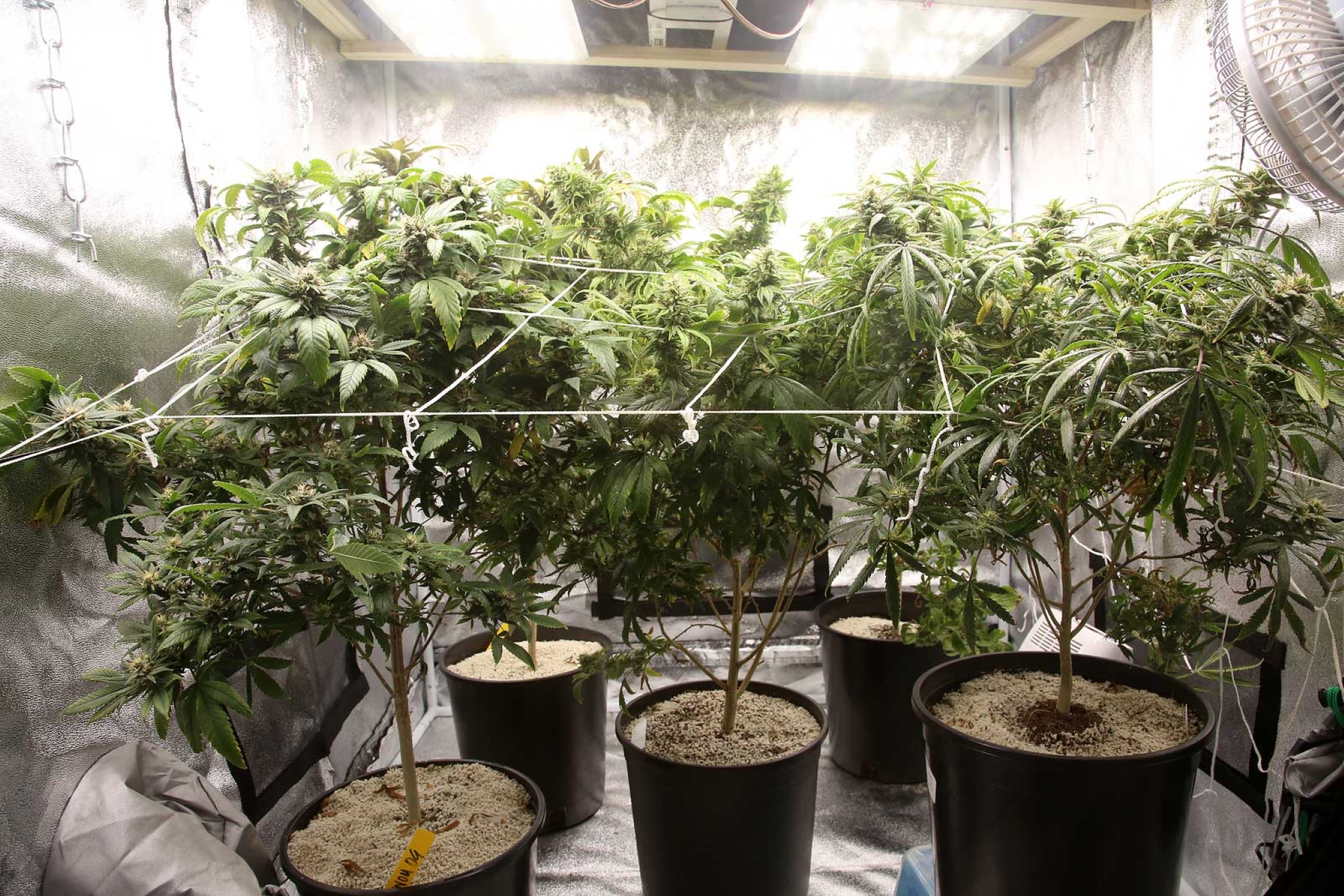
A grow box is a small tight space where you can secretly grow weed. A grow box comes in different sizes with some measuring 48″ x 48″ x 80″ which can accommodate two, three plants with some only about 24″ x 24″ x 48″ which can hold only two plants.

What’s great about grow boxes is for $500 to $1000, you can have a complete setup ready for cannabis growing. Aside from the grow tent or grow cabinet structure, you also get pots, soil, lights, fans, gauges, and reflective material. All you need to do is to buy seeds or clones, and you’re ready to grow weed.

If you think that this is too expensive, you can settle for just the grow tent, which costs around $60 to $100 and buy all the equipment or recycle growing equipment instead. 

To give you an overview of some of the most affordable indoor growing setups, here are some good ones to consider: 

1. Ohuhu Grow Tent 

The Ohuhu grow tent is durable, very easy to use and assemble plus is constructed from 600D Oxford material. To keep your plants secure, durable zippers made of strong metal plus double-stitched tents are also in place.

This is a good grow tent because the material is tear-proof, waterproof, and will keep unwanted grow odors out. The size is 48″ x 48″ x 80″ and there’s another larger version with a 60″ x 60″ x 80″ dimensions. Inside the tent is 98% Mylar that keeps light and heat inside the tent. 

Assembly is easy with very sturdy frames that keep the tent in place.  It comes with labeled parts, so you won’t spend too much time in assembly. To keep the tent steady are rubber feet. And of course, all the provisions and opening for growing equipment are included.

You’ll find ducts, supports, ballasts, and openings for your ventilation, lighting, carbon filters, ducting hoses, and reflectors are available. It is ready for growing weed in hydroponics set up but also for growing weed in soil. 

2. MELON FARM Grow Tent 

This is another growing tent ONLY, an affordable option that comes with metal poles as well as connectors for extra durability. You don’t even need to use tools to assemble this tent. 

The material used as a tent is a 600D canvas cover with a handy observation window that will help you monitor your plants inside the tent—no need to open the door, which will only affect your balanced system. The cover is non-toxic, will never tear, and is double-stitched for durability. Inside is a Mylar lining that reflects light 100% back to your plants. 

Finally, this tent comes with handles so you can grip it firmly and hold it safely if you want to transfer your growing tent someplace else. You also get a special tool pocket inside the tent where you can securely keep your tools and other growing needs. Ventilation socks and electrical openings are also available for power cords to pass through with ease. 

And to give you more value for your money, you also get a 30-day money-back guarantee plus a 20-month manufacturer’s warranty for this indoor grow tent.  

3. LAGarden Hydroponics Indoor Grow Tent 

For less than $120, you’ll have this indoor growing tent that’s made from very durable 100% powerful reflective Diamond-Mylar fabric. It is not just for growing cannabis because you can also grow fruits, vegetables, herbs, and other exotic plants. 

The tent material is made from top quality strong 210D oxford cloth that’s lightproof and secure. You can grow your plants in secret with its efficient door and very strong zipper. You can also check on your plants with vents and windows. The tent is held with very strong metal frames; these are so strong that this can take around 88 to 176 pounds. 

This tent is purposely for cannabis plants. It comes with parts and provisions to hold lights and fans. It can accommodate lamps from 400W to 600W growing lights as well as stronger T5 lights to cultivate plants. It also has a lot of space for three or more small plants as well as other vital growing equipment.

4. Hellogrower Stealth Grow Box 

Hellogrower Stealth Grow Box is an indoor grow set that will work with soil and hydroponics growing. This comes with all the necessary equipment you need for basic marijuana growing. It comes with a 150W LED lamp, which is a powerful lighting system for a few plants. This LED lamp consumes only a small amount of power and gives off very low temperatures. Inside is 100%-reflective Mylar that will easily reflect light to your plants. 

This grow tent measures only 30″ x 15″ x 15″ and can accommodate two plants using deep-water culture hydro method. You also get other growing accessories and equipment like a bubble tub kit, 1.5- gallon tub, lids, net pots, Rockwool plugs, plastic tubing, air pumps, T connector, air stones, and hydro stone. 

You will have all the things you need to start growing weed; all you need to buy are Cannabis Seeds.   

5. Cash Crop 5.0 LED Hydroponics Grow Box 

Cash Crop 5.0 is a grow box perfect for hydroponics growing. It is a good option for people who have a limited budget. For less than $800, you will get basic growing equipment such as filters, fans, lights, nutrients, and pots. All you need to add are seeds.

Cash Crop 5.0 is easy to setup. If you need help, you can always contact their unlimited tech support by phone. This is a spacious hydroponics box that can grow up to 6 plants. You can choose a smaller version if you only have a small number of plants.

Anything Complete Below $100?

A very steep budget? Not a problem! You can grow cannabis with just the basics: 

  • 3-gallon containers at $4
  • A bag of organic potting soil mix at $7
  • CFL lamp with 125 watts at $60
  • A small fan at $30
  • An old cabinet (but clean!) with tin foil interiors

But the thing is, you reap what you sow with cannabis. With this cheap setup, you will only produce a meager amount of weed. But if you prefer to grow more, to produce larger and denser buds teeming with good yields, then you may need to pay more. 

Growing Room Needs

You can grow weed using the basic equipment, but we recommend you complete your setup so you’ll grow more. Indoor growing can be effective and can give you high yields as long as you can control everything in your growing area. 

Indoor growing will let you decide the humidity, lighting, ventilation, and the nutrients you give your plants. You can decide the exact amount of these factors according to what your plants need. With the cheapest indoor grow set up, you can evade external factors that can affect your success. This may be more expensive than outdoor growing, but many say it’s worth it.

  • All growing rooms must be lightproof – the room must be able to preserve light and should reflect light to your plants. Also, your growing room should prevent outdoor light from seeping through since you need a completely dark room to stimulate the flowering of regular plants. If you overlook this lighting schedule, your plants can revert to the vegetative stage and delay flowering and harvest time. You don’t necessarily have to pay so much for a lightproof room. As long as the room or cabinet is well-covered, then you won’t have any problems
  • All growing rooms should be airtight – some marijuana strains emit a very powerful odor, which can be a problem if you’re trying to hide your plants. As much as possible, the growing room, tent, or cabinet must have very tight doors to prevent the escape of these odors. Also, the only air escaping your growing area must be passing a carbon filter. As with maintaining a lightproof environment, you don’t need to spend too much money on keeping your growing area airtight. Just secure all the growing room walls, windows, and doors.
  • A good growing room must have an efficient air extractor system – this allows hot and humid air to escape the growing area. If this is overlooked, your plants will eventually wilt and die. A pair of fans, one fan for the outtake, and one for intake should do the trick for small growing rooms or tents, and these are not as expensive at all. But for larger growing areas, larger and more powerful fans and exhaust systems may need to be used.
  • A good growing room must be able to take in the fresh air – marijuana plants should have constant fresh carbon dioxide to create oxygen as well as sugars. 350 ppm of carbon dioxide can be used up easily, especially when you’re plants are inside a very small growing facility. Therefore, aside from having a proper air extraction system, you also need to have an efficient air delivery system to support your plants. And this does not have to be an expensive system. You can make it as simple as possible, made only from recycled or reused materials. 
  • A good growing room must have efficient heating, especially at night – if the lights are on, then there is a significant amount of heat inside the growing area. But when the lights are off, you need to consider adding heat to avoid freezing your plants. Again, this does not have to cost a lot. You 0can use affordable equipment or, better yet, use regular heating equipment in your homes like a heating pad or a lamp. 
  • A good indoor growing room should have an efficient air distribution system – aside from a system that takes fresh air in and removing stale or used air out, you must have an air distribution system that will move air inside the growing area. Take note that you need this to enhance CO2 distribution and to provide consistent temperatures. Now, this does not have to cost a lot of money, even a simple desk or wall fan will do. 
  • A good indoor growing area should have a waterproof floor – water can easily accumulate on the floor as you water your plants; therefore, the floor should be waterproof. It’s also a practice to spray water on the floor and walls to improve humidity, and thus, a waterproof floor is essential.  
  • A good indoor growing area must have efficient reflective walls – you can use simple, everyday household items to reflect light to your plants. This is important as you want to maximize every kilowatt of light you spend on your plants. Growers line the interior wall of their growing area with foil, Mylar sheets, glossy white paint, paper, or white linen. Again, reflective material does not have to be expensive.  You can use regular items instead.  

Cheap Grow Rooms, Tents or Cabinets

You have had the chance to check out a few of the most popular and affordable, grow tents and cabinets in the market earlier. If you think that these are still too expensive, we still have a few alternatives for you. 

Considering the previous guide on what a proper indoor growing set up should be, we came up with a few useful tips to create the cheapest setup. Consider the following:

  • Transform an unused room in your home into a growing space – instead of buying a grow tent or grow cabinet; you can turn an extra room or space to grow cannabis. Just remember to clean and tidy up and to use cleaning materials and equipment.
  • Use old furniture as growing cabinets – transform an old cabinet or armoire to a convenient growing space. No one will suspect that you’re growing weed when you hide you grow inside old furniture! And the best part of using furniture is the frame of your growing cabinet is secure; shelves may be present, and doors may be lockable for improved security.          
  • Use old home or office equipment as growing cabinets – use home equipment like old refrigerators, speakers, or ovens as makeshift growing cabinets. For office equipment, use old filing cabinets, lockers, pantry cabinets, and other hollow pieces of equipment as safe and secure growing areas for your weed. 
  • Make your own growing tent using simple and recycled equipment at home – if you don’t have old furniture or old equipment at home, you can use different items at home to construct a makeshift growing area. If you have pieces of wood or PVC tubing lying around, then you can construct a frame. Use a tarp as cover for your tent and voila, you have a growing tent! Make sure to secure everything with wire or screws. To make provisions for ducts and electric cords, cut just the right size opening. 
  • A space bucket anyone? –  a space bucket is a large 5-gallon bucket that is converted to a mini growing area. Stack 4 or more space buckets, and you’ll have a tall space bucket to accommodate one or two plants. You can attach a lamp to the cover, while PVC fans can be attached to the bucket walls. 

As you can see, you will hardly pay for any of these growing tents/cabinets. And of course, you’ll be doing Mother Nature a favor by reducing trash thrown in landfills.  

Cheap Grow Lights

Light is life to plants, so the more light you provide, the better plants will grow. Also, consider the formula 1 watt of light = 1 gram of yield, so basically, it’s not a good idea to be stingy if you want to harvest more. There are many kinds of grow lights, but if you want cheap, you must consider the following factors

  • Some lights/lamps are cheap to buy – CFL lamps are very cheap and are available almost anywhere. However, you need more CFL lamps to light to illuminate all the buds and all plant parts. This means you will still end up paying more for electric power consumed by several CFFL lamps. The same goes for HPS lamps, which are affordable and easy to purchase from a local hardware store. However, HPS lamps are the most powerful and consume more power. Thus, you’ll end up paying for more when you use this type of lamp. 
  • Some lights/lamps are cheap to use – LED lights are among the most expensive. However, you’ll save in the long run as these consume less power, will last longer, and are more efficient than CFL and HPS lamps. 
  • Some lights/lamps are cheap to set up – Lighting setups can also be expensive as you need to use safe and efficient lighting fixtures. You must ensure the safety of your lighting system; otherwise, you may end up with electrical problems. Consider safe electrical equipment and ask the help of a professional for electrical installations. 
  • Some lights/lamps are cheap to maintain – LED lamps may be more expensive than CFL and HPS but lasts longer than other lamps. Meanwhile, CFL lamps may burn faster than LEDs, but you can easily purchase replacement bulbs from any hardware or electrical shop. 

Cheap Growing Accessories (pots, nets and other hydroponics equipment)

Instead of buying new growing accessories like pots, nets, tubing, and containers, you can reuse or recycle items in your home. Just make sure that whatever things you want to reuse for your plants, these need to be clean and microbe-free. 

You can recycle clay or plastic pots, or you can reuse recyclable shopping bags as fabric bags. There’s no need to buy expensive hydroponics equipment too because you can recycle things you have at home. 

Growing Without Expensive Nutrients and Supplements

Fertilizers and supplements are expensive, especially the popular ones. But do you really need these expensive products to grow cannabis? Experts say that as long as you start your plants in good quality, pH-balanced soil, you’ll have no problems. Here are more tips to avoid paying too much for fertilizers and supplements. 

  • Start with healthy soil. Have your soil tested to check for pH, the presence of nutrients that cannabis plants need like nitrogen, potassium, and phosphorus as well as any toxins present.
  • Use homemade compost. Check out guides on how to make your own compost and apply this to your plants.
  • Use sandy-clayey soil because this soil aerates better, will absorb and drain excess nutrients and water, and are best for cannabis plants overall.
  • Plant non-finicky cannabis strains. Cannabis strains vary in many ways, and one of these is their ability to grow best in any environment. Some are okay with almost all types of soil and are forgiving with very little mistakes, while some are very finicky. Going with an easy strain reduces the need to deal with nutrient problems and other cannabis concerns. 

Some Important Tips

The cheapest indoor cannabis growth set up is basically something that requires less maintenance. Consider the following tips:

  • Grow only a few plants – it’s safe to say that when you grow only a few plants, you won’t have to spend a lot of money on plant food, electricity, pest control, and buying different supplies. The same goes for being the only one taking care of your plants. Don’t be too overwhelmed; grow the number of plants that you can afford to care for. 
  • Cultivate only a strain at a time – growing different strains means that you have to consider the needs of each one. Take note that every strain is unique, and you can end up being too overwhelmed. So, consider the strain you wish to grow or what is needed at the moment, such as a strain used as medicine rather than the strain that’s used for recreational purposes. 
  • Use autoflowering strains – automatic cannabis strains are those that won’t require a change in lighting schedule to flowerer. This is an easy growing strain that will flower on its own. Autoflowering cannabis also flowers quickly even as early as 7 to 9 weeks. With autoflowering strains, you’ll save time, money, and effort when you use this kind of strain.
  • Reuse growing equipment and supplies – if you have other plants in your garden, you can reuse old pots and other growing equipment. Just make sure to clean these first and to disinfect them before you sow your plants in. 
  • Invest in heavy-duty equipment and supplies – buying high quality growing equipment like lighting, fans, air coolers, and humidifiers can be very expensive, but if you’re a serious grower and want to enhance your growing skills, then it would be best to invest in good equipment. Read reviews, ask for good quality equipment from expert growers, and compare equipment and tools. This way, you’ll get the best value and your money’s worth.

Conclusion 

Yes, it’s possible to have the cheapest indoor grow set up, but consider all your growing needs and equipment before you settle with cheap items. Recycle and reuse equipment, growing areas, and growing tools. Always know your options so you will always get more value for your money. 
How To Make THC Vape Juice?

Now that you have managed to grow your weed, it’s time to do make your favorite THC juice. This is a guide on how to make THC vape juice at home. It’s easy to make your potent weed juice at home when you have proper materials and you know the steps on how to do it.  

What is THC Vape Juice?

Before we make vape juice, let’s first get to know what vape juice is and why many crave it. Vape juice is also called e-liquid or e-juice and is a combination of water, alcohol or nicotine, flavors, and vegetable glycerin or propylene glycol.  This delicious concoction was first introduced in the market when the first electronic cigarettes came out to replace regular cigarettes.  

Vape juice was initially referred to as a liquid that contains nicotine and was used to replace cigarettes by people who want to stop smoking. Therefore, if you want to refer to vaping as a way to stop smoking or as an alternative to smoking, use the term vape juice. But if you want to refer to vaping to get high then it’s THC vape juice.

THC vape juice is simply the same thing as vape juice. It’s made with alcohol or water, food-grade flavors, PG or VG, and the final touch: THC concentrate. This makes THC vape juice better for recreational or medicinal cannabis smokers.

Over the years, different forms of THC vape juice have sprouted in the market. But overall, these products may be classified into three: CO2 extraction, tinctures, and liquid THC. Another type of vape juice is a potent cannabis oil called Rick Simpson Oil (RSO). RSO is a very potent type of oil but you need to dilute it in water or oil before you add heat.

Why Do Smokers Vape Cannabis?

Many consumers prefer to consume THC vape juice because this is concentrated THC. THC vape juice effects are very similar to smoking a very high THC weed strain. First-time users and those with low tolerance to THC will experience the following side effects: disorientation to time and place, increased reception to stimuli, euphoria and extreme hunger, or the munchies.

Some people do not feel these effects at all or may only feel slight euphoria and hunger and can function after consumption. Also, the number of doses or takes will affect the high. A user who consumes THC vape juice for the first time may have the same effects as someone who’s taking consecutive doses.

 And because you’re taking very potent THC, you can benefit from the effects therapeutically. You may use THC vape juice to deal with conditions like chronic pain, nausea, vomiting, lack of appetite, depression, anxiety, and other medical and mental conditions.  

Side Effects of Consuming THC Vape Juice

Before you make your THC vape juice, it’s important to learn about the possible side effects of taking THC vape juice. Because this is potent cannabis you will experience the following adverse effects

  • Worst kind of anxiety
  • Paranoia
  • Unconsciousness
  • Vomiting

Never take THC vape juice or any other THC product unless you are in a safe place. Be sure to take a moderate dose and never go over your prescribed dose. And always have your finished product tested to determine the accurate amount of THC in your vape juice.

There are Three Ways to Make THC Vape Juice: 

Now that you know the advantages and some disadvantages of using THC vape juice and THC products, we can now focus on how to make vape juice.  Here are the three different methods explained in great detail.

1. Long Term THC Extraction Method

This THC vape juice extraction method makes use of Propylene Glycol or PG as well as Vegetable Glycerine or VG. This is the most time-consuming way to make vape juice but it’s one of the easiest to do. Most aspiring THC extracts makers prefer to use this extraction method because it’s a very straightforward process and guarantees you won’t make any mistakes.

 This process simply requires grinding your buds, “baking them” and mixing with the VG or PG. Let his mixture sit for at least three months. You may need to mix it now and then. Here are detailed instructions. 

What You Need to Make THC Vape Juice

  • ¼ ounce or 7 grams of cannabis flowers for 80ml of liquid
  • Vegetable Glycerin and Propylene Glycol mix
  • Pyrex tray or any regular baking tray
  • A  roll of aluminum foil
  • Glass jar with a secure airtight cover
  • Weed grinder
  • Cheesecloth
  • Freezer
  • Oven
  • Spatula
  • Syringe
  • A small bottle

Instructions

  1. First, decarb your weed. Set the oven to 250 degrees Fahrenheit or 121 degrees Celsius
  2. Grind your cannabis buds. Grind it coarsely but the bits should be even in size and shape.
  3. Spread the ground buds evenly in the tray. This allows cannabis buds to dry evenly.
  4. Cover the tray with foil. Fold the edges of the foil to the sides of the baking tray.
  5. Once the oven is ready, put the baking tray inside the oven.
  6. Take the PG and VG and mix these two ingredients in a jar or container. Mix these according to the percentage you like but we recommend half and half (50% VG and 50% PG). You may also increase PG slightly at 60% PG and make VG 40% because PG can bring out the natural flavor of weed.
  7. Remove the tray of cannabis from the oven and let this cool down on the counter.  Cooling down of the “baked” cannabis is very important in transforming a non-psychoactive THCa to the psychoactive THC.
  8. When the buds are cool, place these in the jar and add the PG and AG mixture until the ground buds have saturated. Ensure that there is enough mixture to cover all the ground cannabis.
  9. Stir the mixture and then cover. 
  10. Place this jar in a cool and dark cabinet or cupboard. This will sit for 3 months. Take the jar out and stir every 2 weeks. Add more PG and VG mixture if needed. 
  11. In the third month, take out the mixture and stir.
  12. Put the rice press over a glass jar. Place a few pieces of cheesecloth over the mouth of the rice press. 
  13. Pour the mixture in the rice press. Cover this with another cheesecloth and then squeeze. the mixture will pour in the jar and will produce clean juice.
  14. Test the potency of your mixture by vaping it. Use a syringe and take a small amount, enough to fill a bottle. Add a small amount inside the electronic cigarette and smoke it. Label the bottle accordingly.

2. Short Term THC Extraction Method

This THC vape juice recipe also contains VG and PG but you can make this in just 3 hours. This is faster than the first method because heat is used to extract THC from the PG and VG mixture. People who can’t wait three months and won’t buy expensive rosin presses often use this short term THC extraction process.

Things You’ll Need for this Method

  •  ¼ ounce or 7 grams of cannabis flowers for 80ml of liquid
  • Vegetable Glycerin and Propylene Glycol mix
  • Pyrex tray or any regular baking tray
  • A  roll of aluminum foil
  • Glass jar with a secure airtight cover
  • Weed grinder
  • Cheesecloth
  • Water
  • Freezer
  • Oven
  • Stovetop
  • 2 pots or a double-broiler
  • Spatula
  • Syringe
  • Cooking thermometer
  • A small bottle

Instructions

  1. Decarb your weed by baking it slowly in 250 degrees Fahrenheit or 121 degrees Celsius. After decarbing, let the tray of cannabis on your counter.
  2. Take the PG and VG and place these two ingredients in a container. Mix these according to the percentage you like or a half and half (50% VG and 50% PG). Try PG at 60% PG and VG 40% because PG can enhance the natural flavor of weed.
  3. When the buds are cool, place these in the jar and add the PG and AG mixture until the ground buds have saturated. Make sure that there is enough mixture to cover all the ground cannabis.
  4. Place water in the bigger pot. The water must be at least 1-inch deep. 
  5. Place water in the second pot and place this inside the smaller pot.
  6. Place the pot on the stove and heat it until you reach 220 degrees Fahrenheit. Use your thermometer to monitor the temperature accurately. Maintain a constant temperature of 220 degrees Fahrenheit.
  7. Place the jar of cannabis and PG-AG mixture in the small jar. Let the mixture heat up to 180 degrees Fahrenheit or 85 degrees Celsius. 
  8. Once you have achieved this temperature, maintain this using your thermometer. Do not let this go over or else it may destroy all the THC. Take note that this is a very important step to help the THC bind with the PG and VG without degrading its quality. 
  9. Once the temperature of the mixture has reached 180 degrees Fahrenheit, allow the jar to remain cooking for an hour. Some concentrate makers recommend extending this for two, three, or four hours for enhanced potency. But as long as you’re able to keep the mixture at a safe temperature, you can extend up to many hours if you wish.
  10. Use a spatula to mix the contents of the jar. You may add more PG and VG mixture in the cannabis if it seems dry. But add just the right amount, not too much because this can make your mixture weaker. 
  11. Once you are satisfied with the consistency of the mixture, remove the jar from the pot and place it on a cool counter or tabletop. Let the mixture cool completely.
  12. Use the rice press and line this with layers of cheesecloth. 
  13. Place the cheesecloth over a jar or container and pour the weed and PG-VG mixture in the press. Let this pass through the cloth to strain the liquid. 
  14. Let the juice pass through. When the liquid has stopped flowing, take another piece of cheesecloth and place it over the rest and remove it from the bowl and squeeze it hard to get all the concentrate into the container.
  15. Take a syringe and take a small amount of the concentrate to fill a small glass jar. Cover and label the jar.
  16. Test the THC vape juice you just made. Fill your electronic cigarette with your homemade THC vape juice and smoke it.  Note the flavor, aroma, effects, and any adverse effects.

3. Rosin Extraction Method

Making THC vape oil using a rosin press is one of the most effective. It is also the quickest especially when you’re ready with the needed concentrates. If you don’t you need to use a Rosin Press or you can use homemade equipment like a pair of straighteners you use to tame hair. 

The goal is to extract Rosin wax that can be added to an electronic cigarette juice to create THC vape juice. With this method, you will extract rosin wax most efficiently and quickly.

Materials You Need

  • Cannabis flowers or rosin. Select only compact nugs as these work well with rosin presses.
  • A rosin press or an updated hair straightener
  • Pyrex glass or beaker
  • A few pieces of parchment paper
  • Non-GMO wax liquidizer 100% Natural Organic Food Grade Medical Terpenes
  • A tool to stir the mixture

Instructions

If you don’t have a rosin press, consider these steps

  1. Hold the cannabis buds and pack these in small bundles. The size must be enough to place in the rosin press or inside a hair straightener. 
  2. Once the packed weed is ready, power on the press or the straighteners. 

The best temperature to press the nugs is from 250 to 280 degrees Fahrenheit or around 120 to 140 degrees Celsius. It’s hard to determine if you have the correct temperature when you’re using hair straighteners so use a thermometer. 

  1. To press your weed properly. Place the weed inside a piece of parchment paper and fold the paper over. Place the piece of paper in the center part of the hot plate. Press and squeeze with the straightener for approximately five seconds. After the allotted time, remove from the plates and let the rosin and paper remain in a cool and dry area. Repeat the process until you get up to 0.5 grams of rosin. 
  2. Place the rosin inside the parchment paper in a cold area like in your freezer for just a minute. When the rosin is hard, you can easily remove this from the parchment paper. Use a dab tool or chopsticks to remove the rosin. This is easy to do because when you have a small amount on your tool, the rest will easily follow or collect easily. 
  3. Place one ml Medical Terpenes in the glass vial and add the 0.5 grams of rosin. But if you want to make more just follow the formula: 1 ml for every 0.5 grams of rosin. 
  4. Heat the Medical Terpenes and rosin mixture by using a hot water bath. 

Boil a small kettle of water. Add hot water in a bowl and place the glass container in the middle. The rosin will slowly mix with the Medical Terpenes to create a liquid with a golden color and smooth texture.

  1. Collect a small amount and place it in your e-cigarette. Smoke this to test your homemade THC vape juice. When all’s good, fill a small bottle with the precious oil.

Some Ways to Preserve Freshly-made THC Vape Juice

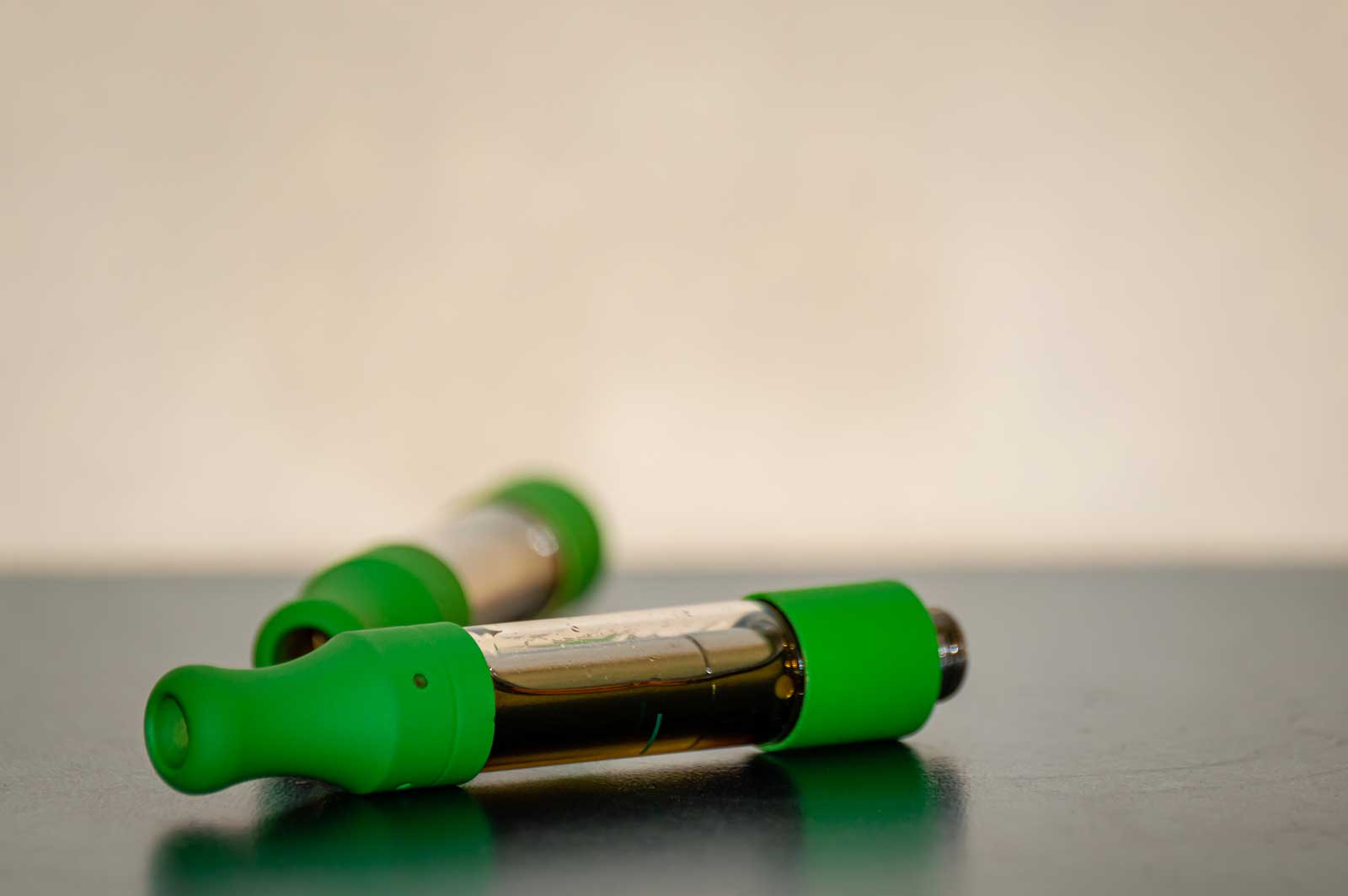
You can keep your freshly-made juice in a small glass preferably in small amber glasses with a tight lid. This will protect the contents from degradation. Commercially-prepared vape oils are mostly inside amber or dark glass bottles, the kind used in keeping medicines and supplements. A medicine dropper cap will allow you to conveniently dose up when you’re ready to vape.

Remember the following when storing your precious vape juice

Avoid keeping your vape juice near hot surfaces. Concentrate makers agree that 70 degrees Fahrenheit is the best temperature to keep vape oil bottles and cartridges. Keeping these in high temperatures will only degrade the liquid and affect the taste, aroma, and potency. Also, some cartridges may leak because of the high heat.

Never keep oils and vape juices near sunlight or in an area where there’s direct sunlight like near a window or ledge. Sunlight can degrade liquid and oil quality. This has the same effect on flower quality. When oils are exposed to light, it turns darker and will reduce its potency. It won’t be too long when the oils become no more than just regular oil.

You can keep vape liquids in a cold room but not inside the fridge or freezer. Moisture can accumulate inside the cartridge or bottle and this can cause mold and mildew. Keep vape juice in a dark cupboard or cabinet away from light and moisture to preserve the oil’s natural properties.

Store bottles and vape cartridges upright and never on the side because oils tend to leak. Can you still smoke dark vape juice oils? Yes, you can still smoke oils and vape juices that have turned darker because the darkening is simply the effects of oxidation. However, you’ll notice that the juice is less potent and the taste and aroma will not be as good as fresh oil. The potency may not be as high but is not too low as to have no effects. However, this oil remains good for consumption. 

As long as THC vape juice is properly preserved, this can last for many years. It will retain its potency, color, taste, and flavor, just like the day you made it.   

Ways to Smoke THC Vape Juice 

The only way to smoke THC vape juice is by using a vaporizer or a vape pen. You can buy one from a local vaping store or an online supplier. Avoid improvising to stay safe.

Is it Legal to Consume THC Vape Juice?

It’s hard to tell if THC vape juice is legal or not especially when you’re from the US. The best way to find out is to access marijuana laws in your area. Some states allow the use of medical marijuana only while some regulate the use of recreational and medicinal cannabis.

If you’re in a state where recreational cannabis is legal and you are old enough to buy cannabis then you may purchase vape juice from a dispensary or online shop. If you live in a state where only medical marijuana is regulated then you need to visit a doctor to get a prescription before you can buy THC vape juice products and vaping equipment. 

It is also possible that in states and countries where marijuana is legal, residents can make their THC vape juice at home. But to be on the safe side, check local marijuana laws before cooking bottles of vape juices in your kitchen.

All About Safety When Making THC Vape Juice

Whenever you’re working with heat or flame, be sure to have a fire extinguisher ready. Use a rosin press, hair straightener, and stoves in a well-ventilated room. Always wear appropriate attire when “cooking” your THC vape juice.

Use safety equipment. Don’t rely on faulty and questionable equipment in making vape juice. Always, wash equipment and utensils before use. Bottles used to store vape juice should be cleaned and sterilized before placing oil or vape juice in.

If you’re purchasing new equipment like a rosin press or a vaporizer, buy only from reputable dealers and suppliers. Check for safety and always read reviews. If you have a vape pen or e-cigarette, you may use this as long as the device is working properly.

Now that you know how to make THC vape juice, you may want to consider making concentrates and oils using different strains. The process is the same for all types and strains of cannabis. And of course, the quality of the flower you’re using matters a lot. Buy only well-preserved, high-quality weed from experts. You may also grow your weed to ensure you’re using safe and organic cannabis. 

How to Grow Bigger Buds Outdoors

Are you wondering how to grow bigger buds outdoors? Every cannabis grower knows that there’s a huge difference between indoor and outdoor growing. Most agree that it’s a bit difficult to cultivate good yields outdoors because of so many unpredictable factors. 

Take the weather, for instance. You might be aiming for cannabis plants with huge buds when a storm starts to brew head on! And there’s the presence of pests. You could be looking forward to dense and fat buds when some caterpillars decide to eat your plants for lunch!

But you don’t need to worry. There are ways to boost yields and grow bigger and denser buds even if you are growing your cannabis plants outdoors. Check out these techniques:

Sow your seeds in spring

Every plant has a life cycle, and with marijuana plants, these will grow taller in spring and during the first half of the summer months. Right after the summer solstice, the female cannabis plants will grow less as it will use up all its energy in making flowers. 

Take note that springtime happens at different times in different places around the world. In South Africa and Australia, springtime is in October while in the USA and Germany; this season is during the late weeks of March. 

Prune your cannabis plants

Pruning can help cannabis plants create larger buds. Although it seems counterproductive, this actually works. You see, more buds that are found downwards in your plant the further these buds are from the canopy. Also, these buds get less light and hence, will grow very small, underdeveloped buds. Most of the lights provided by the lamp, no matter how strong the lamp may be, are blocked by the plant’s canopy.

So how to start pruning? Here are some tips. 

Prepare your materials.

Use sharp scissors, blade, or knife to prune your plants. Never use old, worn out or dirty scissors or knives. As much as possible, use sterile/clean equipment as your plants’ health is at stake. 

Locate the parts to be removed

Remove the large fan leaves first. These are leaves located at the bottom part of the canopy. If the plant is too big, cut higher to free up space. 

Remove the parts

With the part on your other hand and the tool on the other, make a fast and quick cut. If you want to reuse the part, make a diagonal cut. 

Keep the parts

If you wish to use the parts as clones, place these in water. If you need to use the clones ASAP, use cloning powder or gel. Dip the cut tips in cloning gel or powder and then place these in a peat pellet. One clone stem is to one peat pellet. 

When to prune? Pruning should start once the plant is too bushy or too compact. It depends on the strain you are growing. Some strains tend to grow more compact as time goes by, while some remain lanky and sparse. Take note that pruning is done not just to improve the appearance of plants but to reduce the possibility of mold growth and development. Molds can be very devastating to your plants, especially during the flowering phase. 

The right nutrients to make bigger buds

Cannabis plants require three major nutrients: N or nitrogen, K or potassium, and P for phosphorous. N is needed during the vegetative stage, while the P and K are during the flowering stage. 

P will help buds develop and turn to denser and tighter structures. If you are growing your plants in soil, add worm castings or guano, which will enhance P levels. You may also use a special concoction called compost tea during flowering. Compost tea can enhance mycelium numbers in the soil. This will ensure that your plants will get a higher amount of nutrients.

Consider the following tips when providing correct nutrients to your plants

Use only commercially-prepared nutrients. 

These are tested, safe, and are ready to give you’re your cannabis plants. Using homemade concoctions may not be safe, with quantities of nutrients are not measured. With commercially-prepared products, all the nutrients are considered, measured, and at the right amounts, ready for your plants to consume.

Choose a fertilizer that’s right for your plant’s growing phase. 

There are two growing phases of cannabis plants: the vegetative phase and the flowering phase. During the vegetative phase, your plants are actively growing and thus will need more nitrogen than other nutrients. 

Nitrogen is important in growing stronger and healthier stems, branches, and leaves. It is also a nutrient essential to plants to make food. Therefore, fertilizer products during the vegetative stage have more nitrogen, so your plants will grow better during this crucial stage. But during the flowering phase, it’s a different thing. Plants don’t need nitrogen but instead need more phosphorous and potassium instead. These nutrients will help grow larger and denser buds, and thus, a fertilizer that has more P and K and less N is needed. 

Read the instructions carefully. 

Most fertilizer products are simply mixed in water and then applied to plants like when you’re watering them. But there are some new fertilizer products that are used differently. Therefore, read product labels and understand how much to use, when to use, and how often to use the fertilizer or supplement. Only when you understand this will you be able to grow larger buds outdoors. 

Monitor post-feeding

There’s more to it than just feeding or applying your fertilizer product to your marijuana plants. You must continue monitoring your plants accordingly. This is especially true when you’re using a new fertilizer product. 

First, take note of the amount of feeding and the time. Consider the frequency of the application and your plants’ response. Check out any of these signs:

  • Good response, plants appear livelier, taller, with good color and overall appearance.
  • Check for any problems, including nutrient deficiencies or nutrient overload. Usually, nutrient problem signs are changes in the color of the leaf and leaf textures and changes in the stem and branch colors, etc. 

At the first sign of any problem, discontinue the fertilizer and flush the soil with clean and pH-neutral water.

Give compost teas

Compost teas are used to boost plant health and should be given at least once to plants to grow larger buds. Some growers use compost tea as a remedy to plants that recently had stress problems, nutrient deficiencies, overwatering, or under-watering problems.

To give compost teas, use the compost material, place in a cheesecloth, and then brewed in a small pail. Air is pumped in the pail using a small air pump with an air stone. This tea is left to brew at least a day and then given to your plants. Monitor your plants right after application. 

How to grow bigger buds outdoors – the light plays a crucial role

Light is very important in any grow setting. If you want bigger buds when you grow outdoors, your plants must get the best growing conditions like correct temperature and humidity from the start. These should also receive correct lighting schedules in a day. 

Outdoor growing is susceptible to weather. But when you’re growing buds indoors, you can do so much from the start to enhance bud growth. The light intensity of the grow lights is a huge part of your lighting factor. The more intense the lamp, the thicker or, the bushier your plants will grow. Plants that are skinny, lanky, and weak don’t receive much light. 

To improve light intensity, move your grow lights closer so that the light is on top of your plants for the most growth. But what about outdoor plants? You can do the following:

  • Plant your cannabis in pots so you can move them around the garden. Place the plants directly under the sun to get the most light. Move the plants back to a shaded area in your garden if it starts to rain, or it’s too hot for your plants to be exposed. 
  • Grow your plants in a greenhouse, so you don’t need to move them around. A greenhouse is still an outdoor growing area with a lightweight structure covering your plants. 
  • Follow correct lighting schedules 

Photoperiod cannabis strains require a different growing schedule than other strains. This is because these should be exposed to a 12-hour light and 12-hour dark schedule to bloom. But right after this schedule, continue placing your plants in full 12-hour light by taking the pots directly under bright sunlight. 

Grow in healthy soils

To guarantee bigger buds when growing weed outdoors, plant your weed in the best growing medium. If you want to grow in soil, start with healthy, organic soil.

Your garden soil may already be healthy if plants nearby are growing well, but of course, cannabis plants have different growing needs. To find out if your soil is healthy, test it out. Use a special soil testing home kit to check for the pH, nutrients, and any dangerous metals or toxins in the soil. The ideal pH is neutral at 6.6, while nutrients that should be present are the basic N, P, and K as well as other micronutrients like calcium, magnesium, zinc, iron, and many more. There must be no dangerous metals present or anything that can hurt your plants. 

If your soil is not healthy or there are dangerous materials present, you may use commercially-prepared soil preparations instead. You can use soil with perlite or vermiculite, which aerates better and can hold water and fertilizer and can drain the excess as well. 

For best growth and good bud size and yields, grow your plants in a sandy loamy soil. This is soil that has the mentioned characteristics plus is available in most garden shops. Place this type of soil in large growing pots, preferably 5 to 10-gallon pots. You don’t need to add perlite or vermiculite for this soil because it is already well aerated. 

The growing pots also play a huge role in growing healthy, high-yielding plants. Large pots should be used from germination till harvest time. Growing in small party cups and transferring to a larger pot or directly in the ground will stress your plants, and this may affect its ability to produce bigger buds.

Prevent pests and molds

Pests and molds can strike unexpectedly and are very common in plants grown outdoors. The best way to deal with pests and molds is to prevent them. Here are a few ways to do it

  • Trim or prune your plants, remove the large fan leaves to improve airflow inside the plant canopy. This will prevent mold and mildew growth.
  • Keep the outdoor area, the surrounding area clean and dirt free. Throw away the trash, cover trash cans, and keep tools away to avoid attracting pests.
  • Use garden-friendly bugs like ladybugs to eat pesky pests like aphids and spider mites. You can buy ready to use ladybugs in packs, and all you need to do is to place these all over your outdoor growing area. 
  • If snails and slugs are present in your outdoor garden, stop these from eating your plants by placing dishes with beer. Apparently, snails and slugs are a sucker for beer, and they will drown themselves in it. 
  • Be diligent and check every leaf and underside of your plants for molds and pests. Act quickly when you spot one because surely there will be plenty more around. 

Start with good genes

To increase your chances of growing large buds, start with seeds of cannabis strains that are known to grow large and dense buds. We recommend the following strains for your outdoor growing area:

  • Critical Kush
  • Critical Mass
  • Industrial Plant
  • Monster
  • Sweet Moby
  • Big Bud
  • Brian Berry Cough
  • Big Foot

Consider the growing needs of the cannabis strain you want to grow. Get to know if the strain fits an outdoor growing area and if it needs direct sunlight. Some weed strains are perfect outdoors but require indirect sunlight. By understanding all these, you will now know how to grow bigger buds outdoors

How Much Weed Does One Plant Produce?

One of the most common questions that first-time cannabis growers ask is, “How much weed does one plant produce?” This question is usually followed by what they can do to enhance their yields? 

Unfortunately, there’s no easy answer to this question because there are many factors that affect cannabis plant yield. We will discuss what you can expect when it comes to yield according to these different factors. We can assure you that you’ll be able to answer this question after you have read this simple guide. 

Cannabis yields when growing indoors 

This guide will divide yield prediction into two major topics: indoor and outdoor yields. This is because it’s very obvious that indoor growing is completely different from outdoor growing despite cultivating the same plants. 

When it comes to cultivating your plants indoors, using the right kind of lighting is very important. People who have grown cannabis before can grow plants that can produce around a gram of weed/watt of light.

Therefore, a 400-watt of high-intensity sodium growing lamp can produce 400 grams of yield. This is 400 grams or 14 ounces of dried and usable weed, ready to smoke. Also, a grow lamp that has 1200 watts can give you 1.2 kg. or 42 ounces of weed. 

These could only mean that investing in the right kind of lighting equipment will give you the best results when combined with the best airflow and using correct nutrients as well as other important growing factors. Also, make sure that your indoor plants have enough space to grow for these to produce good yields. 

Indoor growing in soil

Growing in soil is common in an indoor setup. You may get a lesser amount of yield in soil compared to growing in a hydroponic setup. This is because hydroponic growers are able to have complete control of the nutrients or supplements needed by plants. 

But despite this, indoor growers still prefer soil than hydro because it is easier to do. Also, soil growing mediums can help create some kind of buffer or cushion for any error since it holds nutrients. There is always room for any mistakes when growing cannabis in soil.

Therefore, an estimate would be around a gram of yield per watt when growing in soil indoors. Again, this means using a 400-watt growing lamp will give you around 400 grams of weed or 14 ounces.  

Indoor growing in hydro

Now that you know how much you can get when growing weed indoors in soil, hydroponic growing is a lot different. You can get up to 20% better yields as long as you follow growing in hydro closely, and you monitor your plants well. 

You must be very keen on keeping correct TDS and pH levels because your plants’ roots are found in water. Any kind of mistake or incorrect level can result in drastic mistakes. Consider that even a very small mistake in hydro can cause a lot of problems for your plants. But people who are able to manage their setup better will be rewarded with amazing yields. 

You can possibly get around 1.2 grams of usable weed per watt of light. This means that a 600-watt HPS light can provide up to 720 grams of usable weed or more than 25 ounces. 

Some high-yielding strains to grow indoors

There is indeed a very stark difference when you consider an indoor or outdoor grow and in plants grown in soil or hydro, but most of the time, you need to consider the strain or the kind of plant to grow. It’s useless to push for higher growth and harvest when you are cultivating a low-yielding strain.

We have a few of the best strains to grow indoors because of their high yields. 

  • Big Bud – Big Bud is one of the most satisfying cannabis strains to grow because it can give you high amounts of usable weed. Big Bud is an indica-leaning strain that’s easy to grow and high yields.  This strain can provide a full-body experience. It also comes with a very earthy and fruity aroma and smell.
  • GSC Extreme – Girl Scout Cookies is one of the most productive plants and is 80% indica and 20% sativa. You can get a lot of yields whether you’re growing this plant indoors or outdoors. You will feel very relaxed with a good high. GSC can give you a relaxed and euphoric high.
  • Blue Dream – being 80% sativa, Blue Dream is one of the most potent and high-yielding strains in the market. This strain offers an easy-growing effect with THC as much as 21%.n Blue Dream is a consistent plant with very lovely buds. 

Cannabis yields when growing outdoors

Now we learn about the amount of yield an outdoor cannabis plant can produce. When you grow in the best growing conditions, you may get as much as 500 grams of yield or about 17.5 ounces of yield per plant. 

Take note that space is very important, with plants getting at least two meters of space to get the best yield. Also, other factors to consider are the presence of pests and diseases, the amount and type of nutrients you will use, and the environmental temperatures. Growing containers also play a huge role. When you grow plants inside pots or containers, the pots must be around 50 liters or about 15 gallons. 

When sowing seeds in an outdoor growing area, germinate the seeds first to help your plants grow larger. Also, germinate these indoors so you can easily manage temperature and humidity levels. If you follow all the growing needs closely, you can get as much as 500 grams of usable weed for every plant. 

And similar to growing cannabis indoors, the genetics of the plant also plays a huge role. Starting with strains with the best genetics count a lot. 

Can you predict your yield before you grow your plants?

You don’t have to worry about the amount of yield of your cannabis plant because you can use simple weed plant calculators found online. One such efficient calculator is the one from Yield-O-Rama, where you can input the type of light, light intensity, or lumen and the level of experience you have as a grower. This calculator will help you find out or make an approximate value of your yields in no time.

How much weed does one plant produce – dry weed vs. wet weed

Getting the right amount of yield does not end after harvest time. There’s a huge difference between dry and wet cannabis. It’s very important to dry your weed very slowly at an average of 10 to 14 days inside a dark and climate-controlled area. Your drying area must have a temperature of 64 degrees to get more weed.

Keep in mind that you can get as much as 20 to 25% of weed after the drying process, and this may also depend on the type of strain, the density of the bids, and the drying method you are using. You must weigh only the wet buds and never weigh the entire plant. 

So considering all these factors, you can get as much as 20% to 22% of dry weed from a sativa and around 22% to 25% from an indica. Meanwhile, you can get only 12.5% when you use the entire cannabis plant when the weed is still wet. This includes the leaves, stems, and all other plant parts when the plant is still wet. 

Some tips to improve yields

Now that you have a clear idea of what to expect when it comes to yields, consider the following tips: 

Grow fewer plants

It seems a bit odd that to get more yields is to grow fewer plants. This is important, especially when you grow plants indoors under strong lighting. If you’re only growing four plants, then you can get more yields compared to growing eight or sixteen plants under every growing lamp.

So decide how many plants you wish to grow before you even start sowing your seeds. 

Keep in mind that if you already have four plants, then you can get 25% less of your yields in case one of your plants die or becomes diseased. 

Consider that four plants are much easier to monitor and manage compared to more plants. And in case cannabis growing is not legal in your area, you will only be caught with only four plants in our possession!

Use the Screen of Green (SCROG) method

SCROG is one of the most common low stress techniques and is used by many growers because it can increase your yields easier. SCROG is all about topping your cannabis plants and putting a screen at around 15 inches at the top of your plants. As the branches grow 4 inches and moves through the screen, tie it down in a horizontal pattern. Continue placing the branches in the same position until you have managed to create a screen or blanket on the top of your plants. The SCROG method is preferred by growers because there’s no light wasted; the thick screen or blanket prevents the light from being wasted. 

With the SCROG method, all the plants are the same height, and thus every plant receives the same amount of light. You can even bring your lamp closer to the blanket as long as the temperature does not go above 77 degrees Fahrenheit. And with the SCROG, you’ll get dense and solid buds, no fluffy ones that contain more air than weed. Take note that fluffy buds are no good because these don’t ripen. 

Most growers who have used the SCROG have managed to improve their yields up to 20%!  

Use the best type of light

Now we come to another important factor in understanding the number of yields. Yes, the type of light makes a huge difference when it comes to lamps, the intensity, and the type of light matters. 

Does a 600-watt HPS lamp yield less than a 1000-watt HPS lamp? A 1000-watt lamp will create more light, but a plant will not be able to use up all this energy. It will need CO2 to do this. 

Around 350 to 400 ppm of carbon dioxide is found in the air, and indoor cannabis plants will utilize this CO2 with energy from light to make sugars. In a closed room with no air circulation, plants will use CO2 in just an hour and thus will have slower sugar creation due to low CO2 levels. This is the reason why an indoor growing area should be well-ventilated. 

When the room is pumped with 350 to 400 ppm of carbon dioxide will not be able to make more sugars compared to the light coming from the 600 watts lamp. The yield won’t be higher even if you use a 1000-watt bulb HPS in normal situations. 

But if the carbon dioxide levels are increased, your plants will require more light, and therefore a 1000-watt lamp can nearly double the yield! Therefore, a 1000-watt lamp is a good investment if you want more yields as long as you use it properly.  

LED lamp yields

You may be wondering if LED lamps are good at making more yields. LED is bright but not as intense as HID or HPS lamps, but the key is the light spectrum. There is a certain color of light that can help produce more yield, and LEDs are available in different colors. Also, LEDs do not produce too much heat, and thus it won’t be a burden to your plants. 

Big yields in a small growing area

People who still want to grow more yields despite cultivating plants in a small area can try other techniques. They can use SCROGGING, trimming, and pruning to control the growth of their plants.  So, how much weed does one plant produce?  The yield that your plants produce depends on many factors, and thus, it is very difficult to mention a nice round number. Take extra care of your plants to get the most yields. Start with the best strains and modify your growing area to meet your needs.

Different Types of Weed: Comparison, Effects, and Benefits

When you are new to trying out cannabis, it can be a big decision to choose your first strain and choose the types of weed for your needs. By now, you probably have come across many strains that include what type of weed it is in the description. Knowing the type of weed of a certain strain can help you select the best cannabis to suit your needs, whether for medical treatment or recreational use. 

While the type of cannabis cannot completely determine what exact effects you can get for each strain, you can predict how consistent these effects are with every use through knowing how much terpenes and cannabinoids does each of these types contain. This information is also helpful with what to expect when you want to explore growing them yourself. 

It is important to remember that every strain and type of weed can affect each user differently. You might get the more common effects of it, or maybe the least experienced, and even the side effects that come with it. It is best to seek recommendations and advice from your trusted dealer or your doctor if you are under prescription

To better understand the different types of weed, here is a list of each type along with their effects and benefits, plus what you can do for the best results when raising them.

Different Types of Weed

Cannabis Indica

Indica Origins

The origins of Indica-type cannabis are not clear but believed to be first cultivated in Afghanistan (like Afghani strains) and India.

Appearance

Cannabis Indica comes in a shorter height and has broad, fan-like leaves to catch the sunlight. They have a sticky surface that produces resin. They also have thicker stems and branches.

Effects 

Users often choose indica types of weed for their relaxing and relaxing and sedating high. It puts the body in a calming state that is highly satisfying, especially when coming from stressful and vigorous activities that wear you out.

Benefits 

Indica strains have been known to improve sleep and treat insomnia from its sedating effects. Aside from that, this trait also helps fight stress and alleviates fatigue. Indica strains also contain analgesic properties to treat pain from headaches, migraines, arthritis, body pain, chronic pain, and muscle spasms.

Growing Cannabis Indica

This type of weed is fit for indoor growers for their compact size. They will need regular trimming pruning since they grow out bushy colas. Trimming also promotes better air circulation and gives room for their wide leaves to get enough light. Due to this, the weight of the branches tends to bend the plant and might cause them to break off. Some strands will require you to install supports to avoid them from bending. 

Cannabis Sativa

Origins of Sativa

The roots of Sativa-types of cannabis go back to Europe and regions of Eurasia, where they were first discovered by French biologist Jean-Baptiste Lammarck.

Appearance

Cannabis Sativa strains have thinner stems and are tall, with long serrated leaves, which makes them more suitable for outdoor settings.

Effects 

The effects that are commonly experienced with Sativas are buzzing and cerebral high. Unlike Indica strains, the Sativa types of weed affect the mind with psychoactive properties that can uplift your mood and redirect focus.

Benefits 

Sativa strains help aid in the treatment of mood disorders and mental health concerns, reducing anxiety and depression, and are even prescribed for patients with ADHD. It can relieve stress fatigue and restores energy that can keep you running. Sativa has also shown to improve focus and encourage creativity.

Growing Cannabis Sativa 

Sativas prefer warm climates, often described as tropical or Mediterranean. Due to their size, they are more suitable for outdoor environments. You can, however, control their growth with regular pruning and trimming or applying the topping method so that you may keep them inside your home. 

They often take longer than average strain before they reach their flowering stage. Although their vegetative stage is shorter, so their lighting cycles can be adjusted early on if kept indoors. Handle these types of strains gently as they have more fragile branches. Supports can be added for extra security.

Hybrid Cannabis

Hybrids are the product of cross-breeding an Indica and Sativa strain. They will manifest the characteristics of both strains, and users may also experience the combined effects and benefits of the two. How you grow, hybrids may vary across strains.

Cannabis Ruderalis

Appearance 

Cannabis Ruderalis has similar features to indica, being short in stature with bushy leaves. The origins of this strain are currently unknown.

Purpose 

The Ruderalis is used for only crossing with other strains to speed up their growing process, particularly for producing autoflowering strains. They have no psychoactive properties or buzzing effects.

Check the Label

Research studies on the types of weeds and their effects have proven that the type does not correlate with their impact, whether it is an indica, sativa, or hybrid. Most strains also give off similar effects, such as relaxation, euphoria, and inducing drowsiness or increasing energy levels. 

It is best to check if the description of the strain you are interested in includes information on the number of terpenes and cannabinoids so that you can get a better picture of what kind of experience and benefits a strain has to offer. 

These are especially crucial for those who seek weed for medicinal purposes. Get in touch with your doctor or dealer if they can provide more information on this type of content for healthy and enjoyable smokes plus other uses.

Conclusion

If you want to make sure that you get the most out of each strain you purchase, it is best to be informed and have in mind your expectations and needs from each type of cannabis. List down all that you need so that comparing the different types of weed you are browsing over will not be a difficult task. You can also check reviews from users who have already tried the strain before. Just remember that all experiences vary, and you can always get help from experts and medical professionals for your safety and getting the most out of your purchase.

Smoking Weed Resin: Is it Good for You

Smoking resin is one way to consume cannabis. Try imagining this: you come home from work on a Friday night, and you are relieved that the week has finally come to an end. You feel exhausted and stressed out and decide you should treat yourself to a good old’ high hit to relax. You check your supply of weed in the cupboard, and to your surprise, you ran out. Your garden has no fresh buds to harvest, and your trusted dealer cannot deliver to you in a jiffy. You are left with nothing but your pipe and some burn leftovers from your last smoke, and you have to satisfy your cravings for tonight. 

Weed resin is always the last resort of every smoker on days when there is nowhere else to get some fresh flower. Resin, also known as reclaim, is the charred remains after smoking your buds. You often get them in pipes or bongs if you do not bother to discard them once you are finished with your high smoking sessions. Some might also have experienced having resin stick to their lips while smoking. However, the smoking resin is not always safe and can impose some risks to your health. If you do tend to run low to empty on your stock of Mary Jane, you should only smoke resin occasionally and safely to prevent health concerns in the future.

The Health Risks of Smoking Resin

When you smoke resin, do not expect to have the same experience with how you smoke a new nugget of weed. The burn, of course, will affect the taste and aroma, while there are small traces of THC and CDB left in the reclaim that can still get you on a buzzing high if you are patient. So yes, you can still get high, but it is only good when done seldom in cases that you have no access to cannabis nearby and urgently need it. Users who smoke resin will also experience some of the side effects of regular smoking pot: anxiety, dizziness, and migraines, to name a few. Regularly smoking can cause increased heart rate and lung damage if not controlled sooner. So do smoke with caution so you can still enjoy more pipes and bongs to blow.

Collecting the Resin

Weed resin has a sticky texture and will harden over time if left inside the pipe. This will make it more difficult to remove. If you have left the resin in your pipe for too long, heating the surface for it to soften. Do note that this can get messy if you burn up the resin – it can start to melt and will be tougher to collect. The goal is to make it soft enough for you to reclaim all the scraps. It is advised that you discard the resin immediately and avoid smoking at all costs. But if you are desperate to get a bit of MJ in your system, you can take these steps to gather your resin neatly:

1. Heat the surface of your bong or pipe with a lighter. Do not keep the flame top close that it will burn the glass or melt the resin into a sticky and foul syrup. You need the resin to be still whole and soft enough just for you to scrape off.

2. Take a bobby pin or any slim metal tool you have around that can scrape the resin off from the glass or metal. Keep doing this until you have enough to smoke or have cleaned out the whole pipe.

3. Set aside the reclaim in a bowl or plate lined with parchment paper if you do not want to worry about cleaning up the dishes later. This should make the stickiness a bit more bearable and leave you with a neat workspace. Since the resin was exposed to heat, it will get moist, handle it carefully, and try not to stain your clothes as the stains are hard to wash off. 

How to Smoke Resin

You can smoke resin using the same methods as you normally smoke weed. Joints, pipes, and vaporizers can still burn the resin, but it will leave some residue in the end. Smoking resin does not have as much flavor and the same aroma as the original, but it should suffice if you are out of stock and want to get a feel of the effects and high. 

Since resin usually comes in small amounts, it will take you more drags until the effects start kicking in, and this will increase the experience of side effects and further harming your health. You can also try using the resin in the kitchen for cooking and baking delights.

Cleaning Up the Resin

If you want to get rid of the tar, you can use the heating method to scrape the resin and discard it right away. To remove the leftover residue and give your pipe a general clean, use a cleaning formula for the instrument’s material, whether it’s plastic, metal, or glass. 

You can also make a homemade version you mixing isopropyl alcohol and salt to sterilize it for the next use. Soak the pipe or bong in the solution for about one hour. You can then take it out to rinse in running water until clean or give it another soak. Let your pipe dry completely on a dish rack or dry with a towel.

Conclusion

It is your choice if you want to smoke resin but it is your responsibility to make sure that you smoke it safely or in a good way and only if you have no other options available. As much as possible, reclaim the resin right after smoking. In this way, it will not be stuck on the surface of the pipe. Set it aside or throw it away if you cannot put it to use. 

The same methods work with smoking resin-like how you smoke weed. Just remember that when you smoke resin, you can reduce health risks by restricting yourself to small doses and smoke it when you badly need to take the last resort.

A Comprehensive Guide to Weed Measurements

If you are dealing with the cannabis industry, you may be amazed to find out about how much mathematics is implicated in the process. Generally, marijuana is measured by ounce. But enthusiasts may still choose to buy them in smaller accrual, choosing to grab supply one gram at a time, or they may also choose to buy in big volume. For instance, an eighth will commonly costs significantly cheaper as compared to purchasing 3 grams of weeds separately. 

Instinctively, weed measurements involving bigger volume doable. However, once you urge over an ounce purchasing weeds, it becomes not only expensive but may also be illegal. Currently, many states are only permitting weeds of up to one ounce on hand. That is a starting glimpse of how cannabis is acceptably offered to consumers.

Weed Measurements – Grams in Buying Weed

When it comes to purchasing a weed, you know that the unit of measurement being followed is the gram. One gram is already enough for several joints. But how much weight is involved in a gram of marijuana?

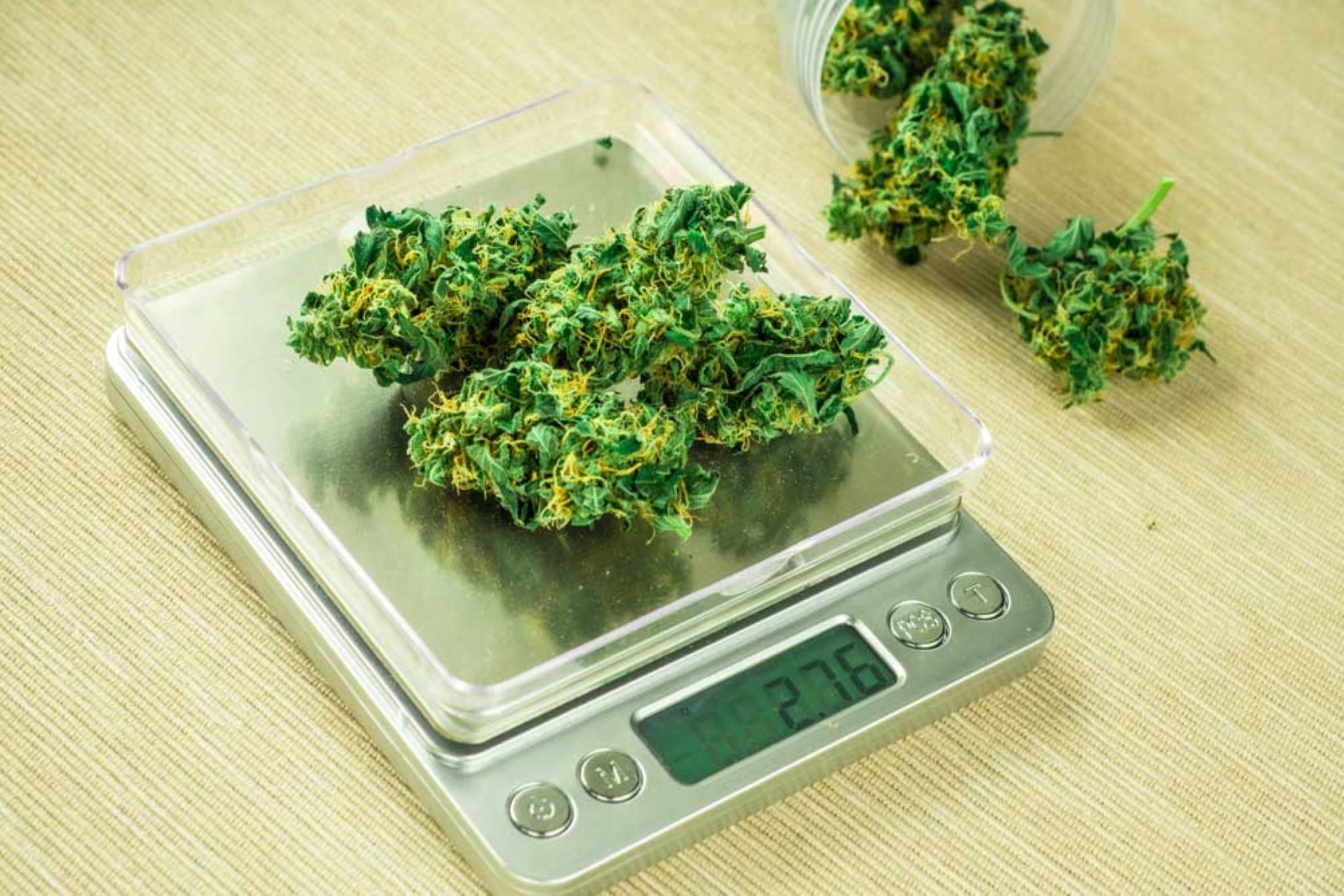
A gram is the least possible weight you can have when buying a weed. To illustrate it into a specific framework, one gram corresponds to 1/28 of an ounce. You can easily fit a gram of weed into the palm of your hand.

However, you should know that the cannabis world is full of slang words and jargon. You will be amazed to learn that there are plenty of languages associated with weed. Although you do not have to necessarily understand all these terms, you may find it helpful to familiarize some of them, especially if you are planning to make your purchase of flowers. One of the most popular monikers for a gram of weed is “dime bag”.

What You Should Know About a “Dime Bag”?

A “dime bag” is commonly the least accession of weed that you can buy. 

As discussed above, it is assimilated into a gram of weed. Nevertheless, if by any chance you see yourself living in a state where buying of weed is not acceptable, you may probably get an idea that people could mean something else when they utter the term “dime bag”.

Occasionally, it is just a thing of a region – different sections of the state publicize their regulations, although many are using this common term for whatever the slightest accrual of weed is attainable for purchase.

How Much is a “Dime Bag”?

So how much will it cost you to get a dime bag? Conventionally, a gram of weed costs around $10, thus the term “dime bag”. Nonetheless, it is not always as strictly regulated as that. Just like with the other products, the cost of weed is also subjected to constant changes. The amount you pay for a gram of weed is relative to the different factors involved, such as your setting.

What You Should Know About Dub of Bud?

To certain people, dubs and dime bags are nearly synonymous. However, widely speaking, the specific guideline on the cannabis industry differentiates them. Conventionally, a dub of bud refers to 2 grams of weeds. The actual volume can differ depending on your current location, although that is comparably much the typical quantity.

The cost of dub is commonly directed to any 20 dollar bag of weed, although the actual volume that you will get relies on the current market value of marijuana in your place. Thus, you only consider a dub as a similar term for any 20 dollar bag of weed. Nevertheless, assuming that we are discussing your typical 2-gram bag, you may expect to shell out somewhere around 30 dollars in some other parts of the state.

What is the Presentation of a Dub?

Dub is not a very large volume of weed. If you will take a look at it, it is roughly around the proportion of two huge nuggets of weeds. When crushed, it will be sufficient for some blunts of joints.

What You Should Know About An Eighth of Marijuana?

This is where you start to have a grievous bang for the buck. It is quite more affordable as compared to the cost of dub per gram. However, an eighth of weed can offer you more for a more reasonable price. 

By terminology, an eighth of weed is composed of 3.5 grams of cannabis. This type of measurement is quite less puzzling compared to the others that we have delved into for a common fact that regardless of your current location, 3.5 grams is still 1/8 of 8. But you will see that there are a lot of legal dispensaries that give 4 grams eighths to provocative purchasing in great volume compared to purchasing per gram.

How Much Does It Cost for an Eighth?

Again, the cost of an eighth is still dependent on your current state, the city, and the dispensary. Nevertheless, the common price of an eighth is somewhere between 25 to 35 dollars. 

If you try to assess it, it will make a better approach if you want to save money as compared to purchasing in gram. Purchasing three grams individually at a cost that ranges around 15 to 20 dollars will cost you more compared to purchasing an eighth separately.

Slang Terms for Eighths

The mathematical term for this accrual of weed is compensated by certain monikers that make it sound to be lesser formal. Throughout the region, there are endless slang terms used to suggest an eighth such as slice, half a quarter, cut, and eify. There are no uncompromising guidelines for this thing. If one person would seem to get an understanding of what you are attempting to utter, then everything is going well.

What You Should Know About a Quarter of Bud?

A heavier bag, this measurement is going to be appropriate for cannabis enthusiasts with a massive habit, those who want to save by purchasing in bulk, and those who simply adore their weeds.

A quarter of an ounce is equivalent to seven grams. Again, for vocabulary, that implies we are searching at roughly 12 to 15 joints or 10 blunts. And just like with other measurements, you cannot expect to encounter a single price for a quarter of bud. Traditionally, the price may range around 50 to 70 dollars, depending on the quality of the cannabis as well as its origin.

Slang Terms for Quarters

There is one common moniker for the quarter in the world of cannabis, and that is a “quad”. Throughout the region, there can be a diversity of various terms and languages that are used by people to refer to these weed measurements.

What You Should Know About Half Ounce of Weed?

A half-ounce of weed is likely to last longer. It is exactly 14 grams, and that is 30 and beyond joints or 20 to 28 blunts. Thus to say, if you ingest around 1 gram of bud or less in a day, a half-ounce can last around 2 to 3 weeks.

How Much Does It Cost for a Half Ounce?

You can grab half an ounce of weed for yourself for roughly 100 to 120 dollars. This places the cost per gram at around 7 to 10 dollars – approximately half of what you will normally pay if you purchase them separately.

Slang Terms for Half Ounce

There are only a few slang terms used to refer to a huge volume of weed. Most typically, you may hear someone referring a half-ounce of weed with half a zip, half an O, or half-O.

What You Should Know About a Quarter Pound of Weed?

Many places do not allow buying increments of weeds at this volume. However, if you are using it for medicinal purposes, then there should be no problem. A quarter-pound has 4 ounces, which sums up to 96 grams. That will provide you around 200 and beyond joints or 60 to 100 blunts. In short, you will have plenty of supply of marijuana.

How Much is a Quarter Pound?

Again, the cost of a quarter-pound is dependent on your current state. Typically, you can get a quarter-pound of weed at approximately 800 dollars.

Conclusion

The cannabis world comprises different weed measurements. Unless everybody has able to embrace similar guidelines, it will be helpful for you to learn the different weed measurements. By making yourself familiar with these measurements, you will have the confidence to purchase the exact quantity of weed that you wish to have and help you refrain any horrible surprises when purchasing online.

When comprehending the different weed measurements, you will also comprehend your endurance. This can be helpful when you begin experimenting and trying different kinds of cannabis strains.

Weeds give you a pleasant experience, and there are plenty of new things you can explore. By taking time to understand the different measurements of weeds, you can easily handle this venture with certainty and assurance. You will have the advantage of understanding the common slang terms that refer to these measurements too.

Head High VS Body High: A Comparison

Cannabis can carry out different effects commonly exhibited in massive patterns – from the most blatant euphoric, psychoactive effects to the slightest high-intensity buzz. Every cannabis strain releases its chemical mixture composed of plenty of cannabinoids. The most notable cannabinoids are the terpenes, CBD, and THC. All of these have the ability to alter the effects of every plant towards its users once they are ingested. Hence, one should have an idea of head high vs. body high. 

Terpenes are the ones responsible for the fragrance and flavor of the cannabis plant. The CBD does the medicinal effects. The THC, on the other hand, tackles the psychedelic effects. Although there is no means to precisely tell how every strain will affect the user, every strain possesses unique characteristics that can provide you a little regularity when choosing one to fit your requirements. 

Head High vs. Body High – How Do We Get High?

You do not have to learn all the scientific explanations behind the intoxication of cannabis. To put it into the simpler discussion, when you ingest cannabis through vaping, smoking, or edibles, you are bringing in cannabinoids into the system. As humans, we have the so-called cannabinoid receptors in the brain. 

These cannabinoid receptors are hooked up to the inflow of cannabinoids from ingesting cannabis, which, as an effect, makes the cannabis high, which stoners adore and enjoy.

There are special cases to this, mainly when it comes to the ingestion of CBD rather than THC. Considering that CBD is overwhelming the market, you may already know that it does not have psychoactive cannabinoids, opposite to the many recreational strains that have high THC levels.

CBD and THC are both cannabinoids; however, only THC can affect you the same with the individuals in stoner comedies. This uniqueness is significant because the ratio of CBD and THC in whatever kind of strain you are consuming does have an impact on the head high and body high. Indicas are likely to have more content of CBD compared to the Sativas.

Understanding a Head High

Do not allow the term “head high” to shake you off. There is so much more about it rather than just getting your head in the sky. THC is a psychedelic element; hence every strain is capable of creating a heady high. Commonly, the Sativa strains are seen to provide the heady rendition of a cannabis high. 

Sativa is commonly the one responsible for the gentler, more exhilarating head high. A head high will let you keep your sanity and remain active. The effect of head high is most recognized for its amazingly constructive mood-transforming effects and commonly suggested to people who are going through anxiety or depression. A head high can be most delightful for users who want to remain active while consuming. A head-high effect is popular among outdoor aficionados to loosen up while staying alert.

Head high can take in many deviations and kinds. Depending on the kind of strain, your inclination to paranoia, anxiety, your surrounding environment, how much you ingested – the effects can be entirely different.

A microdose of a particular Sativa strain can create exquisite cerebral impacts. These can be demonstrated as exhilarating and euphoric, with a dynamic tone hooked up. If a particular work is at hand, many users will notice that they are able to concentrate more keenly.

 A head high may also seem like a gigantic expansion to your creativity. Artists will normally see the inspiration and energy to finish their work after ingesting cannabis strains containing high levels of THC.

When having plenty of cannabis in the party, the head high effect may appear to be more alike to a “trip”, then an expansion on the energy and clearness. High levels of THC can direct to an incredible moment that you and your colleagues will always remember. The lavish sensations of euphoria and thrill may be illustrated as floating in the cloud or walking in the moon.

The other side of the picture is that when an extreme amount of THC enters the system, feelings of paranoia, anxiety, and an increase in heart rate can be the adverse effects. The feeling that there is someone watching you after you have ingested cannabis is mainly because of the head high. The body as a whole cannot feel paranoia, but the mind can definitely do. This is the common reason why a lot of users opt to use Indicas or hybrids, although you will still see a lot of cannabis enthusiasts who opt to get a dynamic head high.

These adverse effects will commonly wear away immediately if you address the concern properly. Begin by doing slow and deep breaths. Find yourself a comfortable place to lay down. Establishing a safe spot is key.

Understanding a Body High

The Indica varieties are most commonly recognized for their body high effect. A body high is demonstrated as a tranquilizing and relaxing sensation. This is an effect that can bring you to sleep and is suggested to people who are having difficulty sleeping or those who have insomnia. 

A body high is commonly related to a powerful Indica-dominant strain. However, the fact is that any kind of strain, regardless of whether it is an Indica or Sativa, can create a body high. The body high you experience from this type of strain can be demonstrated as a buzzing feeling experienced by the entire part of the body. 

Indica strains are seen to provide a couch-locking effect. It means that if you have some things to finish and want to grab a quick seat after ingesting a powerful Indica, then you are likely not to get up immediately.

Popular among people who are searching for an extremely more stereotyped experience when consuming cannabis and often seen among strains that are recommended for inflammation and chronic pain.  It will make you shiver all throughout the body or not feel anything at all. However, one thing is certain – a body high is the most popular effect.

The use of heavy-hitting Indicas that offer a powerful body high is recommended to be taken during night-time. Many users will use the compelling high from an Indica to get a pleasant sleep. 

The manner you use to ingest your cannabis will relatively affect the body-high. Smoking will offer a marginally headier buzz. Edibles, on the other hand, can stuck you in your seat. Cannabis that is ingested through the liver is processed uniquely. The THC is transformed into 11-OH-THC or 11 hydroxy metabolites. This approach establishes a more powerful impact compared to vaporizing or smoking cannabis.

If you need a strain that helps to alleviate headaches, chronic pain, sore muscles, and spasms, a powerful Indica strain is best for a long-lasting body high. The offshoots of Indicas leave the users to feel lethargic.

Which Is Better?

Just like with the other stuff in life, choosing which kind of high is better is completely dependent on the user himself. And considering every strain, cultivators, and distributors are distinct, you may see that even a tough strain can show ferociously various effects. 

Ensure to only purchase from a reputable cannabis store to obtain excellent products with the best statistics of head high vs. body high. If you are currently experiencing difficulty in getting the best balance for head high and body high, it would be better if you make yourself familiar with what exactly you are ingesting.

If you are new to cannabis, it will take some experimentation for you to locate the best area for your personal ideals. With plenty of incredible products that are available in the market nowadays, it will not be easy to determine where to begin. Rather than being worried about selecting the best strain, you may depend on the skills of the dispensary worker who is assisting you with your transaction.

Dispensary workers are experts when it comes to coupling customers to the strain they like. And unless you quickly get your luck, there is a possibility that you will not get the best product on your first try. You will just have to try strains across a huge array of head high to body high to help obtain some outlook.

And when you get a ratio of high to body high that does well for you, stay with it. It will only be you who can determine what type of cannabis high you like, and before you draw a conclusion to that, you should smoke some cannabis. 

Conclusion

In the end, when you compare head high vs. body high, you can say that both are beneficial to the users; it all just counts on your needs and preferences. After learning the comparison between the head high and body high, you will know by now which one is more suitable for you. Find a strain that is more inclined to providing you your needs. As always, it is recommended to maintain accurate dosage and proper consumption to guarantee the best results and safe experience.

Early Signs of Hermie Plant You Should Know

When searching for Cannabis Seeds online, you’ll find options in the feminized variety. This means that the sex of your cannabis has a very clear impact on what happens to the plant itself.

Female plants lead to the bud sites that support the dense resinous nugs we know and love. Male plants are pivotal for providing genetics needed in advanced and structured breeding lines. As male plants pass pollen to female cannabis plants, they create the next generation of seeds. 

So what are hermie plants and where do they fit into all of this?

Importance of Sex in Cannabis

When discussing cannabis, we must look closer at what makes it unique within the plant kingdom itself to better clarify the importance of sex. Cannabis contains cannabinoids, terpenes, and many other unique phytochemicals.  Within the plant kingdom, the vast majority of species are considered monoecious, possessing both female and male reproductive organs. This is where cannabis separates itself from plants like squash and corn.

Cannabis is part of a species that is dioecious, meaning it is capable of producing both female and male plants separate from one another. Cannabis breeders embrace this minority trait to have more control as they cross their female and male plants together, finding the best combinations to create the best outcomes.

In certain situations, cannabis plants will bust free from the rules, go against the grain, and develop into a monoecious plant. When developed into a monecious plant due to environmental or genetic factors, the plant in question will become hermied. This is part of an evolutionary strategy in cannabis plants to design the species during difficult times.

Hermie plants have characteristics of both male and female plants. In nature, this may not be a problem, but in a carefully cultivated grow room, hermie plants can dramatically reduce the overall quality of a crop. Hermie plants have low potency, unpleasant effects, and a preponderance of seeds.

How to Identify a Hermaphrodite Cannabis Plant

An experienced green thumb attached to a cannabis connoisseur will be able to detect signs of a hermie plant with relative ease. However, newcomers to the hobby will have some distinct issues identifying signs of hermaphrodite plants without some help.

  • Clustered Bud Sites – In their early stages of growth, hermaphrodite plants will begin to manifest the reproductive organs of both male and female plants. These can be noted around bud sites, as pollen sacs are formed well before the plants are mature enough to advance to flower production.
  • Banana Hermie Nodes – Cannabis growers should become familiar with the ‘banana’ hermaphrodite plant to avoid it in the future. Banana hermies are also known as ‘nanners’ thanks to their banana shape. Growing in bunches like bananas, banners will showcase multiple naked stamens.
  • Physically Shorter Plant – While not always a guarantee that your plant has hermied, hermaphrodite plants are distinctly shorter than their healthy male or female counterparts. The effect of becoming a hermie is so intense that it physically impacts and hampers the rest of the plant’s growth.

Once you identify a hermie plant there are very few steps to take outside of removing the plant itself. The vast majority of growers would rather remove every single hermie from their room to prevent pollinating the rest of their crop. Allowing hermies to grow will cause other plants to lose their potency while reducing the overall quality of the harvest.

Fortunately, it is possible to save a hermie plant if you catch it in time.

How to Save a Hermie Plant

While there are no guarantees when attempting to save a hermie plant, there are steps that can be taken to help accomplish the task. With the right actions at the right time, a hermied plant can still lead to a harvest of sinsemilla buds.

  • Identify Immediately – Make sure to carefully monitor your plants throughout their growth cycle. Upon noticing a hermied plant or indicators of one, remove the plant from the room and set it apart from the rest of your plants to avoid pollination. 
  • Remove Pollen Sacks – After identifying the hermied plant and its banana hermie nodes, use sterilized tweezers to carefully remove the pollen sacks. Repeat this process on all your hermied plants.
  • Monitor and Remove New Male Organs – Upon removing the pollen sacks, take time to carefully assess your hermied plants. If new male organs appear, be sure to remove them immediately.

Why Do Plants Hermie?

Hermaphroditism can manifest from two primary factors: genetics and stress. As we alluded to above, hermaphroditism was developed as a mechanism of survival for plants that could not successfully cross-pollinate. In addition to this survival tactic, there are other reasons for your cannabis plants to hermie.

Genetics

Hermie parents will almost always lead to hermie children. This is the biggest reason to focus on acquiring feminized seeds from a reputable online seed bank. With that being said, some strains are more genetically predisposed to hermaphroditism than others. Do your research to learn what to expect from your seeds before planting them.

Stress

As a survival mechanism, hermaphroditism is the right way for plants to potentially survive problematic elements by becoming self-reliant instead of hoping for external pollination. Stress can come from several different directions, though they are likely all environmental: poor lighting, improper nutrition, pests, and weather conditions.

How Can I Avoid Hermied Plants In My Garden?

If you want to avoid hermied plants in your cannabis garden, make sure that you are acquiring your Cannabis Seeds from a reputable seed bank. With the quality of your seeds assured, the rest of your focus should be on maintaining the conditions needed for your plant to thrive, ostensibly with the least amount of stress possible.

A few ways to ensure the health and vitality of your plants to avoid hermaphroditism:

  • Stable Growing Environment – Maintain the right temperature settings in your garden, avoiding extreme heat to bypass one of the biggest triggers of hermaphroditism. You will also want to prevent pests from taking over your growing area as they can lead to the stress that causes hermaphroditism.
  • Steady Nutritional Support – If you are growing your plant in a controlled environment, provide it with the nutritional profile it needs to thrive. Consult with seed banks to learn more about the strains you are cultivating to best meet their nutritional needs.
  • Harvest on Time – Make sure to harvest your plants on time. The longer you allow mature buds to sit on the plant, the more likely it is that they will hermie.

Best Strains to Grow in Maine

Cultivating the cannabis strains may seem quite easy when simply learning the theory. A lot of people have encountered the experience of growing a strain. Nevertheless, if one likes to completely leap into the cannabis world and rear their own, there are plenty of factors to consider aside from putting some quality seeds into the soil. 

What are the best strains to grow in Maine? How much are you permitted to cultivate? Can it be shared or sold? These concerns can all concern the new and expert growers. It is important to understand and learn what you are doing if you like to cultivate cannabis. Hence, you should conduct a study, and discuss with the experts to learn about the most essential information. 

Whether it is your first time visiting in Maine or you are a resident of the area, you may be pondering which strains are best grown here.

What are the Best Strains to Grow in Maine?

Some strains have properties that are appropriate for cultivation in Maine. If you happen to stay in Maine and wants to grow your cannabis plants, but quite not sure which strain can prosper well, then here are some list of best strains to grow in Maine:

Blueberry

Maine is popular for wild blueberries. Hence, it is not disconcerting that the vibrant cannabis strain labeled after the flavorful fruit is one of the most recognized strains in the Pine Tree State. 

Blueberry is an Indica-dominant strain with an average CBD level. It is a three-way breed between a Sativa Thai, Indica Afghani, and Purple Thai variant ancestors. Users can anticipate a body stone as well as depreciated joint and muscle pain. It also creates anti-anxiety effects. 

The flowers of this strain are small-sized and heavily-packed, as one may anticipate from an Indica-dominant strain.

OG Kush 

A famous option on the coast, this strain is a hybrid with a perplexing past and an even effect. Adored by many enthusiasts both for recreational and medicinal purposes, OG Kush displays a robust resin covering and offers a euphoric feeling that often directs to couch-lock. You may want to use this strain if you are looking for a strain that combats migraines and stress, nausea, and depression.

OG Kush is an iconic strain with a term that is recognized worldwide. Despite its popularity, its specific origin stays a mystery. It exhibits an average to large-size buds that have a heavy, Indica-like formation. Its leaves have a yellowish-green shade, although some phenotypes can exhibit hints of purple. The buds are coated in trichomes that give them a silvery-white look and make them very resinous to the feeling. 

Blue Dream

Blue Dream is a sweetly scented strain that has the flavor of fresh berries. It is a Sativa-dominant hybrid that provides an invigorating cerebral experience and soothing effects that are felt by the entire part of the body.

Possessing a relatively high level of THC that averages from 17 to 24 percent, this strain offers more than just a good appearance. The CBN and CBD levels reach 1 percent and 2 percent, respectively, creating this a leading strain for managing plenty of illnesses. 

The tasty flavor of sugar and blueberry is long-lasting and remain in the air and linger in the tongue long after the smoke has vanished. 

Sour Diesel

Highly flavored and fast-acting, this strain is one of the best strains to grow in Maine. Also recognized as Sour D, this strain invigorates and exhilarates the mind while soothing the body.

The positive and energized high of the Sour Diesel makes it easier to determine why it is relished in the entire United States. It creates a Sativa head high with certain exquisite physical Indica calmness, making it prominent among the medicinal and recreational users.  

Tangie

Exhibiting the scent and flavor of oranges, tangerines, and other citrus, this strain is one of the most prominent cannabis strains in Maine. It is a powerful Sativa that provides an aggressive, clear-headed encounter as well as great levels of terpene Humulene, which is advantageous if trying to suppress the appetite.

The effects of Tangie strain is best illustrated as clear-headed and instigative. Thirty minutes after consuming this strain, users can expect to feel more creative and feel free from stress. Moreover, it is likely to provide a great level of energy. This strain is ideal for treating depression, anxiety, migraines, and chronic stress.

Chocolope

Chocolope is a powerful Sativa strain that bears specifically big flowers. It provides an intensive blend of flavors, varying from earthy coffee to a flavorful fruit, as well as an invigorating, euphoric cerebral encounter.

Yoda OG

Yoda OG is another best strain to cultivate in Maine. It is an Indica-dominant strain with a citrusy scent and woody taste. The large, green flowers are considered to possess compelling sedative attributes and provide a euphoric cerebral encounter.

How to Choose the Best Strain to Grow in Maine?

It is natural for the growers to look for a cannabis strain that quickly and triumphantly crops the soonest time possible. Because of this, it is recommended to use auto-flowering seeds, particularly if you are just making your feet wet. Although these strains will produce a shorter-size crop compared to other kinds of strains, they tend to flower more rapidly. 

For instance, a typical Indica strain shall flower after 7 to 9 weeks after the period of germination while a Sativa strain flowers after around 10 to 16 weeks. An autoflower strain, on the other hand, will only consume a portion of the time. And, although the parts can only reach a height of 2 to 3 feet, you can potentially fit more of these plants into a confined space. This extends the capacity of your growing and lets you rear a bigger crop.

Growing Strains in Maine

Whether you are cultivating your favorite strain or purchasing excellent medicinal seeds, make sure to secure a time to cultivate your cannabis plants until they reach their maturity period. Maine has a comparably short growing season; hence, you must get the right strain to grow. 

Indica strains and Indica-dominant hybrids can do well outdoors. However, if you want to cultivate a big Sativa strain, you should begin your strains in early spring or late winter and persuade flowering in the middle of summer.

If you are living close to the coast, you must rear in an enclosed greenhouse instead of growing in an outdoor garden. The salt air may establish an accumulation of salt in the soil, which will obstruct the penetration of nutrients, and the regular fog can enliven the growth of Boytrylis fungus, which is commonly named as “bud rot”. Any fungus or pest concerns must be naturally cured so you will not pollute the earth.

How to Start Growing?

Whether you are planning to grow the best strains for recreational or medicinal purposes, you may begin growing cannabis strains in Maine. If you are a neophyte, it is likely ideal to begin affordably and simply. Some growers may opt to go all-in and establish a growing space indoors consisting of all the newest technology. However, it is also possible to first try your luck with outdoor cultivation. 

Cultivating outdoors makes it a little more complicated to manage the environment where the cannabis strains are situated. However, keeping the air and water clean, and keeping the ideal lighting are the mere essentials. Consider seeds, small-sized plants, or cuttings to begin. 

Particularly to cultivating strains in Maine, growers should be conscious about the weather and season patterns for the region. Since it is quite far north, the duration of growing seasons can be shorter compared to the other parts of the United States. Harvesting commonly happens between the last week of October and the starting week of November. Some strains can grow more efficiently here. 

Are Cannabis Permitted in Maine?

How much can you cultivate in Maine? Based on the law of Maine, an adult resident is allowed to grow cannabis strains with the following guidelines:

  • Up to three flowering cannabis plants
  • Twelve immature cannabis plants
  • Unlimited quantity of seedlings

Furthermore, you are permitted to keep the entire marijuana that the plants bear in your custody. You may also buy and use cannabis strains in the Maine state. 

Conclusion

There are plenty of cannabis strains available in the market nowadays. Hence, it is always possible for you to find the best strains to grow in Maine. The list above consists of only some of the best strains to prosper in Maine. If you want to explore with your options, you may want to seek the assistance of a knowledgeable budtender to give you the right path in choosing the most appropriate strain.

When choosing the best strain in Maine, you must consider the important factors. You have to consider the prevailing weather, climate, and growing conditions. Similarly, you have to make sure that you can provide your plants with the necessary love and care. 

Best Outdoor Strains for Pacific Northwest

Cannabis goes through three unique phases in its lifetime. The seedling stage requires a lot of attention and light. It is during the vegetative stage that the plant grows big, powerful, and strong. Lastly, there is a flowering phase once it forms its terpenes and cannabinoids.

Pacific Northwest can be cold, frosty, and wet. This is a common consideration why most cannabis growers find it very challenging to grow a cannabis strain here. Fortunately, some strains can prosper in this kind of environment. So, how do we know the best outdoor strains for Pacific Northwest?

Best Outdoor Strains for Pacific Northwest – What Strains are Most Suitable here?

Even though we like our cannabis to prosper quickly, every stage is critical for cultivating excellent cannabis strains. Unluckily, the vegetative phase can only last if there are a warm temperature and sufficient sunlight, which can occasionally be difficult to obtain outdoors if you happen to live in places with a cooler climate such as the Pacific Northwest. We then begin to wonder – what are the best outdoor strains for Pacific Northwest?

1. Critical Kush

Critical Kush is one of the most ideal cannabis strains for outdoor growing in the Pacific Northwest. Whether you cultivate cannabis as a form of a hobby or to produce a heavy yield, this strain exhibits everything you wish to have in a strain. 

A quick flowering and robust grower, the Critical Kush has a varied profile that lets it to establish highly just around anywhere you turn. It is an Indica strain that bears powerful buds that are bountiful and strong. Growers will achieve up to 550 grams for every plant when reared outdoors, having an average level of THC that is around 20 percent. 

The strain is great for starters, although it is also appreciated by the seasoned growers. With superior fortitude as well as a charming look, Critical Kush is an easy strain to rear outdoors for new outdoor growers.

2. Northern Lights

Northern Lights is a typical cannabis strain that is extremely tranquilizing while also putting the user in a pleasant mood. It is an Indica-dominant strain that commonly harvests during mid of October and chooses a climate that is not too cold or not too hot. Hence, it can thrive in the Pacific Northwest.

Its buds drizzle with resin, it exhibits a short flowering stage, and cannabis cultivators at every level relish it. The plant is sneaky in a humorous manner. It is not a tall plant, which can be frustrating if you are not aware of how amazing the buds are. This strain is a favorite of many growers who adore great yielding condensed plants. 

3. White Widow

White Widow is one of the most emblematic strains in the world. Although its specific origins are very dubious, it is still a fact that it is a strain that produces the best results. 

This strain exhibits excellent genetics blending a true Brazilian landrace with a robust Indica originating from Southern India. This creates an exceptionally potent strain with powerful grow genetics, which is best for cultivation in the Pacific Northwest.

When reared outdoors, the plant can grow up to 2 meters. They prefer a lot of sunlight, although they were efficiently bred that they can endure the rigid conditions in cold temperatures such as the Pacific Northwest. Its yield averages around 550 to 600 grams for every plant, while the flowering period takes around 8 to 9 weeks. The ultimate buds exhibit an intricate combination of aromas and flavor, an enormous THC level of 19 percent, and an average level of CBD. 

4. Special Kush #1

Every cannabis grower in the Pacific Northwest will love to grow Kush. If you are planning to plant a new and powerful strain in your garden, then you should never miss the planting this strain.

Exhibiting superior genetics that brings together an Afghan landrace with one of the first varieties of Kush, this strain creates satisfactory results each time around. The plant prospers extremely tall and bushy. When outdoors, it can grow up to 250 centimeters. Although these strains can do well in any kind of environment, you will notice them grow in places with warm climates. 

5. CBD Cannatonic

This strain is an equal combination of Indica and Sativa. It is an ideal medicinal strain that has high CBD levels. Its THC level is relatively low, which only reaches around 7 to 15 percent at most. Hence, Cannatonic is not an ideal bet for achieving high, regardless of its name. The high is both uplifting and relaxing with both physical and mental attributes.

CBD Cannatonic exhibits an earthy scent, with a woody-citrus taste. This strain is very visible in the Pacific Northwest. It is considered to be a good strain to treat pain and epilepsy as it gives an extreme sensation of calming with uplifting cerebral impacts. 

The Cannatonic strain is a hybrid combination of MK Ultra and G-13 Haze. The strain was formulated to create a bigger ratio of Sativa to Indica, which helps clear the head.

6. Dutch Treat

Dutch Treat was first seen in Amsterdam; however, it is also visible in the Pacific Northwest. It is a kind of hybrid strain that is characterized to be Indica-dominant. The dense and resinous buds create a strong fragrance of sweet fruits blended with eucalyptus and pine trees. 

The effect of cerebral high arrives soon and gives users the euphoric and uplifting sensation while lowering the level of stress and calming the mind. Despite being an Indica-dominant strain, its buds are more alike to the Sativa strains. They are conical and tapered instead of being round, and the leaves are soft and more slender instead of being densely packed.

If you happen to live in the Pacific Northwest, Dutch Treat will make an ideal cannabis strain to grow.

7. Durban Poison

Durban Poison is a true Sativa that originated from South Africa. It is famous for its sweet fragrance and powerful and uplifting results. It is a strain that is best recommended to remain productive through a hectic schedule, when sifting outdoors, or to get an inspiration to be creative.

Cultivators and cannabis enthusiasts will both relish the enormously sized resin glands, which lead this strain to become an excellent option for concentrate extraction. Its buds are chunky and round and create a thick covering of trichomes on nearly all parts of the plant. Durban Poison has a classic dank scent interspersed by indications of sweet licorice. 

Cultivating in Pacific Northwest

Cultivating cannabis strains can be both fun and fulfilling, regardless of how you decide to execute it. Indoor cultivation is easier to manage. However, outdoor cultivation is a lot more natural. Nothing can beat the natural cycle of the sun for cannabis. However, the concern for the neophyte cultivators, entirely depends on timing, particularly in the Pacific Northwest.

Before you start searching for specific strains, you must understand the corresponding climate in the Pacific Northwest as well as the growing conditions you will be dealing with. The northern climate relatively refers to any weather condition of the northern hemisphere. The said conditions are discerned by the cold winters and comparably cool summers, although differ between various portions of the northern hemisphere. 

Regular cannabis strain relies on the photoperiod for the stage of flowering, and it is also occasional. That implies that northern cultivators will commonly germinate seeds between April to May and reap their fruits between October to November.

The major issue in cultivating in the Pacific Northwest are frost and cold weather. Both of these conditions can develop harmful effects on the growth of cannabis plants. Although Indica strains are commonly believed to be quite equipped for these types of conditions because of their origins, they may still deteriorate in a frosty or cold climate.

Cannabis plants should complete the vegetative phase to give excellent results. When indoors, this phase may be extended by modifying the schedules of light, while when outdoors, it is dependent on nature. The best outdoor strains mostly flower rapidly – before it reaches extreme coldness that they may have issues in supporting the growth. Therefore, it is essential to recognize and understand your climate and how to become ready for it before starting your growing procedure.

Conclusion

The best outdoor strains for Pacific Northwest can endure a bit of cold weather and do not require plenty of sunlight – making them potential candidates for cooler temperatures. Fortunately, the Pacific Northwest possesses an ideal ecosystem that can be advantageous in growing some of the best strains in the world.

Remember though that if you live in Pacific Northwest and you are planning to cultivate outdoors, timing is the best key. You should plant strains in a way that they will get the possible amount of light from the sun. Cultivating outdoors in Pacific Northwest can be a tough job. But because of the efficient breeding, different cannabis strains can still manage to produce superior results despite the cruelest climate.

How to Prevent Hermaphroditism From Affecting Your Marijuana Plants

Usually, marijuana plants come in both male and female sexes that can easily be distinguished from one another. Different genders play different roles and create different results, depending on what a cannabis cultivator is after. Male plants are used to produce pollen to fertilize female plants and spur reproduction. Female plants, when pollinated, produce more seeds to increase their specie. When these female plants are never pollinated, however, they use their resources to grow buds, produce more THC, and become more psychoactive than male plants and fertilized female plants.

However, sometimes, certain plants grow to exhibit both male and female structures on the same plants. These plants are called hermaphrodite plants.

Hermaphroditism is not exclusive to cannabis plants. In fact, this phenomenon is usual in nature as certain species go on survival mode and enables the process of self-fertilization. Many animals, such as earthworms, slugs, and snails, are hermaphrodites. And while this may sound interesting or cool, hermaphroditism in cannabis plants is actually a problem that many cultivators want to avoid.

Since the cannabis plant is capable of pollinating itself, female flowers will now focus their energy on producing seeded buds instead of actual flower buds that contain the psychoactive effects. Seeded buds are only useful in creating feminized seeds. Otherwise, they are completely useless and even impossible to sell. The flower buds, on the other hand, are what can be harvested and smoked.

A single hermaphrodite plant can be very frustrating for cannabis growers as they can easily pollinate all the female flowers, flushing down months of hard work, patience, and effort down the drain. Additionally, if these hermaphrodite plants are left to grow and continue to release pollens, this undesirable trait will be passed down from one generation to the next.

How does hermaphroditism in cannabis plants happen?

There are some common reasons to blame for marijuana plants becoming hermaphrodites.

Natural genetic trait

The first one is genetics. Some cannabis strains, such as the Thai Sativas or Gorilla Glue #4, tend to grow as hermaphrodite plants as a result of their natural genetic inheritance. Most likely than not, they come from a line of strains who were subjected to breeding errors that introduced hermaphroditism tendencies.

Environmental stress

Certain environmental influences, which materializes as stress for the plants, can result in them developing hermaphroditism. Essentially, cannabis plants crave a stable set of practices or environmental conditions. As soon as a plant feels that the conditions for its bloom phase are unfavorable, it goes on survival mode and pollinates its own female flowers by growing male pollen clusters.

Environmental stress comes in many forms. This includes temperatures being too high or too low. Or if their light cycles are very unreliable with disruptions during their night period. Too much or too little water can also stress the plant, causing them to go hermaphrodite. Diseases or pest infestations are also forms of stress. If the plants are overfed or underfed or if the nutrients mix is at the wrong PH or if the plants are suffering from root rot and broken branches – all these factors can provoke hermaphroditism.

Trimming the cannabis plants near or in their flowering phase will also trigger a hermaphrodite marijuana situation. Anything less than perfect conditions can create stress, and stress can increase the tendency for the plant to go hermaphrodite, especially if they have the genetic dominance to become one.

Late flowering phase

Cannabis plants that have been left on the flowering phase for too long will begin producing hermaphroditic clones. Since the plants will have waited a long time to be pollinated and have not gotten any pollen, they can decide to make male flower clusters themselves to create their own pollen to allow the continuation of their specie.

Manipulated seeds

Feminized seeds tend to become hermaphrodites. This propensity increases when the process of creating these seeds do not follow the natural pathway to grow out as a male or female plant. Nowadays, many cannabis growers have successfully developed several strains that can come up with a 99% chance of creating female-only plants. 

How to prevent hermaphrodite development in cannabis plants?

Watching out for hermaphrodite plants is very time-consuming. The flowers can hide under leaf junctions, especially in large cannabis plants, which makes scoping out floral clusters an impossible and impractical task. Besides, these flowers can develop within a matter of hours.

However, if you want to save your crop production and ensure that you will be able to reap yields of good smoke, the process of avoiding hermaphrodite plants is very important.

Do your research

The general idea is to use the best marijuana genetics you can find when you are considering growing your own cannabis plants. Research on the strain’s sensitivity to hermaphroditism. It would be safer to avoid these strains as special and strict precautions must be taken to avoid producing plants with pollen sacs.

Treat your plants with respect 

To prevent hermaphroditism from affecting your cannabis production, ensure that it avoids stress as much as possible – especially during and around their bloom period. Pay close attention to the different parameters that can affect their development, including but not limited to the following: ambient temperature, lighting, irrigation, structural health, hygiene, and pruning schedule.

Regularly inspect your cannabis plants for any signs of diseases or pests. Keep the area clean and make sure timers are well-monitored. Water them correctly and with the right frequency. Feed them the recommended nutrient mixture and avoid changes in the mixes. Lastly, keep an eye on the trichomes to ensure you do not miss the harvest period and risk hermaphroditism.

Make sure to follow the growing instructions of your specific cannabis plant and avoid trying other practices that have not been tested. Otherwise, you create the risk of eliminating your entire crop of healthy cannabis plants due to the emergence of a single hermaphrodite plant.

Purchase from trusted dealers 

Check online reviews, ask around, and carefully review the feminized or regular seeds you are purchasing. Stick to dealers who are trusted and are known to produce top-quality feminized seeds.

Hermaphroditism in cannabis plants is as troublesome and frustrating as it sounds. Understanding the differences between male and female cannabis plants and knowing how to identify hermaphrodite plants is only one step in preventing this detrimental trait. It is crucial that you read on the strains you want to cultivate and provide a stable, stress-free growing environment to grow healthy and fruitful cannabis yields.